When the future of healthcare meets the “Two-City One-Exhibition” model, Shenzhen’s medical device and pharmaceutical industry is unleashing new vitality. At a press conference held by the Shenzhen Municipal Government Information Office on December 10, the “two-city layout” of the 2025 Shenzhen International High-Performance Medical Devices Exhibition and Innovative Pharmaceuticals Exhibition was officially announced. The Hong Kong station will launch first on December 11, followed by the main Shenzhen exhibition at the Futian Convention and Exhibition Center from December 18 to 20. Spanning 30,000 square meters with 10 major sections under the “8+1+1” framework and featuring over 300 global enterprises, this event covering “AI medical devices, aesthetic medical devices, and biomanufacturing” serves as another testament to Shenzhen’s leading position as the nation’s top hub for the medical device and pharmaceutical industry.
Two-City Linkage to Explore the 100-Billion-Yuan Track, Shenzhen Leads Nation in Medical Device Output Value
Different from the single-exhibition model, this year’s event builds differentiated competitiveness through “Shenzhen-Hong Kong collaboration”. The Hong Kong station focuses on cutting-edge fields such as international clinical trials, cell and gene therapy, and brain science, highlighting the collaborative achievements of Shenzhen-Hong Kong cooperation in medical device and pharmaceutical export and AI medical device R&D. The main Shenzhen exhibition centers on “full-chain exhibition layout”. In addition to traditional high-performance medical devices, it also includes biopharmaceuticals, biomanufacturing, and household health products in its exhibition areas. Innovative “Made-in-Shenzhen” products like XtalPi’s intelligent autonomous experimental platform and Lifetech Scientific’s aortic stent system will be showcased collectively, vividly presenting the complete path from “source innovation” to “industrialization”.
Liu Chuwen, Member of the Party Leadership Group of the Shenzhen Municipal Development and Reform Commission and Director of the Municipal Medical Device and Pharmaceutical Office, emphasized at the press conference that Shenzhen has included biopharmaceuticals and high-end medical devices in its “20+8” key industrial clusters. Through multi-dimensional empowerment of policies, funds, and talents, a unique industrial advantage has been formed: from 2020 to 2024, the output value of Shenzhen’s pharmaceutical and medical device industry increased from 128 billion yuan to 157.6 billion yuan, with an average annual growth rate of 5.3%. Among them, the output value of medical devices has ranked first in the country for many consecutive years, and in 2024, it once again topped the nation with an export volume of 29.85 billion yuan, with the total export volume of medical devices and pharmaceuticals reaching 41.38 billion yuan. Looking ahead to the “15th Five-Year Plan” period, Shenzhen has further clarified the “One Corridor, Two Zones, Three Bases” layout—taking the biopharmaceutical innovation corridor as the “source of innovation”, exploring institutional innovation in the Hetao and Qianhai cooperation zones, and undertaking large-scale production at the three bases in Pingshan, Guangming, and Longhua. Combined with the “4+4+N” strategy (4 emerging tracks + 4 key projects + N ecological supporting facilities), Shenzhen will continue to consolidate its position as an industrial highland.
Pingshan and Guangming Highlight Their Strengths to Consolidate the Foundation of Industrial Clusters
As the “core engines” of Shenzhen’s medical device and pharmaceutical industry, Pingshan District and Guangming District disclosed their respective industrial progress at the press conference. Pingshan District is among the first national-level biopharmaceutical industrial bases in China. It has built 13 professional parks with a total area of over 2.79 million square meters, with the number of enterprises growing at an average annual compound rate of 39.8%. It has been consecutively selected into the national biopharmaceutical industry base list of “Most Creative in Biomanufacturing” from 2024 to 2025. Currently, the district has gathered more than 1,300 biopharmaceutical enterprises, established 6 industrial funds with a total scale of nearly 7 billion yuan, and took the lead in issuing biopharmaceutical intellectual property securitization products nationwide. Recently, Proregene Biopharma set a new record for the down payment in Shenzhen’s biopharmaceutical outbound licensing cooperation.
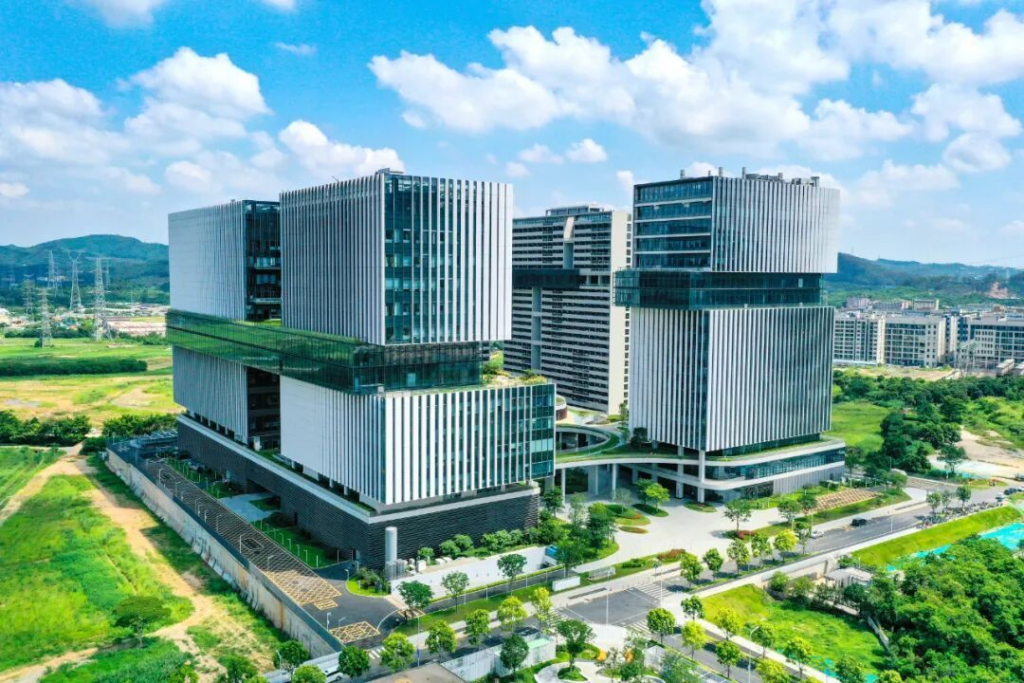
Guangming District is marked by “innovation first”. It has currently gathered over 900 medical device enterprises such as Comen Medical and Dirui Biotech, more than 100 biopharmaceutical enterprises including Weiguang Biotech and Wanhua Pharmaceutical, and over 140 biomanufacturing enterprises like Sello Biotech. More importantly, on December 4, the National Biomanufacturing Industry Innovation Center—the only national-level innovation platform in the biomanufacturing field—launched its trial operation in Guangming, which will directly promote the industrial chain collaboration in the Greater Bay Area. For this exhibition, Guangming District will organize 50 enterprises to participate, displaying over 100 innovative achievements, further strengthening its industrial label of “biomanufacturing + innovative medical devices and pharmaceuticals”.
Over 300 Enterprises and Academician Team Support, the Exhibition Unlocks Five Core Highlights
According to Cai Qiaowu, Executive President and Secretary-General of the Shenzhen Medical Device Industry Association, this year’s exhibition is in the “ready-to-launch” stage. The participating lineup includes multinational giants such as Siemens Healthineers and Medtronic, domestic leaders like Mindray, China Resources, and Jinfeng Medical, as well as niche track pioneers such as XtalPi, with over 300 enterprises coming from multiple countries and regions around the world. More than 20 parallel sub-forums covering 6 major topics including policy interpretation and cutting-edge technologies will be held to promote in-depth connection among “industry, academia, research, medical institutions, capital, government, and management”.
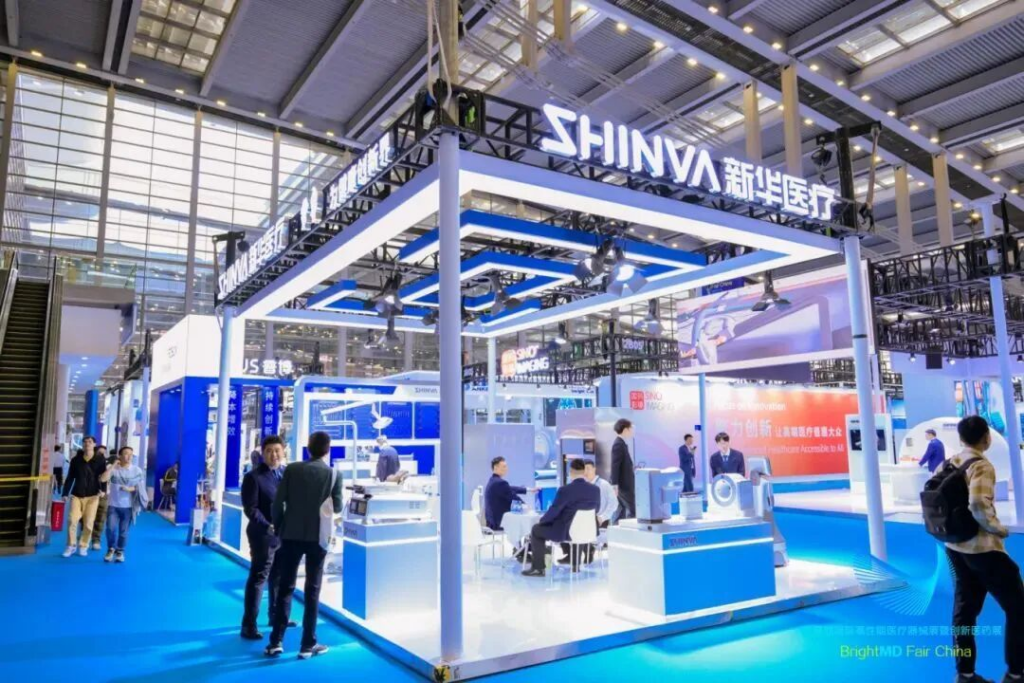
Compared with previous years, the five core highlights of this exhibition are particularly noteworthy: first, “upgraded specifications”—academicians such as Wang Songling, Li Lanjuan, Jiang Baoguo, and Li Renke, as well as representatives of leading domestic and foreign industry enterprises, will share forward-looking insights on-site; second, “expanded fields”—new exhibition areas for innovative drugs and biomanufacturing are added, and emerging fields such as AI medical devices and aesthetic medical devices are showcased collectively; third, “closed-loop chain”—medical institutions, universities, and supply chain enterprises participate in the exhibition on the same platform, building a full-chain display scenario of “R&D-clinical manufacturing-application”; fourth, “achievement release”—a number of cutting-edge medical device and pharmaceutical products and industry white papers will be launched at the opening ceremony, and the Shenzhen Medical Industry Data Element Circulation Service Empowerment Center and a number of professional parks will be unveiled simultaneously; fifth, “complete ecology”—Shenzhen’s “One Corridor, Two Zones, Three Bases” layout is intuitively presented through the exhibition area, fully outlining the industrial development blueprint.
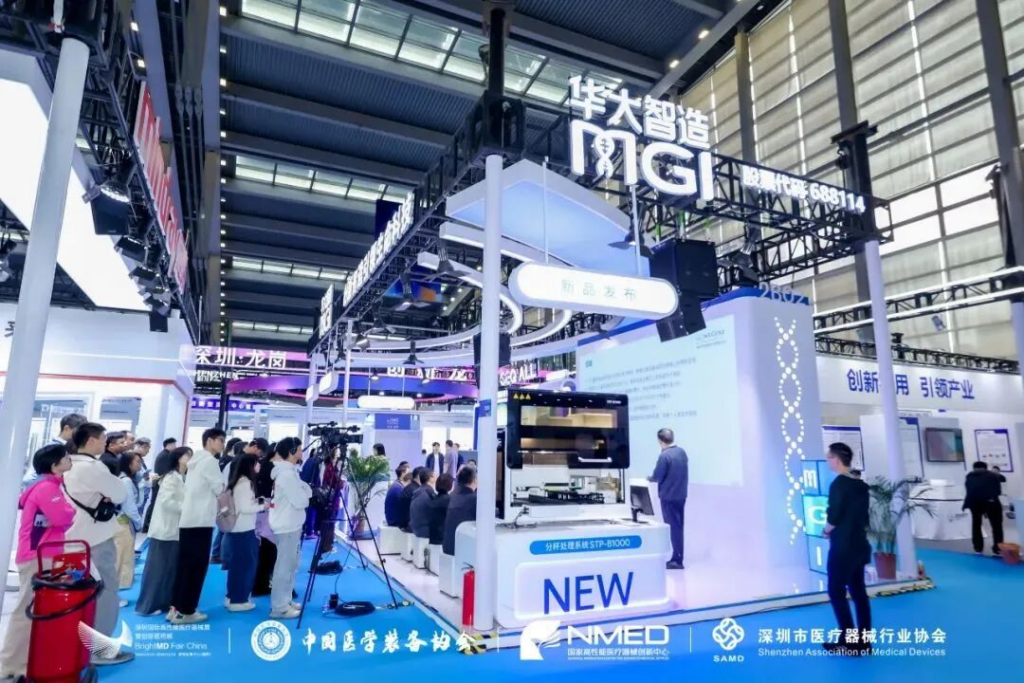
From the “cutting-edge exploration” at the Hong Kong station to the “full-chain implementation” at the Shenzhen station, this “Two-City One-Exhibition” is not only an industry event but also a window to observe the innovation vitality of Shenzhen’s medical device and pharmaceutical industry. With the advancement of the “15th Five-Year Plan”, Shenzhen is building a medical device and pharmaceutical industry ecosystem with a “global vision”, and this exhibition may be the “key node” for the accelerated formation of this ecosystem.