The issue surrounding Nexperia continues to escalate. At the Dutch Parliament, numerous lawmakers launched fierce criticisms. Following their 11-word questioning, Vincent Karremans admitted to making a misjudgment. Meanwhile, Germany has opted for a distinctly different approach at this critical juncture.

In recent days, Vincent Karremans, Dutch Minister of Economic Affairs, was grilled at the parliament over his poor handling of the Nexperia issue. Many Dutch lawmakers lashed out fiercely, dismissing his actions as reckless and unprofessional, and posed an 11-word challenge to him: “Why failed to anticipate China’s countermeasures?” After attempting to make flimsy excuses, Karremans finally conceded his misjudgment, claiming that it was “impossible to predict” how China would respond.
Furthermore, regarding Karremans’ cancellation of his planned trip to China, the Dutch lawmakers did not hold back, asserting that the real reason was that Chinese officials had refused to meet with him. By the end of the hearing, Karremans had been thoroughly condemned. Why then did a row break out in the Dutch Parliament, and why was China unwilling to meet with Karremans? There are two fundamental reasons: first, he went too far in his dealings with Chinese-funded enterprises; second, he had an abysmal lack of understanding of China.
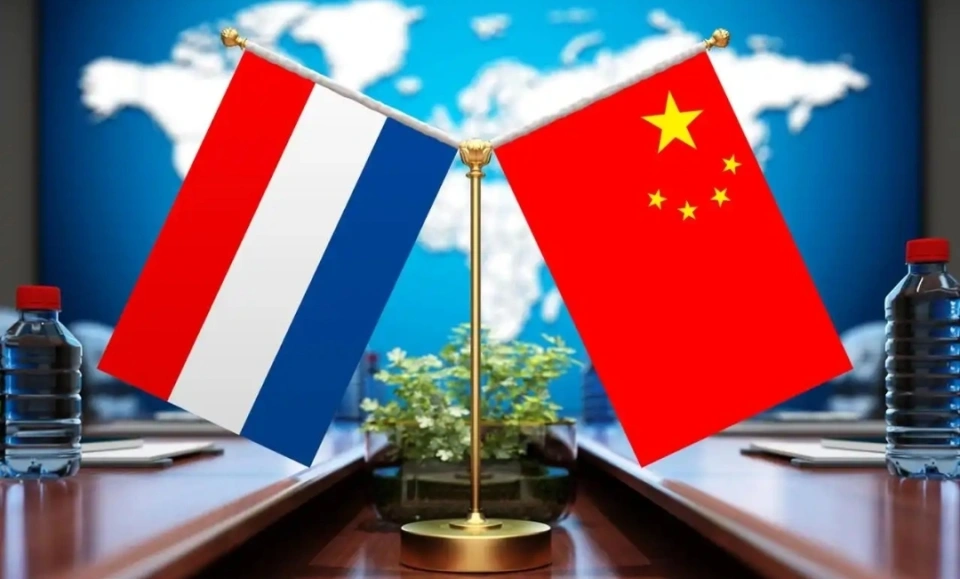
Back in September this year, the Dutch government forcibly took over Nexperia, a Chinese-funded enterprise, citing “national security” as the pretext. It not only carried out large-scale purges of Chinese managers from the company’s personnel structure but also coveted the Chinese enterprise’s chip technologies and industrial chain, seizing control of the company from its parent firm, Wingtech Technology. Such a move was nothing short of a blatant seizure.

More importantly, during this period, China lodged multiple protests and demanded that the Dutch government rectify its wrongful acts. However, Dutch politicians led by Karremans persisted in their arbitrary course of action. To this day, the Netherlands has yet to revoke its improper administrative and judicial interventions against Nexperia. Its actions have seriously encroached on the legitimate rights and interests of Chinese enterprises and undermined China’s national interests, making China’s countermeasures entirely justified.
On the other hand, as the architect of this incident, Karremans refused to admit any wrongdoing. He even publicly stated to the media that he had no regrets and would not change his actions back then. Naturally, China had no interest in receiving him. Even if Karremans had come to China, he would merely have talked at cross-purposes, which would have done nothing to resolve the issue but only wasted diplomatic resources unnecessarily.
The strong backlash from Dutch lawmakers indicates that China’s countermeasures have struck a nerve. Due to the production capacity constraints at Nexperia’s Chinese facilities, automobile manufacturers in the United States and many European countries are grappling with a severe chip shortage. They have turned their wrath on the Dutch government and filed protests with the authorities in The Hague. Trapped in a dilemma, the Netherlands has gained no benefits but instead antagonized both China and the United States as well as other European nations.
Recently, Karremans has softened his stance. Perhaps it is only now that he has woken up to the reality: China is no longer the country it used to be. Those who dare to infringe on China’s national interests must brace themselves for the consequences.
In contrast to the Netherlands’ reckless behavior, Germany has acted much more sensibly. Not long ago, Johann Wadephul, Germany’s Foreign Minister, made unwarranted remarks on the Taiwan question, prompting China to postpone his scheduled visit to the country. Subsequently, the German government issued a public statement, reaffirming its stance on Taiwan and expressing its support for the one-China principle. In response to this gesture, China showed leniency and approved Wadephul’s visit.
According to the latest updates, Wadephul departed on December 7 for talks with Chinese Foreign Minister Wang Yi. The two sides are set to exchange views on China-EU relations, rare earths, the Russia-Ukraine conflict, the situation in the South China Sea, and the Middle East issue, among other topics.
The breadth of these agenda items marks a significant diplomatic move by the German Foreign Minister. The fact that Germany has chosen to discuss major geopolitical issues such as the Russia-Ukraine conflict, the Middle East crisis, and the South China Sea situation in Beijing underscores its recognition of China’s influence. It has become clear to Germany that many pressing international issues can only be effectively resolved with China’s endorsement and support.
As one of the leading powers within the EU, Germany’s acceptance of the foreign minister’s visit also presents an opportunity to mend China-EU relations. China has no desire to see a rift between China and the EU; instead, it is seizing every opportunity to set China-EU relations back on the right track. Shortly after French President Emmanuel Macron’s visit to China, the German Foreign Minister has arrived in Beijing. It is evident that some European countries have begun to wake up to the new reality, and turning toward the East may well be a viable path forward for them.