GUANGZHOU – Dongshankou (Miaoqian West) commercial district in Yuexiu District has been selected as a 2025 Provincial-Level Characteristic Pedestrian Zone (Commercial Circle), making it one of only two Guangzhou hubs to receive the distinction this year. This accolade adds to previous honors including the 2019 UN-Habitat “Asian Urban Landscape Award” and a 2024 “City-Level New First-Tier Neighborhood” designation.
The recognition highlights Yuexiu District’s successful implementation of the “Ba-Qian-Wan Project” – an initiative driving urban revitalization through policy guidance, public-private collaboration, and the integration of culture, commerce, and tourism.
Century-Old Mansions Reborn as Cultural Hubs
Yuexiu District has adopted a strategy of “active preservation, organic renewal, and neighborhood sharing” to transform Dongshankou from a pure historical preservation area into a vibrant cultural-commercial-tourism destination. The restoration of colonial-era mansion facades and optimization of public spaces, combined with the introduction of creative design and art curation businesses, have revitalized the century-old neighborhood.
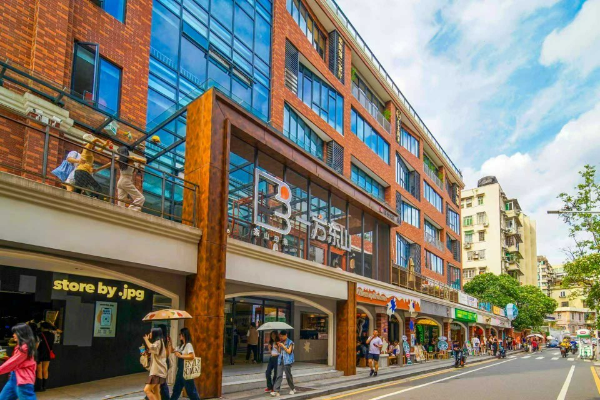
Landmark projects like Yifang Dongshan Cultural Complex have repurposed historical buildings into trendy retail clusters hosting international brands (e.g., KANGOL, UNDEFEATED) and local labels (FPA Store, Boneless). The To Summer flagship store, located in the heritage “Kui Garden,” merges Oriental fragrance art with architectural conservation, creating immersive cultural experiences through its “historic architecture + trendy commerce” model.
Youth-Centric Destination with Independent Brands
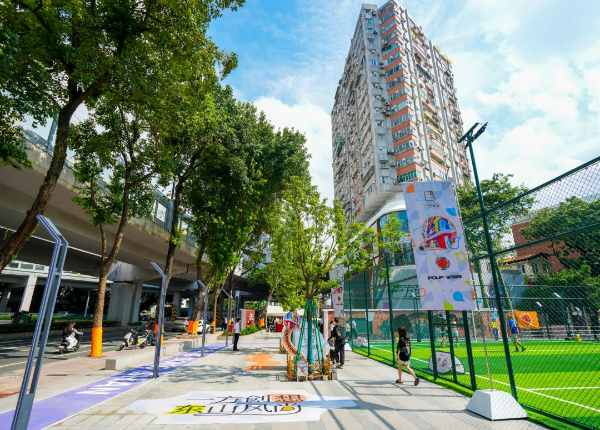
The district’s rise stems from its appeal to young consumers. Miaoqian West Street, the core fashion artery, hosts over 20 independent designer boutiques, cafes, and cultural spaces. The speakeasy-style Hope & Sesame (Miaoqian Bing Shi) attracts 15,000 daily visitors on weekends through its “underground bar + vintage market” concept.
Currently housing 470+ enterprises spanning fashion, art, and F&B, Dongshankou was recognized in 2024 for its strong resource aggregation, community vibrancy, and public value creation.
Innovative Renewal Model Drives Organic Growth
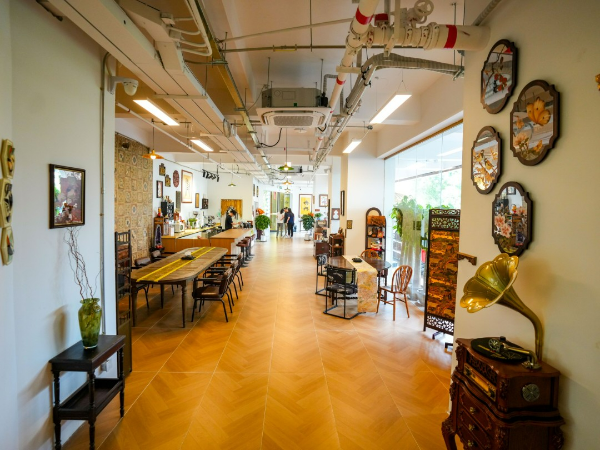
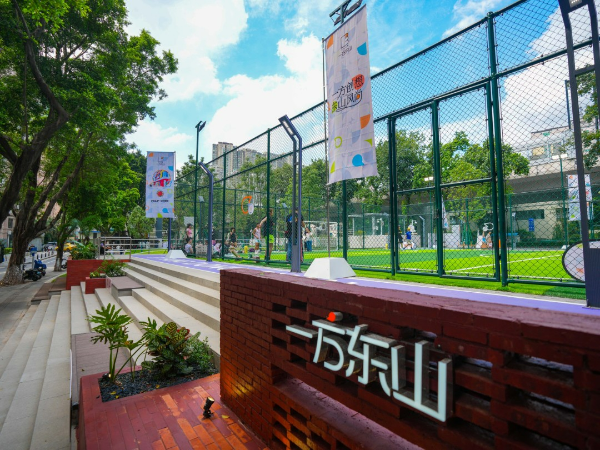
A “government-guided, enterprise-operated, resident-engaged” approach ensures historical elements like red-brick facades and clock towers are preserved while integrating contemporary designs. The second phase of Yifang Dongshan and Junyi Plaza upgrades have transformed previously underutilized spaces into mixed-use hubs featuring celebrity studios, intangible cultural heritage workshops, and sports communities – now recording peak daily footfall of 30,000 visitors and five-digit single-day revenues for ground-floor stores.
The area has completed a remarkable transition from a “hardware wholesale street” to a “trendsetting destination” through streetscape enhancements, traffic optimization, and upgraded public facilities.
Cultural-Tourism Integration Creates New Consumption Scenarios
Leveraging revolutionary heritage sites (e.g., CCP Third National Congress Memorial) and colonial architecture, Yuexiu has developed “red education + CityWalk” routes linking historical venues with trendy stores and local eateries. Regular events like photography exhibitions, DIY workshops, and sports challenges have driven integrated cultural-commercial experiences, generating 250 million+ holiday search volumes and 8,500+ Xiaohongshu user reviews.
The district supports both traditional eateries (e.g., Michelin-recommended Yinji Rice Roll) and emerging designer brands, creating coexistence between Cantonese heritage and youth culture.
Next Phase: International-Standard Upgrade
The provincial designation will accelerate smart guide systems, foreign-friendly payment solutions, and pop-up brand activations. With Guangzhou hosting upcoming national sports events, Dongshankou is advancing cross-border rules alignment with Hong Kong-Macau, exploring tax-free shopping services, and planning Cantonese culture festivals to attract global visitors.
“Dongshankou succeeds by preserving urban memory while creating future possibilities,” noted an expert from Guangdong Chain Operation Association. As century-old mansions evolve into trendsetting landmarks, the area offers a “Guangzhou model” for national commercial district revitalization through culture-led, commerce-enabled, and technology-empowered development.