Tracking Traces in Cuiheng Village: An In-depth Guide to Dr. Sun Yat-sen’s Former Residence Memorial Museum | Touching the Centennial Footsteps of a Great Man
I. Opening: A Former Residence Bearing a Century of Revolutionary Original Aspiration
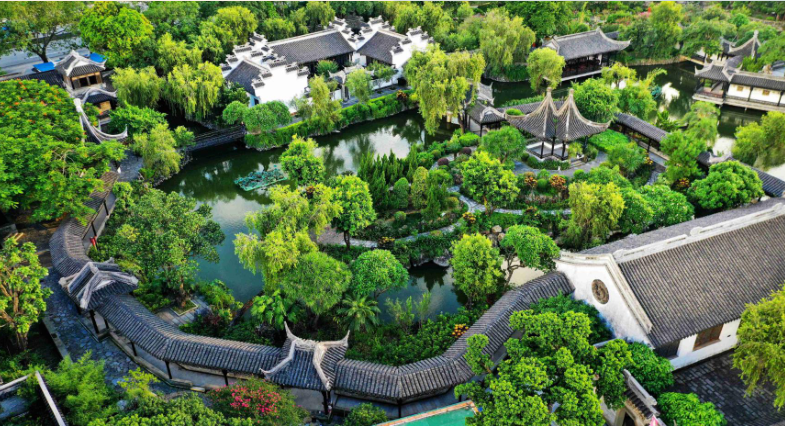
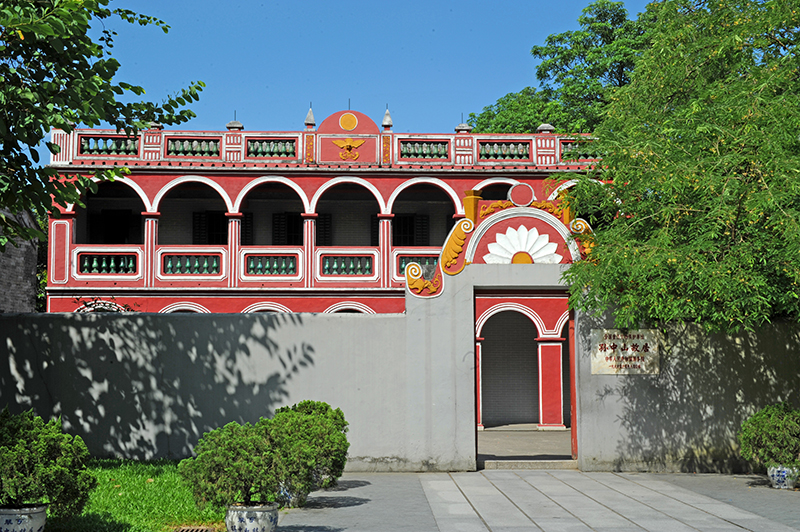
Driving into Cuiheng Village, Nanlang Town, Zhongshan City, and passing through the verdant southern foot of Wugui Mountain, a two-story building with ochre-red arches stands quietly amid green shade — this is the core of Dr. Sun Yat-sen’s Former Residence Memorial Museum, a Major Historical and Cultural Site Protected at the National Level. As the soul attraction of the national 5A-level tourist scenic area “Dr. Sun Yat-sen’s Hometown Tourist Area”, it is not only the cradle where the great man was born and raised, but also a witness to the integration of Chinese and Western cultures and the germination of revolutionary ideals. From Sun Yat-sen’s birth here in 1866, to the completion of the former residence in 1892, and now its upgrade to a cultural landmark integrating historical commemoration, folk custom display, and research study experience, every brick and tile is engraved with the marks of the times.
II. Detailed Explanation of Core Attractions: A Historical Dialogue Across Time and Space
(1) Dr. Sun Yat-sen’s Former Residence: A Spiritual Home of Chinese-Western Integration
The former residence is the core of the entire scenic area, facing west with its back to east, covering an area of 500 square meters with a construction area of 340 square meters. Funded by Sun Yat-sen’s elder brother Sun Mei who remitted money from Honolulu, it was built under Sun Yat-sen’s supervision in 1892. This two-story brick-and-wood structure is a model of innovation in modern architecture:
- Western Style in Appearance: The seven ochre-red decorative arches on the upper floor are magnificent, and the halo in the middle of the eaves and the carving of an eagle holding a coin ring in its mouth fully demonstrate the delicacy of Western architecture;
- Chinese Essence in Interior: The interior follows the traditional Chinese layout, with the main hall in the center, side rooms on both left and right, brick-gray walls with white dividing lines, symmetrically arranged doors and windows, and four doors connecting front, back, left and right. Turning left and right can lead back to the starting point, implying the philosophy of “connecting all directions”. The couplet “A Roof to Shelter, A Home in Wugui” on the main door, said to be personally written by Sun Yat-sen, expresses his deep affection for his homeland.
Must-See Details:
- The area around the well on the right side of the courtyard (about 32 square meters) is where Sun Yat-sen was born in 1866. Although the old house no longer exists, the ancient well silently tells past stories;
- The main hall retains the furnishings personally arranged by Sun Yat-sen. Two kerosene lamps brought back from Honolulu in 1883 are placed on the platform. Though the light is dim, they illuminated his early path of exploration;
- The right side room is Sun Yat-sen’s bedroom, with the large wooden bed and dressing table preserved in their original state. He lived here from 1892 to 1895 and in 1912;
- The study on the south side of the second floor is the birthplace of revolutionary ideas: a photo of the 17-year-old Sun Yat-sen hangs on the wall, and the desk and iron bed are original items. In the winter of 1893, he drafted A Letter to Li Hongzhang here, putting forward the reform proposition of “men to their full ability, land to its full productivity, goods to their proper use, and commodities to free circulation”. In 1895, he discussed the strategy of the Guangzhou Uprising with Lu Haodong here.
Vitality in the Courtyard: The lush tamarind tree on the left was personally planted by Sun Yat-sen with seeds brought back from Honolulu in 1883. Now over a hundred years old, its vigorous branches symbolize the evergreen revolutionary spirit.
(2) Surrounding Relics: Touching Sun Yat-sen’s Youthful Days
Beyond the former residence, every mountain and river in Cuiheng Village retains Sun Yat-sen’s footprints:
- Jinbinglang Mountain: From the age of 7 to 12, Sun Yat-sen often cut firewood here with his sister Miaoqian, and the ancient well halfway up the mountain was his must-pass place to carry water home;
- Stream at the Village Foot: The young Sun Yat-sen once fished and swam here, and his free nature nurtured the courage to resist constraints;
- Big Banyan Tree in Front of the Courtyard: This is where he listened to the elder Feng Shuangguan tell stories of the Taiping Heavenly Kingdom’s anti-Qing struggle, and the seeds of revolution quietly sprouted here.
(3) The Upgraded Memorial Museum: Technology Empowers Historical Experience
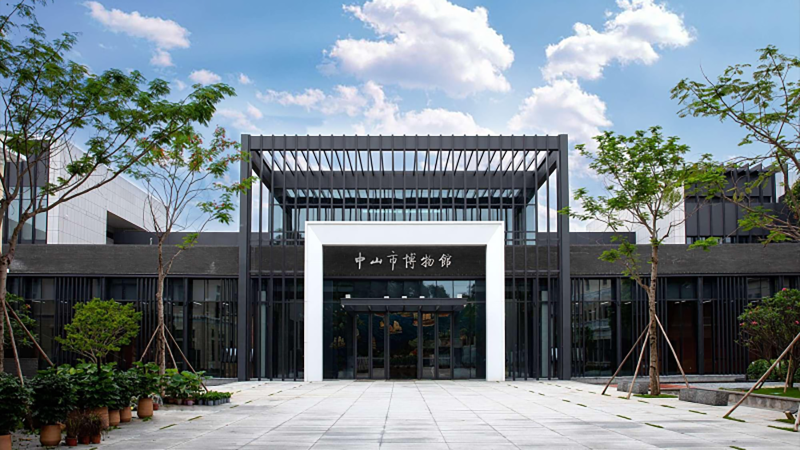
Adjacent to the former residence, the Dr. Sun Yat-sen Memorial Hall (completed in 1999, upgraded in 2025) is an unmissable extended attraction:
- Core Exhibition Areas: With a construction area of 6,000 square meters, the first-floor “Exhibition of Sun Yat-sen’s Life and Achievements” uses more than 410 photos and over 120 cultural relics (including unpublished historical materials) to construct a progressive narrative of “Seeking Truth – Republicanism – Struggle – Cooperation – Inheritance”; the second-floor “Exhibition of Relatives and Descendants” shows the family’s support for the revolution, and the temporary exhibition hall often holds special exhibitions;
- Technological Highlights: The MR mixed reality guide system covers 23 interactive points. Wearing glasses, visitors can “travel through” to the battlefield of the Wuchang Uprising and listen to the original audio of Sun Yat-sen’s speech in 1924; the 3-minute immersive film Revolutionary Tide, based on Aspirations Achieved, reproduces the eventful years from the establishment of the Xingzhonghui to the Wuchang Uprising;
- Integrity Education Base: A special exhibition hall “Sun Yat-sen’s Integrity Thought and Practice” is set up to highlight his noble character of “not amassing family property, but devoting himself to state affairs”.
(4) Extended Scenic Area: Understanding the Great Man’s Growth Environment
As a 5A-level scenic area, Dr. Sun Yat-sen’s Hometown Tourist Area also includes four core sections, and combined tours are recommended:
- Cuiheng Folk Residence Exhibition Area: 17 old residences restore the style of the late Qing Dynasty and early Republic of China, including Sun Yat-sen’s ancestral home and folk custom exhibitions, allowing visitors to experience the social environment in which he grew up;
- Farming Culture Exhibition Area: In the “Dragon Field” where Sun Yat-sen once worked, visitors can see rice cultivation, mulberry fish ponds, and traditional farm tools, and experience Lingnan farming civilization;
- 1911 Revolution Memorial Park: The granite diary wall is engraved with revolutionary records of Sun Yat-sen, Huang Xing and others, and the Chinese-Western integrated architecture highlights the pioneering spirit;
- Litoujian Mountain: The highest peak in Cuiheng, climbing it offers a panoramic view of the scenic area. There is the Sun family cemetery on the mountain, and the “Emperor’s Field” tomb site with excellent feng shui is worth visiting.
III. Practical Guide: Easily Explore the Former Residence Memorial Museum
(1) Transportation Guide: Convenient Arrival by Multiple Means
Public Transportation:
- Bus: Take Zhongshan Bus No.12, K16, K26, 087, or 089 to “Dr. Sun Yat-sen’s Former Residence Station” or “Zhongshan Film and Television City Station”;
- Intercity Railway + Bus: Get off at Nanlang Station of the Guangzhou-Zhuhai Intercity Railway, then transfer to Bus No.12/087 directly to the scenic area;
- Intercity Coach: There are tourist coaches directly from Gongbei Customs Parking Lot to Nanlang Bus Station.
Self-Driving Routes:
- From Guangzhou (about 90 km): Guangzhou-Macau Expressway → Cuiheng Avenue → Scenic Area Parking Lot (free of charge);
- From Zhuhai/Macau (about 30 km): Beijing-Zhuhai Expressway → Cuiheng Exit → No.93 Cuiheng Avenue (main entrance of the scenic area);
- From Shenzhen/Hong Kong: Hong Kong-Zhuhai-Macau Bridge → Guangzhou-Macau Expressway → directly to the scenic area, and Shenzhen can be seen from afar across the Pearl River Estuary.
(2) Ticket and Opening Information (Latest in 2025)
| Attractions | Ticket Policy | Opening Hours | Remarks |
|---|---|---|---|
| Dr. Sun Yat-sen’s Former Residence Memorial Museum | Free, reservation and ticket collection with ID card required | 9:00-17:00 (admission stops at 16:30) | Reserve via the WeChat official account “Dr. Sun Yat-sen’s Former Residence Memorial Museum”, with a limit of 400 visitors per hour |
| Zhongshan Film and Television City | 65 yuan for adults, 35 yuan for students, half price for those over 65 years old | 8:30-17:30 (extended to 18:00 on weekends) | Includes four major scenic areas of China, Britain, the United States and Japan, with horse fighting/3D movie performances |
| Litoujian Mountain/1911 Revolution Memorial Park | Free | Open 24 hours a day | It is recommended to wear comfortable shoes for mountain climbing |
(3) Best Tour Route (Recommended 4-6 Hours)
- 9:00-11:30 AM: Core area of the former residence (main building of the former residence → tamarind tree in the courtyard → well at the birthplace → relics of youth activities) → listen to the guide tell architectural details and revolutionary past (the scenic area provides free scheduled explanations, one at 10:00 and one at 14:00);
- 11:30 AM-1:00 PM: Dine around the scenic area (recommended Yakou Seafood Restaurant and Cuiheng Farmhouse, to taste local dishes such as steamed sea fish and three-yellow chicken);
- 1:00-3:00 PM: Dr. Sun Yat-sen Memorial Hall (MR guide experience → five themed exhibition areas → integrity education base) → Cuiheng Folk Residence Exhibition Area (experience folk customs);
- 3:00-4:30 PM: Farming Culture Exhibition Area (experience traditional farm tools) → 1911 Revolution Memorial Park (pay homage to revolutionary martyrs);
- Optional Extension: For those with sufficient physical strength, climb Litoujian Mountain (1 hour round trip) to overlook the Pearl River Estuary and the panoramic view of the scenic area.
(4) Tips
- Reservation Reminder: Be sure to reserve 1-3 days in advance during peak seasons (holidays/weekends) to avoid being unable to enter without tickets;
- Explanation Services: In addition to free scheduled explanations, electronic guide devices can be rented (20 yuan per unit), or paid in-depth explanations can be reserved (100 yuan for groups of less than 5 people);
- Photography Rules: Flash photography is prohibited indoors in the former residence, and touching cultural relic exhibits is not allowed; the tamarind tree and big banyan tree in the courtyard are excellent photo spots;
- Research Study Recommendation: Bring children to participate in the scenic area’s “Great Ideological and Political Education” courses (reservation required in advance), and understand revolutionary history through handcrafts and role-playing;
- Surrounding Linkage: If time permits, you can go to Zhongshan Film and Television City (5-minute drive) to experience film and television scenes and interactive performances, or to Zhuhai Qi’ao Island (20-minute drive) to connect the travel itinerary of Zhuhai, Zhongshan and Macau.
IV. Conclusion: Understanding the Starting Point of a Great Man in Cuiheng Village
Walking out of the former residence, the setting sun gilds the ochre-red arches, and the branches and leaves of the century-old tamarind tree sway in the wind. There is no noisy commercial atmosphere here, only the depth and tranquility of history. From the big banyan tree where the young Sun Yat-sen listened to stories of the Taiping Heavenly Kingdom, to the lights in the study where he drafted national salvation strategies, and the shocking revolutionary images in the memorial hall, every place tells us: great revolutionary ideals often stem from love for the homeland and concern for people’s livelihood.
Whether you are a history enthusiast, a teacher or student on a research study trip, or a tourist seeking a peaceful journey, Dr. Sun Yat-sen’s Former Residence Memorial Museum is worth a special visit. Here, you can not only see a building integrating Chinese and Western styles, but also touch the original aspiration of a nation pursuing progress.