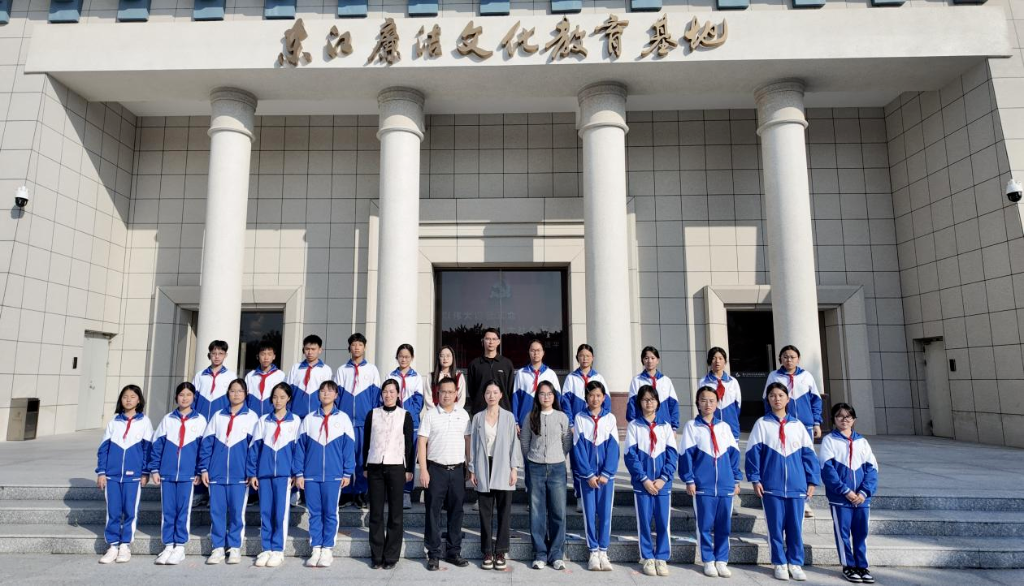
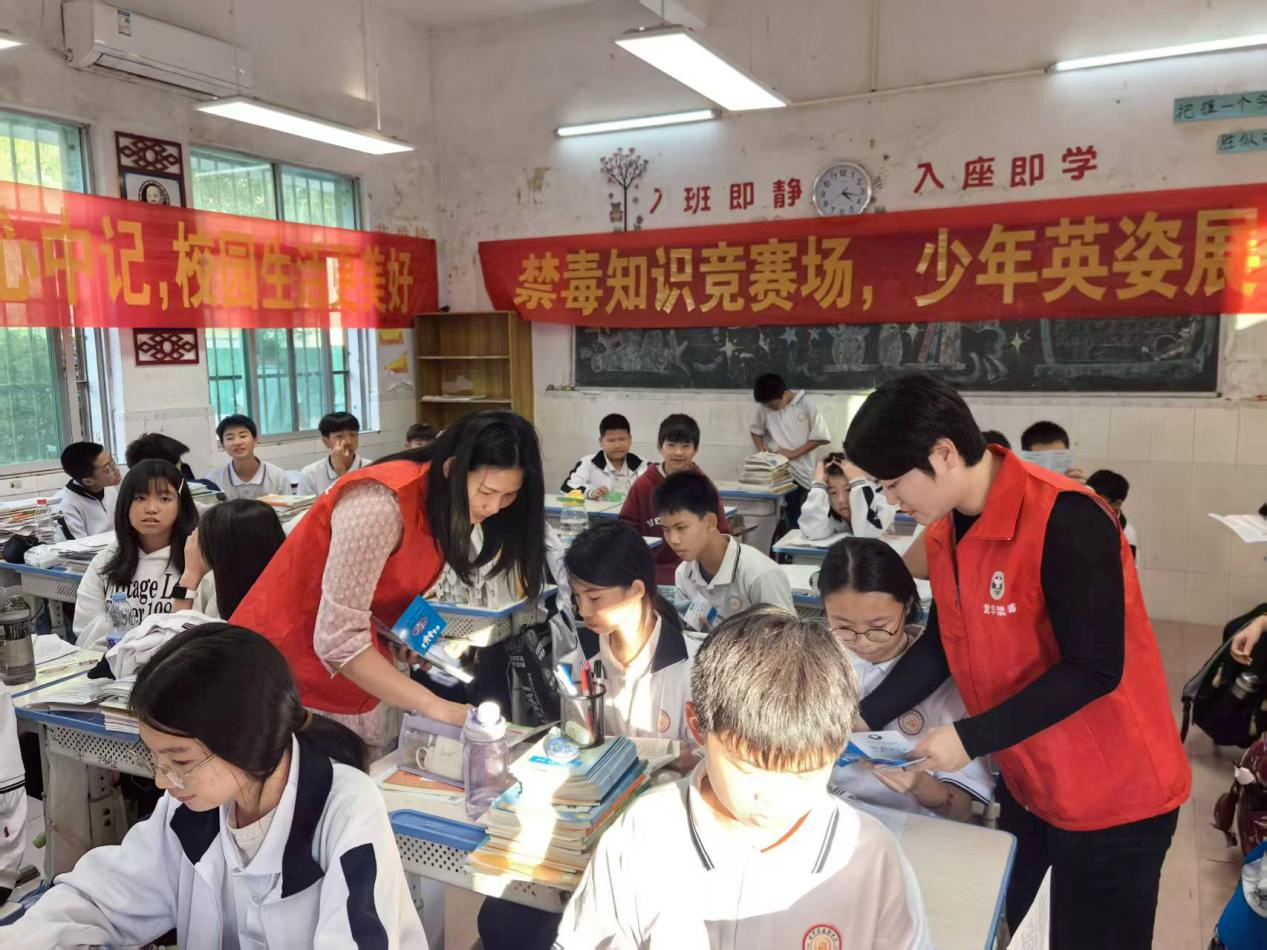
Recently, the Student Service and Quality Development Center of the Ministry of Education released the list of typical cases for the “Sunflower Student Mental Health Promotion Initiative”, with a total of 101 cases from across the country being selected. Among them, 2 out of the 4 primary and secondary school cases selected from Guangdong Province are from Foshan City, namely Trauma Repair and Ecological Reconstruction Model Based on the Integration of Individual-Relationship-System Three Tracks by Teacher Lin Lisi of Liangkai Junior High School in Shunde District, and Protagonist of Life – A Teacher’s Story of Mental Health Education by Teacher Deng Haoming of Nanhai No.1 High School.
It is reported that the “Sunflower Student Mental Health Promotion Initiative” is a national public welfare project jointly promoted by the Ministry of Education and other multiple ministries and commissions. It promotes the mental health development of students through the promotion of typical practical cases and the construction of psychological service systems.
Let’s learn about the specific contents of the cases:
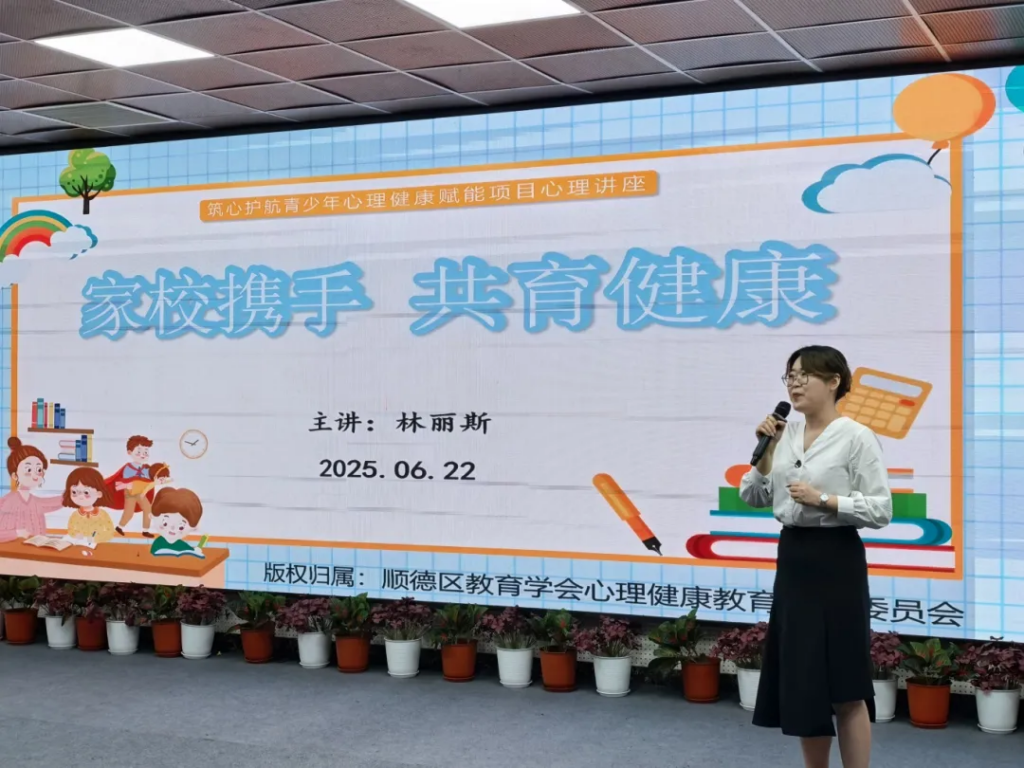
Lin Lisi, Liangkai Junior High School, Shunde District, Foshan City:
Trauma Repair and Ecological Reconstruction Model Based on the Integration of Individual-Relationship-System Three Tracks
Adhering to the core philosophy of “Success for Everyone, Differential Development”, Liangkai Junior High School in Shunde District, Foshan City has been deeply engaged in the field of mental health education for many years and built a three-dimensional mental education system of “Happy Learning, Intellectual Development, and Ability Expansion”. The school has successively been awarded titles such as “Guangdong Provincial Mental Health Education Research Base”, “Foshan Four-Star Psychological Counseling Room” and “Shunde District Characteristic School of Mental Health Education”. Through implementing psychological courses, building a full-staff mental education team, promoting home-school linkage and peer mutual assistance, the school comprehensively safeguards the physical and mental health of students.
Targeting the individual growth and development of students, Teacher Lin Lisi of Liangkai Junior High School has innovatively proposed the “individual-relationship-system three-track integration” intervention model, which is a vivid embodiment of the school’s mental education practice. This model focuses on three dimensions to accurately break through difficulties, committed to awakening students’ internal strength and building a supportive growth ecology.
Individual Growth
The school attaches great importance to cultivating students’ ability of emotional awareness and regulation. Through psychological classes, group counseling, individual counseling and other methods, it guides students to learn positive emotional management methods and empowers their growth. For example, narrative therapy is used to help students “externalize problems” and reinterpret challenges in growth; dialectical behavior training is adopted to improve emotional stability and self-acceptance. These methods not only help students better understand themselves, but also stimulate their psychological resilience and vitality.
Relationship Connection
From family to class, the school actively creates an atmosphere of emotional connection. Through parent classes, parent-child workshops and other forms, it helps parents master emotional response and communication skills, and rebuild trusting and understanding parent-child relationships; in classes, “micro mental education” themed class meetings are held, and the “three dos and three don’ts” mutual assistance principle is put forward to guide students to express their inner feelings through emotional weather, creating a class culture of respect, tolerance and mutual assistance.
System Support
The school has woven a dense campus mental education network. It has established a four-level linkage mechanism of “psychological committee members – head teachers – mental education guidance center – administrative special class”, forming a closed-loop support system of “peer mutual assistance + teacher support + family coordination”. As comfort providers, psychological committee members timely feedback the emotional dynamics of classmates; head teachers and psychological teachers follow up collaboratively; the administrative special class coordinates resources to ensure the effective implementation of mental education work.
Teacher Lin Lisi believes that “the essence of mental education is to awaken the internal power of every life – when the class becomes a mutual assistance community, education moves from knowledge transmission to life nourishment”. In the future, Liangkai Junior High School will continue to rely on the advantages of the Guangdong Provincial Mental Health Education Research Base, continuously practice and improve the three-track integration model, so that every youthful heart can bloom in the sunshine of “differential development”.
Deng Haoming, Nanhai No.1 High School, Foshan City:
Protagonist of Life – A Teacher’s Story of Mental Health Education
Nanhai No.1 High School in Foshan City regards mental health education as the core of its education work and systematically builds a positive campus psychological culture. Through regular psychological courses, professional individual counseling, diversified themed activities and the “home-school coordination” mechanism, the school has formed a mental education pattern with full participation. Characteristic initiatives such as psychological garden tours and peer mutual assistance have effectively improved students’ psychological literacy and adaptability, built a solid psychological safety defense line, and helped students grow into sunny and confident young people in the new era. The school has been rated as a Guangdong Provincial Characteristic School of Mental Health Education.
The Beginning of the Story
In this teacher’s mental health education story, Teacher Deng Haoming tells an educational experience he personally went through.
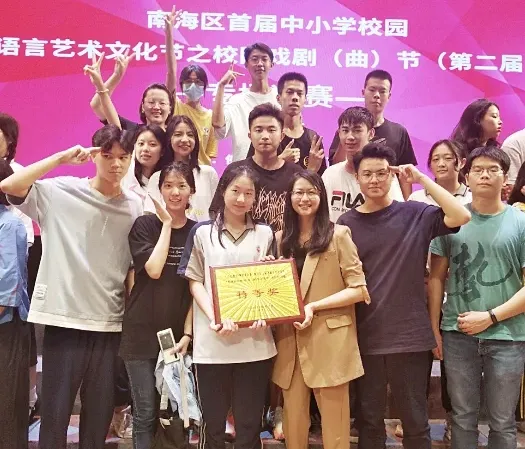
The story happened a few years ago, a few days before the Nanhai District Primary and Secondary School Psychological Scene Drama Competition. As a performance-based competition mainly compiled, directed and performed by students themselves, the selected crew members were all very excited and prepared earnestly. But at this time, the psychological teacher encountered a member who was passive, and no matter what methods he used, he could not establish effective communication with the student.
Resistance
This is the “resistance” often encountered in psychological counseling – different from the resistance encountered in psychological counseling, this time it occurred during the preparation of the psychological drama. The psychological teacher did not necessarily have to resolve this resistance; a simpler way was to directly replace the student actor.
However, the psychological teacher did not choose to do so. Because one of the important significances of the psychological scene drama competition is to improve students’ psychological quality. If the root cause of the student’s problem is not clarified and the student is given up, it is obviously against the original intention of holding the competition.
The “Empty Chair” Technique
Later, the psychological teacher used a counseling technique called the “empty chair” to resolve the student’s heart knot. It can help the client fully perceive what is happening around them, analyze and experience their own and others’ emotions, and help them move towards an integrated, honest and more vibrant existence.
It turned out that the student’s heart knot was not uncommon, but a problem of peer conflicts often occurring in multi-child families. Through several psychological counseling sessions, the problem was solved, and the psychological scene drama was finally performed smoothly.
Looking back on the whole story, the work of psychological teachers is full of moments that require adaptability: the emergence of students’ psychological problems not only occurs in psychological counseling, but also suddenly appears in various unexpected occasions. The coping methods in different scenarios may be different, but what remains unchanged should be the psychological teachers’ unconditional care and tolerance for students.