
On December 8th, the Sanshui Westin Beijiang Football Stadium was bathed in warm winter sunshine, where the fragrance of green grass mingled with silent yet passionate energy. The 5-a-side deaf football competition of the 12th National Paralympic Games and 9th National Special Olympics (hereinafter referred to as the “National Para Games & Special Olympics”) officially kicked off here.
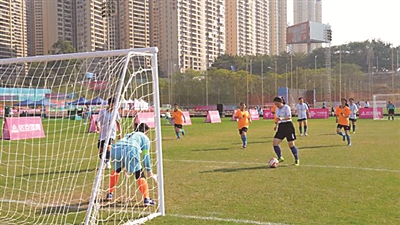
In the opening match of the women’s group stage on the morning of that day, Shanxi Team defeated Guangdong Team 7-0, while Liaoning Team thrashed Tianjin Team 8-0. Over the next 7 competition days, 18 teams from across the country will compete in 48 matches.
The women’s group matches were the first to set the pitch ablaze. Without cheers from the stands or tactical shouts on the field, the athletes relied on eye contact and hand gestures to achieve seamless coordination. Their agile ball control, precise passes, and desperate shots made the silence of the stadium even more intense and dramatic.
“The core of deaf football is mutual understanding,” introduced Liang Yi, coach of the Guangdong women’s football team. The team is mainly composed of players from Zhanjiang, who have developed a unique chemistry through long-term training. “As the host team, the girls are in high spirits and will go all out in the upcoming matches to show the fighting spirit of Guangdong women.” Unlike regular football events, deaf athletes cannot communicate verbally and must fully concentrate on capturing every movement detail of their teammates. This unspoken tacit understanding has become the most touching scene on the pitch.
The tournament is divided into men’s and women’s categories, with the championship finals to be held on December 14th.
Sanshui District, Foshan City, the host of this event, boasts a century-old football heritage. In recent years, Sanshui has accumulated rich experience in hosting events through brand competitions such as Foshan “La Liga”.
To meet the needs of deaf athletes, the event organizing committee has built a solid guarantee system from four aspects: comprehensive renovation of venue facilities, full-process emergency service support, upgrading of the urban environment, and targeted improvement of thoughtful services. With efficient organization and humanistic care, it has injected infinite vitality into the silent stadium.