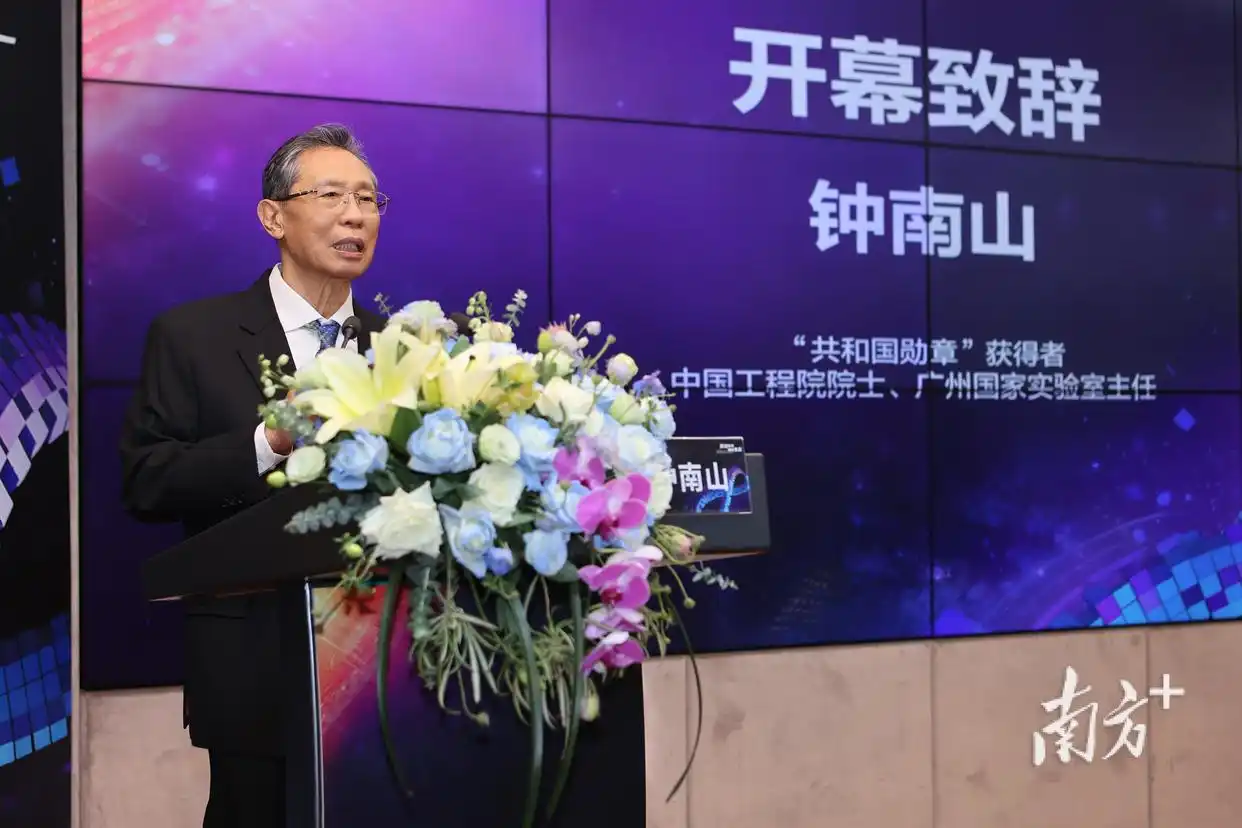
“The Guangdong-Hong Kong-Macao Greater Bay Area (GBA) is not only a national frontier of reform and opening up, but also a highland for the development of low-altitude economy, an emerging industry with boundless prospects,” said Chen Zhijie, Academician of the Chinese Academy of Engineering and Director of the National Key Laboratory of Air Traffic Management Systems, at the 2025 GBA High-Quality Development Conference on Low-Altitude Economy held recently in Guangzhou, Guangdong Province.
A number of supportive new policies were issued, a batch of projects were signed, and a variety of technological new products were unveiled… During the conference, competent authorities of the low-altitude industry, key enterprises and industry associations from multiple cities in the GBA conducted in-depth exchanges and cooperation, striving to build a three-dimensional and networked industrial ecosystem for the low-altitude economy.
A Variety of Aircraft on Display
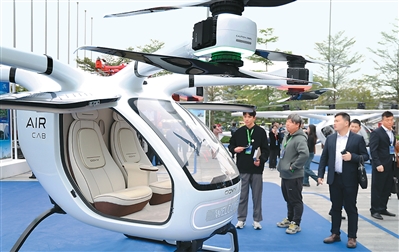
Order via mobile phone, and takeaways arrive by air a few minutes later—in Guangzhou, such scenes have turned from imagination into reality. But this is not the full picture of the low-altitude economy. During the conference, a wide range of aircraft, as the “leading stars” of the low-altitude economy, were displayed collectively, giving visitors a more intuitive understanding of what low-altitude economy is.
SF’s Fengyi Ark 40 UAV serves as an “operation and maintenance supplier” shuttling between offshore wind farms; the AW119 medical helicopter acts as an “air lifeline” connecting emergency scenes with hospitals; Sunward Aerospace’s integrated UAV for firefighting can ascend to a height of 200 meters for long-term stable operation; Xpeng’s detachable flying car, which can “fit into the trunk”, opens up the imagination of “air-land integrated” travel; EHang’s EH216-S manned aircraft outlines the blueprint for future urban air mobility…
Behind the orderly shuttling of aircraft in the sky is the monitoring and dispatching of intelligent platforms. On-site exhibits at the conference, including DJI’s agricultural UAVs and heavy-duty logistics platforms, XAG’s intelligent farm robot matrix, and Zhifei Collaborative’s unattended fire-fighting platform, jointly weave a three-dimensional operation network covering agriculture, transportation and security.
In 2025, the market size of China’s low-altitude economy is estimated to reach 1.5 trillion yuan, and is expected to exceed 2 trillion yuan by 2030. On this trillion-level new track, the GBA is one of the front-runners. Data from the Guangdong Provincial Development and Reform Commission shows that Guangdong gathers more than 30% of China’s low-altitude industry chain enterprises, totaling 15,000. In 2024, the output of civil UAVs in Guangdong reached 6.94 million units, ranking first in the country, among which the consumer-grade UAVs accounted for 95% of the national market share, and industrial-grade UAVs accounted for 54%.
Policy Support Further Enhanced
At a time when many technical difficulties have been overcome and the industrial chain has taken shape, the development of low-altitude economy is in greater need of policy and environmental support from upstream and downstream sectors. The conference released a series of latest policies covering infrastructure construction, technological innovation, management services and other links of the low-altitude economy, mainly including the introduction of the Implementation Plan for the Reform of Low-Altitude Airspace Management in Guangdong Province, the “One Map” of Infrastructure, the “Twelve Measures” for Low-Altitude Finance, and 4 provincial local standards.
Among them, the “Twelve Measures” for Low-Altitude Finance focus on the financial needs of the clustered development of the low-altitude economy, highlighting the “new, comprehensive and collaborative” features to build a systematic support system. It puts forward 12 measures in four aspects: mechanism construction, product and service supply, coordination and linkage, and supporting guarantees, comprehensively improving the quality and efficiency of financial supply, and pressing the “accelerator button” for the development of Guangdong’s low-altitude industrial cluster.
The Guangdong Provincial Integrated Management Service Platform for Low-Altitude Flight was officially launched at the conference. Equipped with four major functions including low-altitude air traffic management, joint supervision, safety prevention and control, and user services, the platform monitors over 50,000 flight sorties and processes 80 million pieces of data on a daily basis, providing solid support for the busy airspace.
On-site, the licensing ceremony for the second batch of pilot-scale test platforms in Guangdong’s low-altitude field was held, including 5 platforms: the Comprehensive Performance Pilot-Scale Test Platform for New Energy Aircraft, the Pilot-Scale Test Platform for Integration of Advanced Materials and Green Power Systems for Low-Altitude Economy, the Pilot-Scale Test Platform for All-Space Unmanned System Equipment, the Pilot-Scale Test Platform for Intelligent Connected Vehicles + Low-Altitude Aircraft, and the Pilot-Scale Test Platform for Safety and Intelligent Integration Testing and Verification of Low-Altitude Equipment.
Talent reserve is also a top priority. At the conference, the Guangdong Provincial Talent Training Service Platform for Low-Altitude Economy was officially put into operation. As the country’s first provincial-level specialized talent service hub for the low-altitude economy, the platform will build a talent pool for the high-quality development of Guangdong’s low-altitude economy through the “1+2+5” service model.
Joint Efforts of Multiple Cities
Cities in the GBA have made concerted efforts to provide strong momentum for the development of the low-altitude economy. As a core city for low-altitude economy layout, Guangzhou has built a full product matrix ranging from 40kg-class to 19-seat manned aircraft; in terms of infrastructure, it plans to build 10 low-altitude take-off and landing bases, 100 take-off and landing fields and 1,000 take-off and landing points by 2030, set up the headquarters of flight camps in Panyu and add more camps in Zengcheng, Huangpu and Nansha; in terms of policy support, it plans to launch a 20 billion yuan government-guided fund to help gather upstream and downstream industries of low-altitude cultural tourism and build a sound industrial ecosystem.
John Lee Ka-chiu, Chief Executive of the Hong Kong Special Administrative Region (HKSAR), proposed in the 2024 Policy Address to set up a working group on low-altitude economy development, formulate development strategies and cross-departmental action plans, as well as supporting regulations and construction systems. The HKSAR government held the launching ceremony of the low-altitude economy “regulatory sandbox” on March 20, 2025 and announced the list of the first batch of pilot projects.
The Macao Special Administrative Region (MSAR) government held the first meeting of the “Low-Altitude Economy Development Working Group” in August 2025. Established by a directive of the Chief Executive of the MSAR, the working group is coordinated by the Economic and Technological Development Bureau. Relevant departments will jointly formulate laws and regulations on low-altitude economy management in line with Macao’s actual conditions, providing better support for the industry to make good use of airspace resources and promote commercial deployment.
The 2025 GBA Low-Altitude Economy Blue Book points out that the future development of the GBA’s low-altitude economy lies in collaborative integration. It is necessary to strengthen the linkage of the “three cores” of Guangzhou, Shenzhen and Zhuhai, deepen cross-border cooperation with Hong Kong and Macao, explore rule alignment and data interconnection, and radiate and drive the eastern, western and northern regions of Guangdong, so as to build a GBA low-altitude economy community featuring “core leadership and full coverage”.