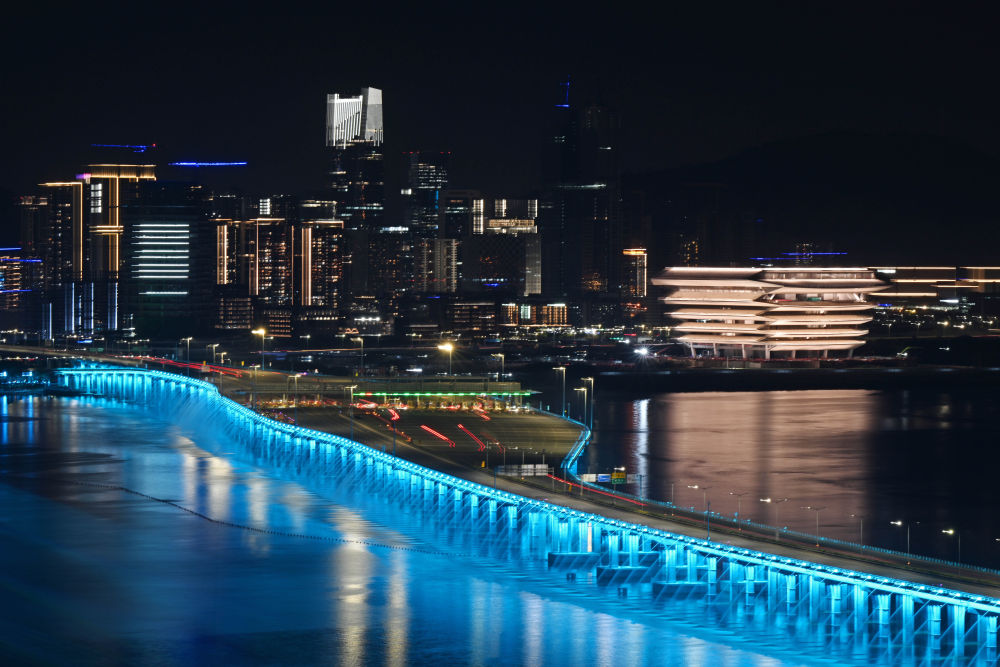
At midnight on the 23rd, as a private car registered in Zhuhai (license plate starting with “C”) bearing an “FT” prefix cross-border plate drove into the exit lane of the Zhuhai Port of the Hong Kong-Zhuhai-Macao Bridge, the highly anticipated “Guangdong Vehicles Going South” policy allowing Guangdong private cars to enter urban Hong Kong was officially launched, injecting new impetus into the integrated development of the Guangdong-Hong Kong-Macao Greater Bay Area (GBA).
“Being able to drive directly from Zhuhai to Hong Kong with just one press of the accelerator is such a smooth experience,” said Mr. Cao, a Zhuhai car owner who was among the first to try the new policy. He told reporters that in the past, traveling between the two places always involved worries about vehicle arrangements, ferry schedules and traffic restrictions. Now, with greatly simplified procedures, cross-border shopping, family visits and self-driving tours have all become much more convenient.
“With the year-end shopping season approaching, I specially came here with my family. We plan to drive to Victoria Peak, Victoria Harbour and Kennedy Town, and also meet up with friends in Hong Kong for tea. We’ll stay for two days,” he added.
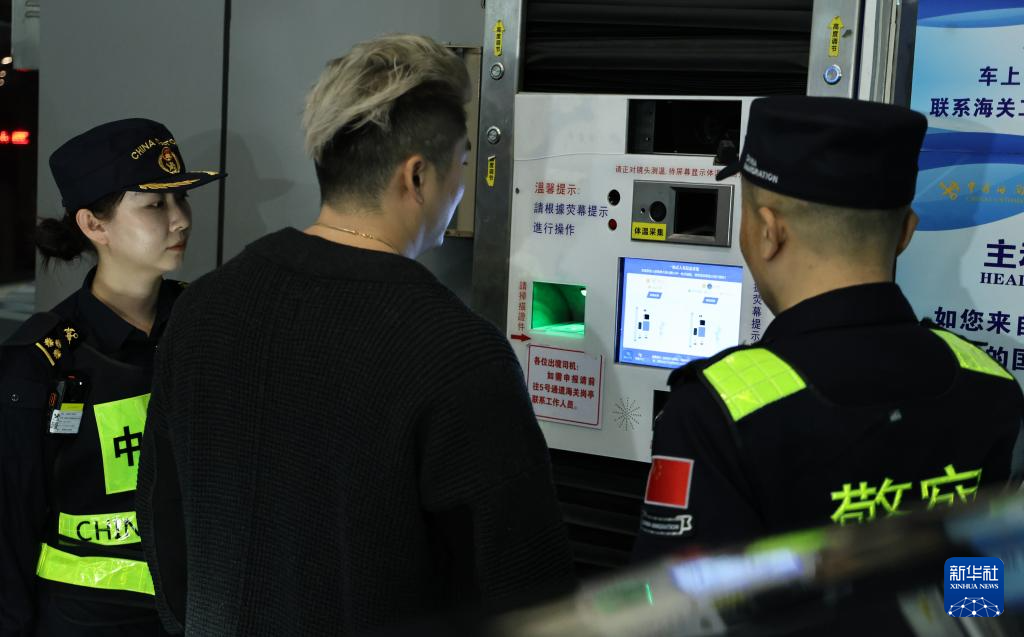
Talking about the application process, Mr. Cao said, “As long as all documents and certificates are prepared, the approval process from submitting the application to obtaining the cross-border plate is very fast.” He also mentioned that the inspection process for first-time applicants went smoothly. The 15-item inspection, which includes verifying the Vehicle Identification Number (VIN) and engine number, checking tires, steering wheel, suspension and braking systems, as well as inspecting the vehicle body structure, safety equipment and modification status, was completed in less than 30 minutes.
“The guidelines on the official websites of the ‘Guangdong Vehicles Going South’ program and the Transport Department of the Hong Kong Special Administrative Region (HKSAR) are very clear, making the entire process from appointment to vehicle inspection easy to follow,” Mr. Cao added. He also followed the dedicated “Guangdong Vehicles Going South” page launched on the “Hong Kong Mobility” mobile app. The traffic diversion measures and road safety guidelines issued by the Transport Department of the HKSAR have given him greater peace of mind for cross-border self-driving trips.

The “Guangdong Vehicles Going South” policy is an important measure for the country to promote the construction of the GBA, and another major favorable policy following the “Macao Vehicles Going North” and “Hong Kong Vehicles Going North” initiatives. Eligible and pre-registered private cars from Guangdong can now travel directly to urban Hong Kong via the Zhuhai Port of the Hong Kong-Zhuhai-Macao Bridge. This not only provides more flexible travel options for residents of Guangdong and Hong Kong for business, employment, tourism and family visits, but also injects new development opportunities into Hong Kong’s tourism, retail, catering and other industries.
Data from the Hong Kong-Zhuhai-Macao Bridge Border Checkpoint of the Zhuhai Frontier Station shows that as of 8:00 p.m. on the 22nd, more than 380 vehicles had completed border checkpoint registration under the “Guangdong Vehicles Going South” policy for entry into urban Hong Kong.

“The ‘Guangdong Vehicles Going South’ and ‘Hong Kong Vehicles Going North’ policies form a mutually beneficial and complementary two-way arrangement, marking a key breakthrough in the alignment of rules and the interconnection of infrastructure in the GBA,” an official from the Hong Kong-Zhuhai-Macao Bridge Border Checkpoint said. Since the implementation of the “Hong Kong Vehicles Going North” policy on July 1, 2023, the checkpoint has inspected over 3.86 million Hong Kong-registered vehicles traveling northward. In 2025 alone, the traffic volume has exceeded 2.03 million vehicle trips, a year-on-year increase of 36%.
“Driven by the ‘Hong Kong Vehicles Going North’ policy, the total number of vehicles entering and exiting through the port has exceeded 6 million trips for the first time this year,” the official stated. With the steady advancement of the “Guangdong Vehicles Going South” policy, cross-border traffic flow at the port is expected to rise further.
It is reported that the first phase of the “Guangdong Vehicles Going South” policy is open to private car owners from four cities in Guangdong: Guangzhou, Zhuhai, Jiangmen and Zhongshan. It will be expanded to other cities in the province in six months. Earlier, starting from midnight on November 15, eligible Guangdong private car owners were allowed to drive into the automated parking lot at the Hong Kong Port of the Hong Kong-Zhuhai-Macao Bridge. Applications for Guangdong private cars to enter urban Hong Kong have been accepted since 9:00 a.m. on December 9, and approved vehicles have been allowed to enter Hong Kong via the bridge since midnight on December 23. In the initial stage, the daily quota is set at 100 vehicles, with each stay in Hong Kong limited to a maximum of three days.