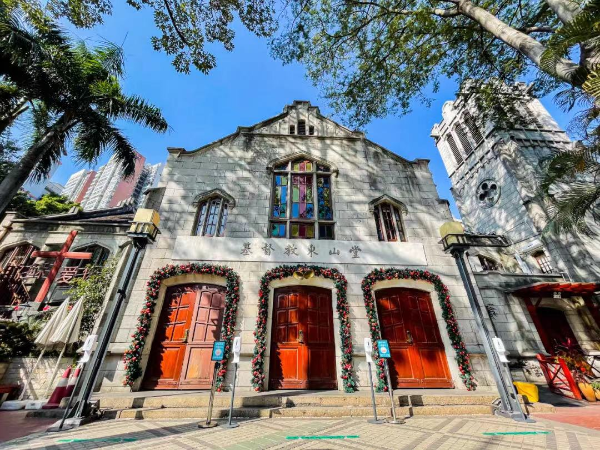
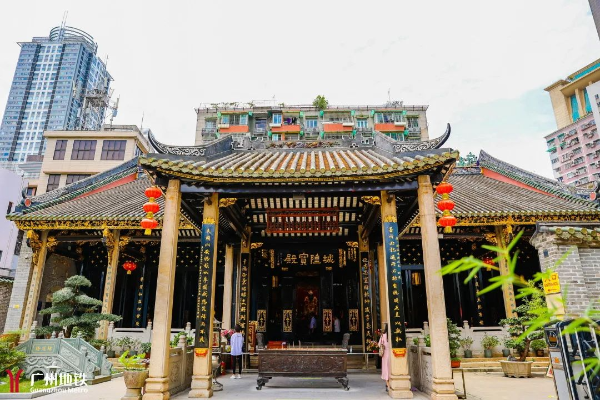
Guangxiao Temple: The First Temple in Lingnan – Where Zen Lingers for Millennia Amidst Rustling Banners
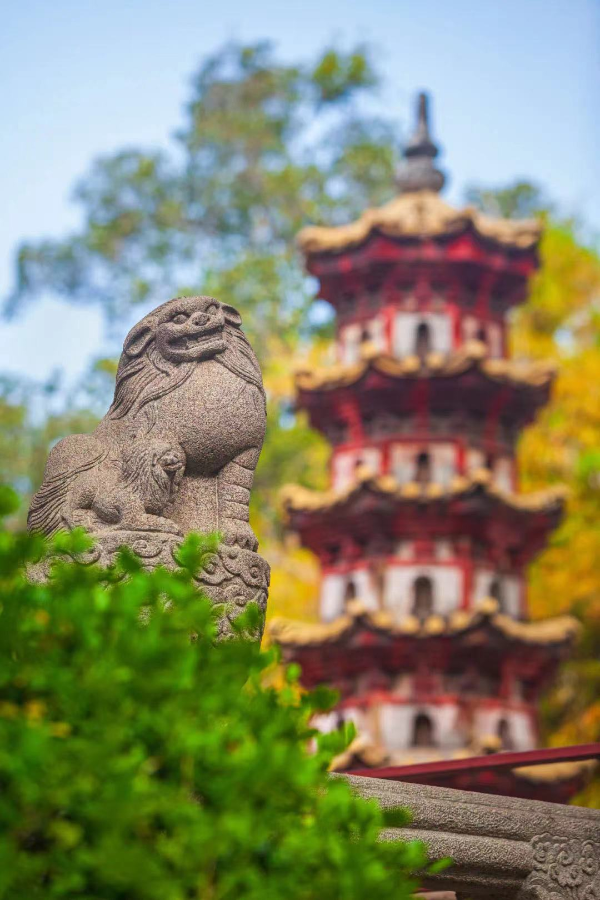
Walking along Guangxiao Road, you suddenly catch sight of a stretch of crimson walls. The faint sound of temple bells and Buddhist chants drifts to your ears, as if transporting you instantly from the bustling city to a serene pure land.
A Guangzhou folk saying goes: “Guangxiao Temple existed before the City of Rams (Yangcheng).” Located at No. 109 Guangxiao Road, Yuexiu District, this millennium-old temple is not only the oldest and largest Buddhist monastery in Guangzhou but also a sacred site of Buddhist culture with a history spanning over 1,700 years. As the place where Huineng, the Sixth Patriarch of Chan Buddhism, received tonsure and ordination, Guangxiao Temple has witnessed the entire process of Buddhism’s spread and development in southern China.
Stepping into Guangxiao Temple, you are not just visiting an ancient temple, but flipping through a thick historical book. Every hall, every stone stele, and every ancient tree silently tells Zen stories that have transcended millennia.
01 Historical Evolution: From Royal Mansion to the First Temple in Lingnan
The history of Guangxiao Temple dates back to the Three Kingdoms period. It was originally the residence of Zhao Jiande, the fifth-generation grandson of Zhao Tuo, King of Nanyue. During the Three Kingdoms era, Yu Fan, a Cavalry Commandant of the Wu State, was exiled here. He turned the place into a garden and planted many myrobalan trees, earning it the names “Yu Garden” or “Myrobalan Grove.”
Yu Fan’s descendants donated the residence to become a temple, initially named “Zhizhi Temple” – marking the beginning of temple construction in Guangzhou. In the 5th year of the Long’an era of the Eastern Jin Dynasty (401 AD), Tanmaya She, a renowned monk from Kapisha (an ancient kingdom in Central Asia), arrived in Guangzhou. He built a Buddha hall here, and with imperial approval, translated Buddhist scriptures and preached, renaming the temple “Wangyuan Temple” (Royal Garden Temple).
The temple’s name changed repeatedly with dynastic transitions. It was called “Qianming Faxing Temple” in the Tang Dynasty and “Wanshou Chan Temple” in the Northern Song Dynasty. In the 21st year of the Shaoxing era of the Southern Song Dynasty (1151 AD), it was officially named “Bao’en Guangxiao Chan Temple.” Soon after, “Guang” (expansive) was changed to “Guang” (bright), giving it the name “Guangxiao Temple” which remains today.
Guangxiao Temple holds a prominent position in the history of Sino-foreign Buddhist cultural exchanges. From the Eastern Jin to the Tang Dynasty, many Indian monks translated scriptures and preached here. In the 1st year of the Tianjian era of the Liang Dynasty (502 AD), the Indian monk Zhiyao Sanzang brought a bodhi sapling and planted it in front of the ordination platform. He prophesied: “In 170 years, a living Buddha will expound the supreme Dharma under this tree and deliver countless beings.”
True to the prophecy, 174 years later, in the 1st year of the Yifeng era of the Tang Dynasty (676 AD), Huineng, the Sixth Patriarch of Chan Buddhism, received ordination under this bodhi tree and founded the Southern School of Chan. In 749 AD, Jianzhen, a famous Tang Dynasty monk, stayed here for a spring to lecture on Buddhism during his fifth attempt to sail east to Japan.
In 1961, Guangxiao Temple was listed as one of the first batch of National Key Cultural Relics Protection Units by the State Council. In 1986, it was handed over to religious authorities for management. After ten years of meticulous restoration, it has now become an important Buddhist activity site and cultural landmark in Guangzhou.
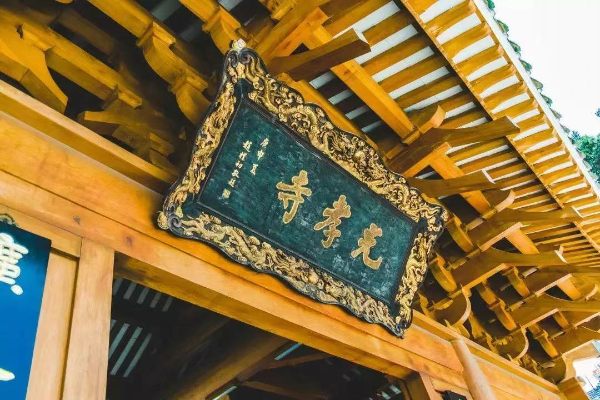
02 Architectural Layout: A Living Fossil of Ancient Lingnan Architecture
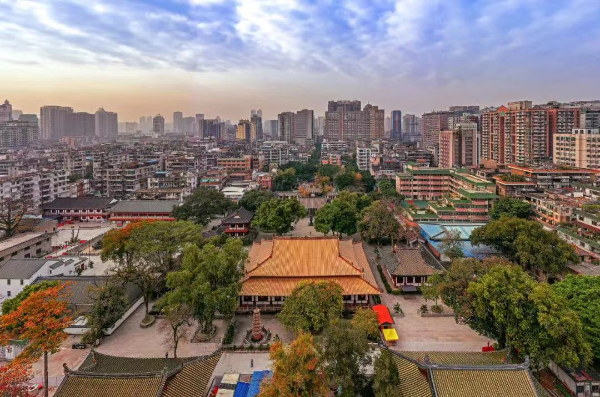
Covering an area of over 30,000 square meters, Guangxiao Temple features a rigorous architectural layout and magnificent halls. It is the largest complex of Buddhist temple buildings in the Lingnan region.
Along the central axis of the temple, buildings are arranged in sequence: the Mountain Gate, Heavenly King Hall, Mahavira Hall, and Hair-Burial Pagoda. To the west stand the Drum Tower, Sleeping Buddha Pavilion, and West Iron Pagoda; to the east are the Xipo Spring, Bell Tower, Guest Hall, Sixth Patriarch Hall, and Stele Corridor. This layout not only conforms to the architectural norms of traditional Chinese temples but also incorporates local Lingnan characteristics.
The architectural style of Guangxiao Temple combines the grandeur of Tang and Song Dynasty architecture with the exquisiteness of Lingnan architecture. The Mahavira Hall, the core building of the temple, was first constructed in the 5th year of the Long’an era of the Eastern Jin Dynasty (401 AD) and has undergone renovations in subsequent dynasties.
The hall is 35.36 meters wide (spanning seven bays) and 24.8 meters deep (spanning five bays), with a height of 13.6 meters. It adopts a double-eaves gable-and-hip roof design. The shuttle-shaped wooden columns and the six-tiered Dougong (bracket sets) inside the hall are extremely rare in ancient Chinese architecture.
To adapt to the humid climate of Lingnan, the buildings of Guangxiao Temple feature unique designs such as high plinths for moisture prevention and oyster shell windows for ventilation. The ceramic ridge decorations of the Mahavira Hall are vivid and lifelike, divided into three types: main ridge decorations, ridge-holding decorations, and squatting ridge decorations – showcasing the exquisite craftsmanship of Lingnan artisans.
03 The Cradle of Chan Buddhism: The Rustling Banner and the Sage’s Trace of the Sixth Patriarch
What Guangxiao Temple is most renowned for is its profound connection with Huineng, the Sixth Patriarch of Chan Buddhism. In the 1st year of the Yifeng era of the Tang Dynasty (676 AD), Huineng arrived at Faxing Temple (now Guangxiao Temple) just as Master Yinzong was lecturing on the Nirvana Sutra.
At that time, a breeze blew, making the temple banner flutter. Two monks began arguing: one claimed it was “the wind moving,” while the other insisted it was “the banner moving.” Huineng stepped forward and said: “It is not the wind moving, nor the banner moving; it is the mind of the onlooker moving.”
His words shocked everyone present. Master Yinzong realized Huineng was no ordinary person. Upon learning that Huineng was the heir to the Chan Dharma, Yinzong immediately gave Huineng tonsure under the bodhi tree, and Master Zhiguang later conferred full ordination on him. Huineng officially became a monk and later founded the Southern School of Chan. Since then, Guangxiao Temple has been regarded as one of the important cradles of Chan Buddhism.
To commemorate this significant event, several buildings related to Huineng were constructed in the temple:
- Hair-Burial Pagoda: Built by Abbot Facai of the Tang Dynasty to commemorate Huineng’s tonsure, this brick pagoda is 7.8 meters tall with eight sides and seven tiers. Each tier has eight niches, each housing a small Buddha statue. The pagoda enshrines the hair Huineng shaved off during his ordination, making it one of the most precious cultural relics in the temple.
- Sixth Patriarch Hall: Constructed during the Dazhong Xiangfu era of the Northern Song Dynasty, it houses a seated statue of Huineng. The large wooden fish in front of the hall faces outward, indicating that Guangxiao Temple is a public monastery (open to monks from all regions) and holds a prestigious status.
- Wind and Banner Pavilion: Formed by merging the Tang Dynasty’s Sleeping Buddha Pavilion and Wind Banner Hall, it was built to commemorate the Sixth Patriarch’s “debate on the moving wind and banner.” Inside the pavilion, there are still stone carvings of the Sixth Patriarch and Bodhidharma, as well as colorful paintings depicting the “wind and banner debate” and Bodhidharma’s eastward journey to China.

04 Precious Cultural Relics: Millennia-Old Remains and Buddhist Art
Guangxiao Temple boasts a rich collection of cultural relics and historical sites, earning it the reputation of an “open-air museum.”
- East and West Iron Pagodas: These are the oldest, largest, and most well-preserved iron pagodas in China. The East Iron Pagoda, cast in the 10th year of the Dabao era of the Southern Han Dynasty (967 AD), is 7.69 meters tall with seven tiers. Its body is carved with over 900 Buddha niches, each containing a small Buddha statue. When first completed, it was covered in gold leaf, earning it the name “Gilded Thousand-Buddha Pagoda.” The West Iron Pagoda was built four years earlier than the East one, but four of its tiers were destroyed by collapsing buildings during the Anti-Japanese War, leaving only three tiers intact today.
- Great Compassion Pillar: The earliest stone carving in the temple with a verifiable exact date, it was built in the 2nd year of the Baoli era of the Tang Dynasty (826 AD). Standing 2.19 meters tall, the eight-sided pillar is inscribed with the Great Compassion Mantra.
- Bodhi Tree: Another important attraction of the temple. In the 1st year of the Tianjian era of the Southern Liang Dynasty (502 AD), the Indian monk Zhiyao Sanzang brought a bodhi sapling and planted it here. In the 3rd year of the Jiaqing era of the Qing Dynasty (1798 AD), the original tree withered. Monks then took a sapling from Nanhua Temple in Shaoguan to replant, and today it thrives with lush foliage. The “Bodhi Tree of Guangxiao” was once one of the “Eight Scenic Spots of Yangcheng” in the Song Dynasty.
- Myrobalan Trees: With a long history, these trees were first planted here by Yu Fan during the Three Kingdoms period, making them over a thousand years old. The temple still preserves myrobalan trees over 400 years old, which can be called “living cultural relics.”
05 Unique Culture: The Eco-Friendly Concept of “Using Flowers Instead of Incense”
A major feature of the modern Guangxiao Temple is the practice of “using flowers instead of incense.” Burning incense is prohibited in the temple; visitors and devotees hold fresh flowers to pay respect to the Buddha. This unique tradition sets Guangxiao Temple apart from many other temples.
This eco-friendly initiative began in the 1990s. The temple authorities found that long-term incense burning not only affected air quality but also damaged ancient buildings, so they decided to promote “using flowers instead of incense.”
Today, stalls outside the temple gate are filled with flowers of various colors. Visitors select bouquets to offer before the Buddha, and after offering, they often leave the flowers in the temple for the next visitor to share the beauty. Without the choking smoke of incense, only the fragrance of flowers lingers, allowing visitors to focus more on feeling the tranquil atmosphere of the temple.
Guangxiao Temple also regularly holds public Chan meditation activities and has a vegetarian canteen and a Buddhist scripture distribution center, making it a spiritual haven for modern urbanites seeking inner peace.
06 Visitor Guide: Exploring Millennia of Zen
Practical Information
- Address: No. 109 Guangxiao Road, Yuexiu District, Guangzhou
- Opening Hours: 8:00-16:30 (some sources indicate closing time may be extended to 17:00 or 18:00)
- Admission: Free
- Best Visiting Time: Weekdays are relatively quiet; the temple hosts rich activities during Buddhist festivals
Transportation Guide
- Subway: Take Line 1 to Ximenkou Station, exit from Exit B (Guangxiao Road), and walk for about 8 minutes.
- Bus: Take buses No. 4, 88, 186, 250, or 823 to Ximenkou Station.
Visiting Suggestions
Visiting Guangxiao Temple is more than just a tourist trip; it is a cultural experience and a spiritual journey. It is recommended to slow down and feel the historical accumulation of this millennium-old temple:
- Allocate 2-3 hours for the visit. Start from the Mountain Gate, visit the Heavenly King Hall, Mahavira Hall, and Hair-Burial Pagoda along the central axis, then head to the Sixth Patriarch Hall and Wind and Banner Pavilion on the east side, and finally visit the Sleeping Buddha Pavilion and East/West Iron Pagodas on the west side.
- Do not miss the ancient and famous trees in the temple, especially the bodhi tree and myrobalan trees, to experience the perfect integration of nature and humanity.
- If time permits, participate in the Chan meditation activities in the temple or taste the vegetarian food to deeply experience Buddhist culture.
Respecting Religious Customs
Guangxiao Temple is still an active religious site. When visiting, please dress neatly, keep quiet, and do not take photos in non-designated areas.
Guangxiao Temple is like a wise elder, guarding a pure land amidst the bustling city. While more and more temples become commercialized, Guangxiao Temple still maintains the authenticity of a spiritual practice site.
Standing under the bodhi tree where Huineng, the Sixth Patriarch, once received tonsure, you may suddenly attain the Zen state of “Originally, there is nothing; where can dust alight?” In this fast-paced era, Guangxiao Temple reminds us: tranquility is not far away, but within the heart; piety does not require thick smoke, but a bunch of flowers is enough.
Frequently Asked Questions about Guangxiao Temple in Guangzhou
1. Basic Information and Historical Background
What is the specific address and area of Guangxiao Temple?
- Address: No. 109, Guangxiao Road, Yuexiu District, Guangzhou City, Guangdong Province.
- Area: Approximately 30,000 square meters (data from 1990). The current area includes about 2,000 square meters of surrounding green squares.
How long is the history of Guangxiao Temple? Why is there a saying that “Guangxiao existed before Yangcheng (the old name of Guangzhou)”?
- Its history spans about 2,000 years. It originated from the former residence of Zhao Jiande, the Nanyue King of the Western Han Dynasty (2nd century BC). During the Wu State of the Three Kingdoms period, Yu Fan was exiled here and donated his residence to build a temple (around 233 AD).
- The proverb comes from the fact that before the founding of Guangzhou (214 BC), this place was already Yu Garden/Helin (the former name of the temple). It existed earlier than the formation of Yangcheng, symbolizing the earliest birthplace of Buddhism in Lingnan.
What was the original purpose of Guangxiao Temple? When did it officially become a Buddhist temple?
- Its original purpose was the residence of Zhao Jiande, the Nanyue King.
- During the Wu State of the Three Kingdoms, Yu Fan was exiled here to give lectures, and this place was called Yu Garden/Helin. After his death, his family donated the residence to build Zhizhi Temple (around 233 AD).
- In the 5th year of Long’an in the Eastern Jin Dynasty (401 AD), Tanmoyeshe built a Buddha hall, and it officially became a Buddhist temple.
What names has Guangxiao Temple had in history? When was it officially named “Guangxiao Temple”?
- It has had names such as Yu Garden, Helin, Wangyuan Temple, Faxing Temple, Zhizhi Temple, Wuyuan Temple, Qianming Faxing Temple, Qianheng Temple, Wanshou Chan Temple, and Bao’en Guangxiao Temple.
- In the 21st year of Shaoxing in the Southern Song Dynasty (1151), it was officially named Guangxiao Temple (changed from Bao’en Guangxiao Temple, with “Guang” replaced by “Guang” meaning brightness).
What is the historical status of Guangxiao Temple?
- It is the oldest and largest famous Buddhist temple in Guangzhou, the ancestral court of Chan Buddhism in Lingnan, and the leader of the four major jungle temples in Guangzhou (Guangxiao, Liurong, Hualin, and Haichuang).
- It is the location of the Buddhist Association of Guangdong Province.
- In 1961, it was announced by the State Council as one of the first batch of national key cultural relics protection units.
What is the historical connection between Guangxiao Temple and the “Maritime Silk Road”?
- As a center for Sino-foreign Buddhist exchanges, eminent monks in the Tang Dynasty, such as Bodhidharma and Jianzhen, passed through Guangzhou and stayed in Guangxiao Temple to translate scriptures and promote Buddhism.
- Cultural relics such as the iron towers of the Southern Han Dynasty reflect the cultural integration of the Maritime Silk Road.
- The Xipo Spring and the Bodhi Tree in the temple were introduced from India, symbolizing the starting point of the eastward spread of Buddhism in Lingnan.
2. Opening and Visiting Information
What are the opening hours of Guangxiao Temple?
- The regular opening hours are 8:30-16:30 (some sources say 8:00-16:30).
- On the Lantern Festival, the opening hours are extended to 7:00-17:00.
Do I need to buy a ticket? What is the ticket price? Are there any preferential policies?
- Tickets are required. The full ticket price is 5 yuan per person (including a stick of incense).
- Preferential policies:
- Half-price tickets for students.
- Free tickets for the elderly over 60 years old.
- Free tickets for Buddhists with a conversion certificate.
- Free admission on some Buddhist festivals.
Do I need to make an appointment in advance? What are the regulations for group visits?
- Individual visitors do not need to make an appointment.
- Group visitors need to contact the temple in advance (tel: 020-83348867). Each group is limited to 20 people, and a guided tour is provided.
- During the epidemic, a health code appointment was required.
How long is the recommended visiting time? How to plan the tour route?
- The recommended visiting time is 1-2 hours.
- Tour route: Mountain Gate → Heavenly King Hall → Mahavira Hall (main line) → East and West Iron Towers, Yifa Tower → Sixth Patriarch Hall, Bodhi Tree (east side) → Xipo Spring, Jialan Hall (west side) → Bell and Drum Towers.
- Tour in a counter-clockwise direction to avoid backtracking.
Under what circumstances will the opening hours be adjusted?
- The opening hours are extended during special festivals such as the Spring Festival, Buddha Bathing Festival, and Sixth Patriarch Chan Culture Festival.
- The opening hours may be temporarily adjusted or the temple may be closed during the epidemic or major Buddhist ceremonies.
What is the opening situation and visiting precautions on the first day of the Lunar New Year?
- It is usually open from 7:00 to 17:00, with a huge flow of people. It is recommended to arrive early to avoid peak hours.
- Precautions:
- Limited number of visitors with appointments required.
- Open flames and incense are prohibited.
- Keep quiet.
- Group visits require a tour guide.
3. Architectural and Layout Features
What are the characteristics of the overall layout of Guangxiao Temple? What are the main buildings on the central axis?
- It faces south with a central axis symmetry and Lingnan style (double-eaves gable and hip roof, shuttle-shaped columns). It covers an area of 30,000 square meters, with a combination of virtual and real spaces like a garden.
- The main buildings on the central axis: Mountain Gate, Heavenly King Hall, Mahavira Hall, Yifa Tower.
- The Bell and Drum Towers, Jialan Hall, and Sixth Patriarch Hall are on both sides of the central axis.
What are the important buildings and cultural relics in the temple?
- Important buildings: Mahavira Hall, Heavenly King Hall, Jialan Hall, Sixth Patriarch Hall, Bell and Drum Towers, Fengfan Pavilion.
- Cultural relics: Xipo Spring, Yifa Tower, Great Compassion Pillar, East and West Iron Towers, Stone Scripture Pillars, stone inscriptions, Buddha statues, Bodhi Tree, and Hezi Tree.
What are the historical and architectural features of the Mahavira Hall?
- It was first built by Tanmoyeshe in the 5th year of Long’an in the Eastern Jin Dynasty (401 AD) and rebuilt in the 11th year of Shunzhi in the Qing Dynasty (1654 AD). It is the earliest existing wooden structure building in Lingnan (with a width of 7 bays and a height of 13.6 meters).
- Features: Double-eaves gable and hip roof, shuttle-shaped columns, and Dougong (bracket sets) with one jump and two angled brackets. It is moisture-proof and rain-proof, integrating the styles of the Tang and Song Dynasties.
What is the historical value of the East and West Iron Towers?
- They were cast in the Southern Han Dynasty (the West Tower in 963 AD and the East Tower in 967 AD). They are the oldest and most complete existing iron towers in China (the East Tower has 7 floors, a height of 7.69 meters, and more than 900 Buddha niches).
- Value: Exquisite craftsmanship (with dragon and lotus decorations), reflecting the peak of Buddhist art in the Southern Han Dynasty.
What ancient and famous trees are there in the temple?
- Bodhi Tree: It was brought from India by Zhiyao Sanzang in the 1st year of Tianjian in the Liang Dynasty of the Southern Dynasties (502 AD). It is related to the ordination of the Sixth Patriarch Huineng.
- Hezi Tree: It was planted by Yu Fan in the Three Kingdoms period. With a history of more than 1,500 years, it is the origin of the name “Helin”.
Which dynasties’ characteristics are integrated into the architectural style of Guangxiao Temple?
- It integrates the characteristics of the Eastern Jin Dynasty (the foundation of the Mahavira Hall), Tang and Song Dynasties (shuttle-shaped columns, double-arch Dougong), and Ming and Qing Dynasties (detailed carvings in the Jialan Hall and Sixth Patriarch Hall).
- Lingnan characteristics: Moisture-proof high platforms and garden-style layout.
4. The Sixth Patriarch Huineng and Guangxiao Temple
What is the connection between the Sixth Patriarch Huineng and Guangxiao Temple?
- In the 1st year of Yifeng in the Tang Dynasty (676 AD), after Huineng went into seclusion in the south, he came to Guangxiao Temple (then called Faxing Temple). After the “Fengfan Debate” (Debate on the Wind and the Banner), Master Yinzong shaved his head and gave him ordination. He preached the Chan method of sudden enlightenment under the Bodhi Tree, laying the foundation for the Southern Sect of Chan Buddhism.
What is the story of the “Fengfan Debate”? Where did it happen in Guangxiao Temple?
- When Master Yinzong was lecturing on the Nirvana Sutra, the wind blew the banner. Two monks debated whether it was “the wind moving” or “the banner moving”. Huineng said: “It is not the wind moving, nor the banner moving, but the mind of the onlooker moving.” Then Master Yinzong became his disciple.
- Location: The current Fengfan Pavilion (a combination of the former Sleeping Buddha Pavilion and Fengfan Hall).
What was the Yifa Tower built to commemorate? What is its historical significance?
- It was built to commemorate Huineng’s tonsure and hair-cutting (on the 8th day of the 4th lunar month in 676 AD). Master Yinzong buried his hair and built the tower.
- Significance: It marks the origin of the Southern Sect of Chan Buddhism. The tower is an octagonal seven-story brick tower of the Tang Dynasty (with a height of 7.8 meters) and a national key cultural relic.
Which eminent monk is enshrined in the Sixth Patriarch Hall? What is special about it?
- It enshrines the sitting statue of the Sixth Patriarch Huineng (built in the Song Zhenzong period and rebuilt in the Kangxi period of the Qing Dynasty).
- Special features: The Bodhi Tree in front of the hall is the place where Huineng received ordination. Inside the hall, there are stone carvings of the Sixth Patriarch and Bodhidharma from the Yuan Dynasty, and murals of the Fengfan Debate.
How does Guangxiao Temple reflect the cultural characteristics of Chan Buddhism? How is it different from other Buddhist schools?
- It reflects the characteristics of direct pointing to sudden enlightenment (the Fengfan Debate, the theory of mind moving) and its status as an ancestral court (Huineng founded the Southern Sect).
- Differences: Chan Buddhism emphasizes inner enlightenment and the precepts without form. Unlike other schools (such as Tiantai and Huayan), which focus on gradual cultivation and Buddhist scriptures, it emphasizes that “the mind is the Buddha”.
5. Blessing and Religious Activities
What are the characteristics of the blessing methods in Guangxiao Temple?
- Fresh flowers are used to worship the Buddha instead of burning incense (environmentally friendly and with Chan charm). Other methods include drawing lots, lighting prayer lamps, and turning prayer wheels.
What blessing activities can be carried out in the temple?
- Praying for peace, health, marriage, academic progress, and career success.
- Buddha bathing, scripture recitation, releasing captive animals, and vegetarian fasting.
What special religious festivals and activities are there?
- Buddha Bathing Festival (the 8th day of the 4th lunar month, bathing the Buddha statue for blessing).
- Sixth Patriarch Chan Culture Festival (the 19th day of the 2nd lunar month, Huineng’s birthday, with Buddhist ceremonies and lectures).
- Laba Festival (porridge distribution event) and Buddha’s Birthday.
What is the “Spring Couplet Writing Activity” in Guangxiao Temple? When is it held?
- During the Spring Festival, calligraphers write Spring Festival couplets on the spot, and the public can get them for free to pray for blessings.
- Holding time: From the 1st to the 15th day of the first lunar month, which is the peak period of people flow.
How can ordinary visitors visit without affecting religious ceremonies?
- Avoid the peak hours of Buddhist ceremonies (morning, evening, and the 1st and 15th days of the lunar month) and take the outer route.
- Watch the ceremonies quietly and do not disturb the monks.
- Make an appointment for a guided tour to learn about Chan rituals.
6. Visiting Etiquette and Precautions
What are the dress code requirements for visiting Guangxiao Temple?
- Avoid revealing clothing and slippers. It is recommended to wear long pants or skirts below the knees to cover the shoulders and knees, showing respect for the solemnity of the temple.
What are the behavioral taboos in the temple?
- No noise, smoking, touching cultural relics, or open flames.
- Do not climb ancient trees or litter.
- Keep mobile phones on silent mode.
Can I take photos? What are the restrictions?
- Taking photos is allowed, but using flash and taking close-up photos of cultural relics are prohibited.
- Taking photos of monks during Buddhist ceremonies is prohibited.
- Respect the privacy of others.
How to properly salute to the Buddha statue?
- Put your hands together and bow three times (the first bow for the body, the second for the mouth, and the third for the mind).
- Walk around the hall in a clockwise direction and recite your wishes silently.
What should be noted when communicating with the monks in the temple?
- Address them as “Shifu” (Master) or “Fashi” (Venerable).
- Receive items with both hands.
- Be modest when asking about Chan principles and avoid arguing.
Can I bring food and drinks into the temple?
- Food with open flames is not allowed.
- A small amount of drinks can be brought in, but eating in the hall is prohibited.
- There is a vegetarian restaurant in the temple.
7. Transportation and Surrounding Information
How to get to Guangxiao Temple by public transportation?
- Take Metro Line 1 to Ximenkou Station, Exit C, and walk for 5-10 minutes (about 410 meters).
What bus routes are available nearby?
- Bus routes: 2, 4, 31, 38, 88, 103, 181, 186, 202, 239, 251, 260, 288, 538, 556, 823, 883.
- Get off at Renmin North Road Station or Ximenkou Station.
Is it convenient to drive by car? Are there parking lots nearby?
- It is convenient, but there may be traffic jams in the city center.
- Parking lots: The square in front of the temple (about 2,000 square meters, with a charge of about 10 yuan per hour). There are limited free on-street parking spaces nearby.
What are the recommended local foods near Guangxiao Temple?
- Time-honored stew restaurants on Guangxiao Road (clay pot rice, stewed soup).
- Zizai Pot (a local street food).
- Shuiyuntian Vegetarian Restaurant (about 50 yuan per person, with Chan-style vegetarian food).
- Cantonese cuisine on the nearby Beijing Road Pedestrian Street.
What other scenic spots are there nearby?
- Liurong Temple (10-minute walk, with the Flower Tower).
- Huaisheng Temple (an Islamic mosque, 15-minute walk).
- Dafo Temple (20-minute walk).
- You can plan a “Guangzhou Religious Culture Route”: Guangxiao Temple → Liurong Temple → Hualin Temple.
8. Featured Highlights and Best Visiting Time
What are the “treasures of the temple” in Guangxiao Temple?
- East and West Iron Towers (the oldest iron towers in China).
- Yifa Tower (the place where Huineng’s hair was buried).
- Mahavira Hall (the earliest wooden structure in Lingnan).
- Bodhi Tree (the earliest Bodhi Tree in China).
- Xipo Spring (a relic of Bodhidharma).
What are the best photo spots in the temple?
- In front of the Mahavira Hall (panoramic view of the magnificent hall).
- Under the Bodhi Tree (Chan-style shade).
- East and West Iron Towers (the reflection of the ancient towers).
- Murals in the Fengfan Pavilion (cultural stories).
- Yifa Tower (the shadow of the historical tower).
What are the different experiences of visiting Guangxiao Temple in different seasons?
- Spring: Yellow Trumpet Flowers bloom, creating a poetic atmosphere.
- Summer: Ancient trees provide thick shade, making it a cool place to escape the heat.
- Autumn: A Chan-style atmosphere with fallen leaves, bringing a sense of tranquility.
- Winter: Kapok flowers bloom, creating a warm atmosphere for praying.
What is the best time of day to visit?
- 8:30-11:00 in the morning. The morning light is soft, and there are fewer people, making it quiet and peaceful.
- Avoid the noon peak and the time after 4:00 pm when the temple is about to close.
How to experience the essence of Guangxiao Temple in a short time?
- 30-minute route: Mountain Gate → Worship at the Mahavira Hall → Quick tour of the Iron Towers/Yifa Tower → Pray under the Bodhi Tree → Listen to the sounds of the Bell and Drum Towers.
- Focus on understanding the Chan concept of “mind moving”.
9. Historical Figures and Cultural Heritage
Besides the Sixth Patriarch Huineng, which other historical eminent monks are associated with Guangxiao Temple?
- Tanmoyeshe (built the temple and translated scriptures in the Eastern Jin Dynasty).
- Bodhidharma (spread Chan Buddhism in the Southern Dynasties and created Xipo Spring).
- Zhiyao Sanzang (planted the Bodhi Tree in the Liang Dynasty).
- Gunabhadra (translated scriptures in the Northern Wei Dynasty).
- Jianzhen (stayed in the temple when he went east to Japan in the Tang Dynasty).
- Paramartha and Amoghavajra (translated scriptures and promoted Buddhism).
What role did Guangxiao Temple play in the development history of Chan Buddhism?
- It is the birthplace of the Southern Sect of Chan Buddhism. Huineng had the Fengfan Debate and received ordination here, and founded the method of sudden enlightenment.
- Bodhidharma stayed here to spread the concept of “wall-gazing meditation”.
- It was a center for translating Buddhist scriptures in Lingnan, influencing the formation of the Platform Sutra.
What is the connection between Guangxiao Temple, Nanhua Temple, and Guo’en Temple?
- They are collectively known as the three major ancestral courts of Chan Buddhism in Lingnan:
- Guangxiao Temple (the place where Huineng received ordination).
- Nanhua Temple (where Huineng promoted Buddhism for 37 years in Caoxi).
- Guo’en Temple (the place where Huineng passed away in Xinxing).
- They jointly inherit the sudden enlightenment teaching of the Southern Sect.
What impact did the Sixth Patriarch Huineng have on the development of Chinese Buddhism after receiving ordination in Guangxiao Temple?
- He founded the Southern Sect of Chan Buddhism (emphasizing sudden enlightenment and directly pointing to the human mind), breaking the prejudice of gradual cultivation.
- The Platform Sutra became the only Chinese-language Buddhist scripture in China.
- His disciples, such as Shenhui and Huairang, inherited his teachings, influencing the formation of five sects including Linji and Weiyang.
What is the cultural function of the “Helin Academy” of Guangxiao Temple?
- Relying on Guangxiao Temple, it promotes the “Sixth Patriarch Culture” of Chan Buddhism, and holds activities such as scripture translation, lectures, and international exchanges.
- It cultivates talents and promotes the localization of Buddhism in China.
- Cultural functions: Research on the history of Buddhism in Lingnan and Yu Fan’s Yi studies, integrating Confucianism and Buddhism.
10. Practical Suggestions and Service Facilities
What background knowledge do I need to know before visiting?
- The Chan concept of “Fengfan Debate” (the theory of mind moving).
- The life story of Huineng.
- Temple rules (using flowers to worship the Buddha).
- History: “Guangxiao existed before Yangcheng”.
Does the temple provide guided tour services? Is there a rental service for audio guides?
- Yes, it provides manual guided tours (free of charge, by appointment for groups).
- Audio guide rental service is available (10 yuan per set, in Chinese/English).
What convenient facilities are there in the temple?
- Toilets, rest areas, water dispensers, and first-aid kits.
- Barrier-free ramps and wheelchair rental service.
- Vegetarian restaurant (Putuo Ganlu Fang).
Is there a souvenir shop? What kinds of characteristic cultural and creative products are sold?
- Yes, there is a souvenir shop.
- Products sold: Chan Buddhism books, the Platform Sutra, Bodhi bracelets, iron tower models, Spring Festival couplets, vegetarian gift boxes, and cultural and creative products related to Master Mingsheng.
Are there barrier-free facilities? Is it convenient for disabled visitors to visit?
- Yes, there are ramps, handrails, and barrier-free toilets.
- Wheelchair-accessible routes cover the main tour line. Disabled visitors can make an appointment for assistance.