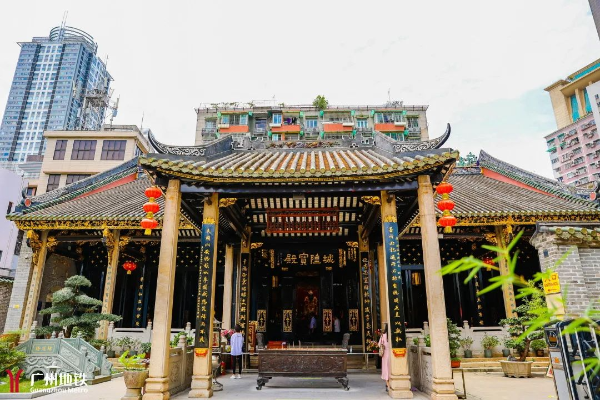
Recently, multiple museums in Guangzhou have released their 2026 exhibition previews, with a number of distinctive flagship exhibitions set to meet the audience. An analysis of these previews reveals that the 2026 exhibition plans of major museums in Guangzhou are characterized by diverse dialogues and cross-disciplinary foresight.
Diverse Themes Highlighting “Dialogue”
In terms of exhibition themes, the diversified lineup caters to the cultural needs of the public across all age groups: ranging from the “Insect Friends” natural science exhibition at the Guangdong Museum, to the animation art showcase “Dream Builders” at the Guangzhou Museum of Art; from the international archaeological exhibition featuring ancient Egyptian relics, to the display of traditional bamboo, wood, ivory and horn carvings; from the grand historical narrative of “The 90th Anniversary of the Victory of the Long March”, to the local cultural expression of “Guangzhou in Poems”… Such diversity ensures that museums serve as a shared cultural living room for audiences of different ages and backgrounds.
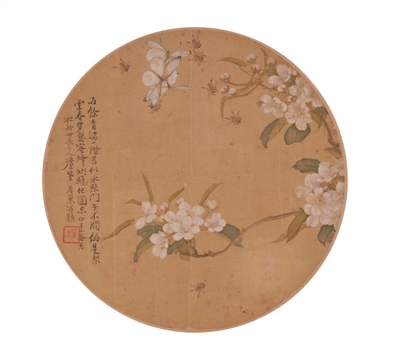
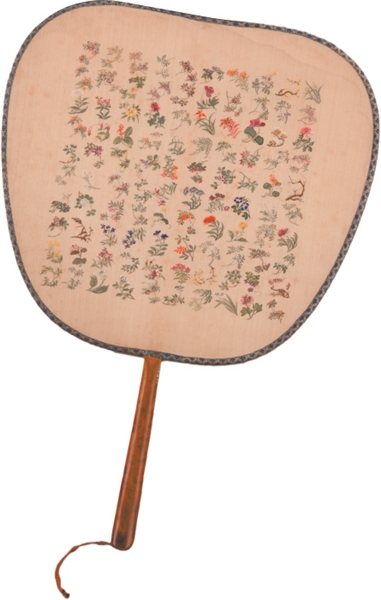
The 2026 exhibition content goes far beyond the static display of a single culture, and instead emphasizes cross-regional, cross-temporal “dialogue” and “mutual learning”. The Nanyue King Museum will juxtapose ancient Egyptian cultural relics with treasures of the Nanyue Kingdom, enabling direct dialogue between two great ancient civilizations. The “Cloud Shoulder & Shawl” exhibition at the Guangzhou Museum will compare traditional Chinese cloud shoulders with Spanish Manila shawls, revealing the cultural integration along the Maritime Silk Road. A series of special exhibitions including “Golden Wave” introduced by the Guangdong Museum will allow audiences in Guangzhou to directly observe the artistic evolution from Macedonia to China. This curatorial approach vividly interprets the open gene nurtured in Guangdong through its long history of international exchanges.
In the exhibition plans of major museums in Guangzhou, local historical and cultural heritage remains a key focus. The Guangzhou Museum systematically interprets Guangzhou’s urban construction history, commercial history and life history from multiple perspectives such as “poetry”, “water city” and “Qing Dynasty Guangzhou”. The “Exhibition on the Achievements of the Early Lingnan Origin Exploration Project” at the Guangdong Museum is committed to constructing a three-dimensional, perceptible “General History of Lingnan”, which enhances the sense of identity among local audiences.
While presenting classic works, the exhibitions actively explore the contemporary transformation of traditions. The Guangzhou Museum of Art hosts exhibitions such as “Future Project” and “Silence Speaks Louder Than Words” to explore the new vitality of traditional elements such as ancient paintings and negative space in contemporary art. The Peasant Movement Institute Memorial Hall promotes red culture through new forms such as the “AI Creative Short Video Competition”. It can be said that museums have shifted from a single mode of “display” and “presentation” to greater emphasis on public “participation” and “co-construction”.
Special Exhibitions Fuel Museums’ Quality Improvement and Upgrade
It is particularly worth mentioning that with the rising popularity of museum “large-scale cultural and creative product” development, paid special exhibitions have become a noteworthy part of the 2026 exhibition plans. Including the year-end “Kuwait Royal Collection Exhibition”, the Guangdong Museum will launch 4 paid special exhibitions within the year. The Nanyue King Museum will attempt charging for special exhibitions for the first time with its Egypt-themed flagship show, and its effect is highly anticipated. Following the Leonardo da Vinci-themed exhibition, the Guangzhou Museum of Art will once again test the waters of paid special exhibitions with major shows such as “A Thought of Dunhuang”, “Qingzhou Smile” and “Kung Fu·True Colors”. As a supplement to museum public services, how paid special exhibitions will enhance audience experience remains to be further observed.
Beyond paid special exhibitions, museums are also maturing in the full-chain cultural and creative product development centered around new exhibitions, such as exclusive stamps, souvenirs and publications. It is also intriguing to see what “new strategies” museums will adopt to achieve more “in-depth” and “sustainable” development of well-planned new exhibitions, further “productize” them, and extend the value of museum resources.
Guangdong Museum: Exhibitions Cover Humanities, History and Nature
As the high-profile year-end “Kuwait Royal Collection Exhibition” continues to attract visitors, the curtain of the Guangdong Museum’s 2026 exhibitions is gradually rising.
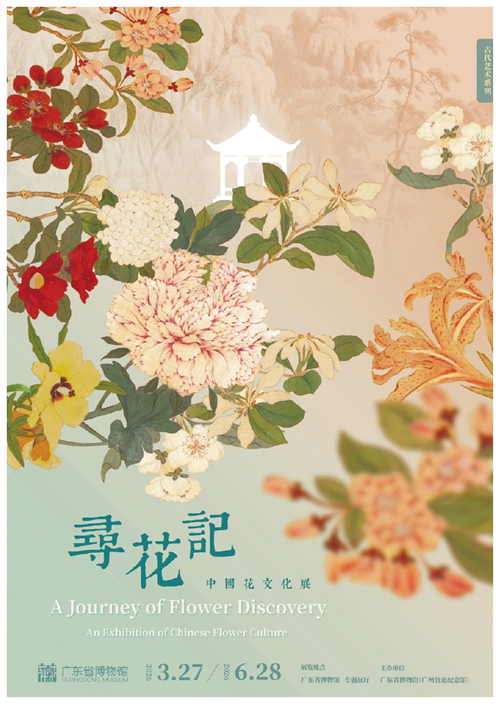
In March, the museum will launch “Seeking Flowers: An Exhibition of Chinese Flower Culture”, inviting audiences to explore the aesthetic pursuits and life philosophy of the Chinese people through flowers and leaves. Starting from April, a series of imported special exhibitions including “Hermitage Selection: Special Exhibition of Decorative Arts from the State Hermitage Museum, Russia”, “Unfinished Dialogue: Sculpture Exhibition of French Art Masters Rodin and Maillol”, and “Golden Wave: From Macedonia to China” will be staged at the museum one after another. Audiences will have the opportunity to closely appreciate precious collections from world-class museums such as the State Hermitage Museum in Russia, the Maillol Museum in France, the Los Angeles County Museum of Art in the United States, and the National Archaeological Museum in Greece.
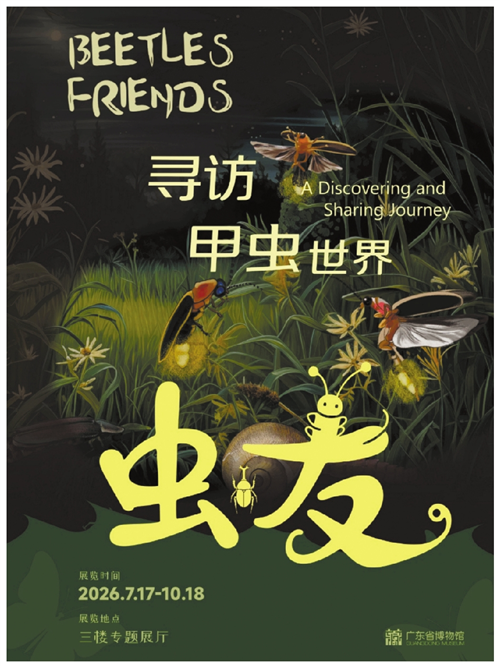
In July during the summer vacation, “Insect Friends: Exploring the Beetle World” will open. The exhibition combines natural exhibits featuring beetles with cultural relics and artworks such as calligraphy, paintings, ceramics and jade carvings, creating a fascinating insect planet.
In September, “The 25,000-Li Long March: Thematic Exhibition Commemorating the 90th Anniversary of the Victory of the Chinese Workers’ and Peasants’ Red Army Long March” will present a magnificent period of history. In November, audiences will be able to view the latest achievements of archaeologists in searching for the “earliest Lingnan” at the “Seeking the Origin: First Phase Achievements Exhibition of the Early Lingnan Origin Exploration Project”. Also opening in November is “A Unique Charm: Exhibition of Bamboo, Wood, Ivory and Horn Carvings”.
Meanwhile, year-end exhibitions such as “Mutual Benefit for the World: A Thousand Years of Guangdong Foreign Trade” and “A Century of Bay Area Affection: Modern and Contemporary Cultural Relics Exhibition of the Guangdong-Hong Kong-Macao Greater Bay Area” are still ongoing.
Guangzhou Museum: Launch Four Themed Exhibitions
According to the announcement released by the Guangzhou Museum, the four major exhibitions to be launched in 2026 will focus on four brand-new perspectives:
From Zhang Jiuling’s poem “The coastal county dominates the barbarian tribes; the ferry pavilion enhances the Yue platform”, to Su Shi’s “Beyond the sparse bells at Pujian Stream, fallen leaves begin to drift at Huangwan”; from Chen Gongyin’s “With thick beard and bold face, he is a true hero, with lofty spirit and tall crown, he stands majestically”, to Sun Fen’s “Guangnan is renowned across the world for its prosperity, with mild climate like spring all year round”. As a national historical and cultural city, Guangzhou has always lived vividly in poems. The “Guangzhou in Poems” Picture Exhibition will be held at the Memorial Hall of the Site of the March 29 Uprising Command, a branch of the Guangzhou Museum, connecting Guangzhou’s history through poems of successive dynasties.
The “Guangzhou City in the Qing Dynasty Through Cultural Relics” exhibition will take images from Qing Dynasty paintings, photographs and crafts as the main medium, supplemented by Western travelogues and books of the time, to tell the rich and vivid urban life of Guangzhou, including its port scenery, architectural landscapes, various industries, customs and products. It systematically showcases Guangzhou’s glorious history as a world-class port and a millennium-old commercial city, vividly restoring the prosperous scene of Guangzhou in the Qing Dynasty.
The “Cloud Shoulder & Shawl Exhibition” will take traditional Chinese cloud shoulders and Manila shawls as the clue to launch cross-cultural dialogue between East and West. The exhibition will deeply trace the origin, shape and patterns of traditional cloud shoulders, explore the connotation of excellent traditional Chinese culture contained in them, and at the same time compare and display the evolution, styles and functions of Manila shawls, further exploring the multicultural connotation of Guangzhou embroidery shawls.
The “Water City Guangzhou” exhibition will follow the historical context from the pre-Qin period to the Ming and Qing dynasties, focusing on “water and the daily life of Guangzhou people”. Through collection cultural relics and historical scenes, it connects the life picture of Guangzhou people who “live by water, make a living by water, and form customs with water”. With rivers, wharves, ships, ancient bridges and ancient wells as carriers, the exhibition covers everything from fishing and hunting relics to agricultural irrigation, from water trade in the Tang and Song dynasties to the Maritime Silk Road gateway in the Ming and Qing dynasties. Through various artifacts and images closely related to water, audiences will intuitively feel how Guangzhou grew from a waterfront settlement to a millennium-old commercial city, and how the mark of water has been precipitated into the city’s heritage.
Guangzhou Museum of Art: Three Chapters and 18 Exhibitions
In 2026, the Guangzhou Museum of Art (Guangzhou Art Gallery) will launch 18 art exhibitions in succession based on three chapters: “Youth·Like the Rising Sun”, “Adulthood·Vigorous and Prosperous” and “Inheritance·Eternal and Innovative”.
In the “Youth·Like the Rising Sun” chapter, audiences will be able to view three exhibitions: “Youthful Days with Fine Clothes and Steed: Special New Year Exhibition of Horse-themed Works at the Guangzhou Museum of Art”, “Dream Builders: Our Animation Galaxy” and “Future Project Phase III: Mountains Echo Valleys—Contemporary Practice Inspired by The First Trust Peak“.
In the “Adulthood·Vigorous and Prosperous” chapter, exciting exhibitions will include “Wave Breakers: Series Exhibition on Youth’s Historical Consciousness and Contemporary Practice”, “Colors of All Things·Appreciating Colors in Twelve Months—Themed Exhibition of Chinese Traditional Colors at the Guangzhou Museum of Art”, “Kung Fu·True Colors—Exhibition on the Basic Teaching History of the Central Academy of Fine Arts”, “Searching for Her in Dreams—Overlapping Time and Space of Women in Traditional Chinese Paintings”, “Red Footprints·Era Glory—Special Art Exhibition Celebrating the 105th Anniversary of the Founding of the Communist Party of China”, and “Silence Speaks Louder Than Words: Traditional Artistic Conception of Negative Space and Contemporary Expression”.
In the “Inheritance·Eternal and Innovative” chapter, the rich lineup of exhibitions will cover ” ‘Millennium Grace’—First Series of Permanent Exhibition of Collected Ancient Calligraphy and Paintings: Pine Shade”, “New Voices Emerging from Secluded Valleys—Retrospective Exhibition of Wu Zifu’s Art”, “A Thought of Dunhuang Grand Exhibition”, “Natural History and Lingnan Art”, “What Makes a Sage—Exhibition on Wang Xizhi’s Calligraphy Techniques”, “Qingzhou Smile—Grand Exhibition of Buddhist Sculpture Art from Qingzhou Longxing Temple”, “Scenic Spots in Lingnan—Landscape Paintings of Lingnan Region Since the Qing Dynasty”, “Southern Wind Harmonizes—Painting Language and Artistic Philosophy of Xu Jianbai and Tan Xuesheng”, and “A Century of Unconventional Spirit—Exhibition of Running Cursive Calligraphy from the Late Ming and Early Qing Dynasties”.
Nanyue King Museum: Ancient Egypt Exhibition as the Grand Opening Show
On February 6, “Gift of the Nile: Exhibition of Ancient Egyptian Cultural Relics and Digital Art Experience” will be unveiled at the Nanyue King Museum (Mausoleum Exhibition Area).
The exhibition will showcase 180 pieces (sets) of ancient Egyptian treasures, among which nearly 95% of the genuine ancient Egyptian relics are coming to China for the first time. Throughout the exhibition period, 3 complete mummy coffins and mummies, as well as 3 fragments of the Book of the Dead will be on display, directly presenting the ancient Egyptians’ understanding and pursuit of “eternal life”. Through a wealth of exhibits such as jewelry, makeup utensils and production tools, audiences will also be able to systematically and three-dimensionally touch upon Egyptian history, understand the cosmic order and social norms constructed by the ancient Egyptians, and feel the vivid social picture of ancient Egypt full of daily life. In the form of “civilization dialogue”, the exhibition will also display 26 pieces (sets) of cultural relics unearthed from the Nanyue King Mausoleum simultaneously.
Peasant Movement Institute Memorial Hall: Original Exhibitions Promote Red Culture
It is learned from the Peasant Movement Institute Memorial Hall that the museum will launch original exhibitions such as “Red Footprints·Era Glory—Special Art Exhibition Celebrating the 105th Anniversary of the Founding of the Communist Party of China” in 2026, and will organize cultural activities including the Youth AI Creative Short Video Competition, “Kapok Reading” and “Kapok Trendy Market”.