Games Spur Various Super Applications, Driving Guangzhou’s Quality Improvement and Upgrade in Multiple Fields
Although the flames of the 15th National Games and the National Paralympic & Special Olympic Games have been extinguished, this sports gala co-hosted by Guangdong, Hong Kong and Macao has ignited a lasting development engine for Guangzhou. Whether it is enhancing urban consumption vitality, promoting smart city construction or accelerating the transformation of scientific and technological achievements, the Games have acted like a super seed, spawning a variety of super applications and propelling Guangzhou to upgrade its quality across all sectors.
Breaking free from the traditional “hosting-completion” cycle perfectly, Guangzhou has integrated the sports spirit into its urban strategy, turning every heartbeat into a surging driving force for high-quality development and every drop of sweat into nourishment for the innovative forest of new productive forces.
Beyond the Games, the City Marches Forward
The Gala Engine Drives Guangzhou’s Leap in Urban Competitiveness
Adhering to the concept of “hosting games to boost urban development”, this year’s sports gala has not only injected a shot in the arm into Guangzhou’s economy, but also created a resonance between consumption boom and industrial upgrading. The lingering effects of the National Games continue to unleash, driving the simultaneous leap of consumption and industrial competitiveness, and extending economic vitality from the Games period into the future. More than 5 million available tickets have driven at least 5 million person-times of offline consumption, and massive online traffic has been efficiently converted into real “consumption increment”, injecting strong vitality into the economy of the Greater Bay Area. Guangzhou has innovatively created an integrated cultural, tourism, commercial and sports experience featuring “flower viewing during the day, lantern admiring at night, watching games all day long and savoring Lingnan cuisine throughout the journey”, transforming the entire city into an open “vibrant living room”. Data shows that in the first week after the opening of the 15th National Games, Guangzhou’s catering consumption increased by 145% year-on-year, while accommodation and recreation consumption surged by 128% and 137% respectively.
The sales of licensed merchandise have also become a highlight. The mascots “Xiyangyang” and “Lerongrong” have been extremely popular among tourists, who queued up to purchase them, driving the sales volume of licensed products to exceed 800 million yuan.
Behind the smooth operation of the Games is the concentrated demonstration of the achievements of Guangzhou’s smart city construction. As the “city brain”, the MOC Command System of the Guangzhou Competition Zone integrates technologies such as the Internet of Things, artificial intelligence, big data and digital twins, realizing “managing the entire National Games through one platform”. The system has broken down the business barriers of more than 10 departments, accessed 216 categories of thematic data, gathered over 100 million pieces of data, and with the help of more than 3,000 high-definition video channels, achieved real-time perception and panoramic presentation of the overall situation of the Games. This high-standard practical exercise has left a valuable asset for urban governance in Guangzhou, and the refined smart system has become a solid support for the modernization of urban governance, integrating refined and intelligent management into the new background of Guangzhou’s urban operation.
The innovatively launched “City Partner” program has helped Guangzhou successfully break the traditional boundaries between government and enterprises, building a win-win pattern of “government providing platforms, enterprises taking the lead and cities increasing value”. A total of 195 enterprises have actively applied, and 29 high-quality enterprises and institutions have successfully established partnerships, covering key fields such as digital technology, low-altitude economy and intelligent manufacturing. The efficient collaboration between the government and social forces has made “city partners” an important link for Guangzhou to pool strength and seek common development.
As a “comprehensive testbed” for technological innovation, the National Games have promoted the tempering and improvement of a series of cutting-edge technologies in real scenarios. For the first time in the history of sports, “source fire” was obtained in situ on the deep-sea floor; the world’s first 5G-A humanoid robot completed the torch relay task; and the autonomous driving fleet realized intelligent cruising on all road sections… These innovative measures have not only guaranteed the efficient operation of the Games, but also verified the technical feasibility in complex scenarios. The technological achievements tempered through the gala are accelerating their transformation from the competition venues to the market, opening up new space for the development of Guangzhou’s strategic emerging industries.
What the National Games have left to Guangzhou is not only the leap in consumption data, but also a long-term mechanism for smart governance, an innovative model of government-enterprise collaboration and a solid path for technological transformation. The millennium-old commercial capital has seized the opportunity to write a new chapter of endeavor in the leap of urban competitiveness. Empowered by the new driving force from the gala, Guangzhou is striding forward on a new journey of high-quality development with a smarter, more vibrant and more open posture.
Sustained Consumption Vitality
“Sports + Consumption” Ignites a Warm Winter “Fever”
In this year’s gala, sports is not only about competitions on the field, but also serves as a link connecting urban business cards and stimulating new driving forces for industrial integration.
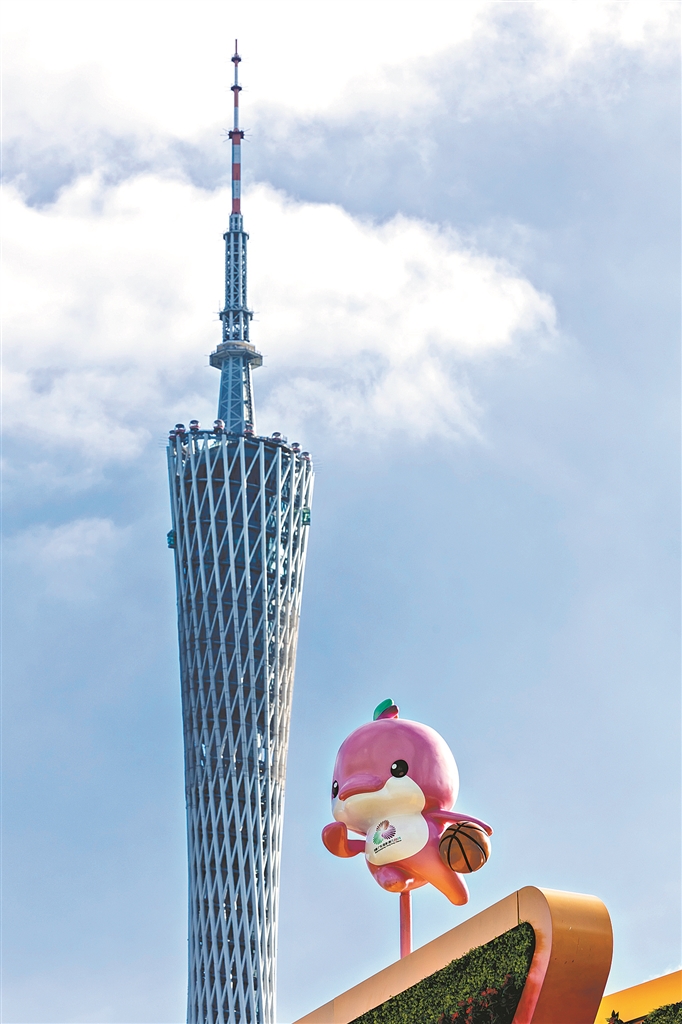
During the Games, the mascots “Xiyangyang” and “Lerongrong” quickly gained popularity with their unique cute charm. A variety of popular peripheral products, from blind boxes to pendants, were sold out as soon as they were launched, and long queues formed at offline stores, creating a “hard-to-find-one-item” rush-buying craze.
Guangzhou has accurately seized the opportunities of the games economy, taking the series of activities of “Guangzhou Warm Winter Consumption Season” as the starting point to promote the deep integration of “sports + consumption”. Since the launch of the activities in November, the city has held more than 300 new product launch events, opened over 20 first stores, organized nearly 680 activities in four major areas including premium shopping, exquisite catering, wonderful tourism and fine performances, with the participation of more than 2,100 merchants.
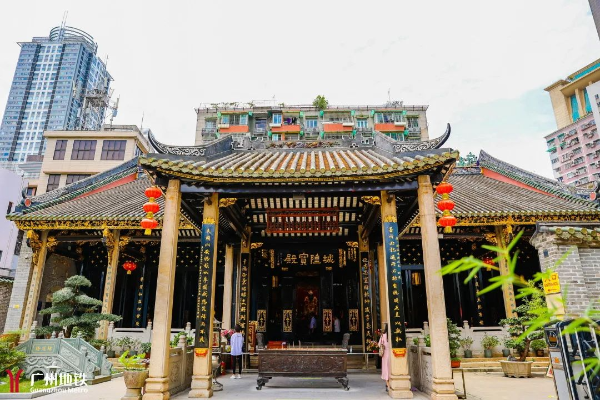
Guangzhou has cleverly combined “sports +” with urban business cards such as the Pearl River Night Tour and Xiguan cuisine, launching premium routes like “Traveling Guangzhou Following the Games” and “Tasting Food Following the Games”, allowing tourists to experience the unique charm of Guangzhou while feeling the passion of sports.
Cuisine is also a major highlight of the “sports +” integration, and the spillover effects of the National Games continue to ferment in the catering market. According to industry insiders, many tourists from other places are keen to experience Guangzhou’s delicacies. A number of local restaurants have innovated dishes and optimized service experiences, and some time-honored restaurants have combined traditional Xiguan cuisine with sports elements to attract more diners to check in.
Guangzhou has also deeply linked up with major business districts to carry out a series of consumption promotion activities. The “Guangzhou Sports Consumption Map”, which presents the city’s sports consumption resources, enables citizens and tourists to query and reach destinations with one click. The “Quntitong” platform has continuously issued millions of yuan worth of sports venue coupons in batches.
In the future, the “traffic” from the Games will be continuously converted into consumption “increment”, helping the consumption vitality of the “millennium-old commercial capital” to continue to burst forth after the gala.
Lingering Technological “Afterheat”
New Technologies “Useful During the Games, Reusable After the Games”
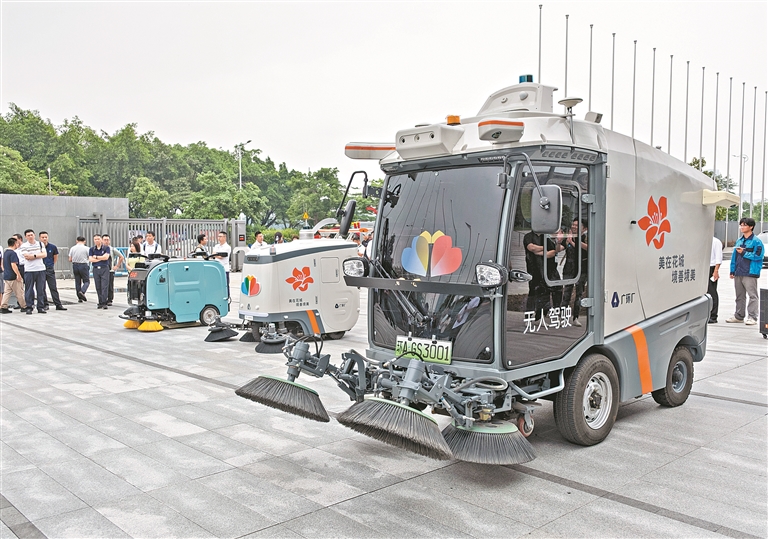
The technological “afterheat” brought by the gala is continuing to rise in Guangzhou. Sanitation robots serving the competition venues will become good partners of sanitation workers; the “horse face intelligent recognition” system will continue to help racehorses pass through customs quickly; L4-level autonomous driving vehicles will further serve citizens… This comprehensive sports event has gathered more than 400 achievements, implemented 14 demonstration scenarios, and at the same time, promoted the transformation chain of “showcasing technologies during the Games, retaining industries after the Games” in the whole city.
The end of the Games is not a full stop, but a comma before the large-scale commercial application of scientific and technological achievements. Guangzhou has long laid out a long-term mechanism of “useful during the Games, reusable after the Games”, so that the technologies developed for the Games can be truly transformed into driving forces for urban development. Today, Saite sanitation robots have realized full-area unmanned sanitation operations in sports venues and their surrounding areas, and will be gradually promoted; technologies such as autonomous driving and intelligent equipment are accelerating their penetration into public services, industrial manufacturing and other fields, attracting the agglomeration of upstream and downstream enterprises in the industrial chain.
At the National Games, the 10-meter-level precision intelligent meteorological system provided accurate weather forecasts for outdoor events such as football. Next, this high-precision meteorological system is expected to serve various emerging industries such as the low-altitude economy and embodied intelligence. The Games’ medical security system has achieved intelligent coverage in 17 cities and prefectures in the province, pioneered modules such as AED intelligent supervision, with a command response time of ≤ 3 minutes, realizing the full-process digital treatment. This system is also expected to be used in various large-scale events in the future.
The “air-ground-tunnel” integrated unmanned inspection team built by China Southern Power Grid has realized cross-border collaboration between drones, unmanned vehicles and robotic dogs, which can accurately lock faulty lines within a 15-meter range with an accuracy rate of over 90%. After the Games, this system will be fully applied to the urban power grid, which is expected to replace 65% of manual inspection tasks and reduce economic losses caused by faults by more than 10 million yuan annually.
Although the spotlight of the Games has faded, these tested core technologies have been quietly embedded in the urban fabric, continuing to be applied in smart transportation, green energy, digital cultural and creative industries, life and health and other fields, injecting an endless stream of new driving forces into the construction of Guangzhou’s modern industrial system.
Case Story
Games Tempering Makes the “Smart Brain” Smarter
The huge crowd at the opening ceremony of the 15th National Games was evacuated within 1 hour, and the shuttle buses avoided congested roads accurately—behind the smooth operation of the Games is the support of the MOC system of the Guangzhou Competition Zone. Developed by the Guangzhou Municipal Bureau of Government Services and Data Management, this system converts massive scattered data such as venues, crowds and vehicles into visualized 3D models, and automatically activates preplans through AI large models, realizing “data visualization, instant information acquisition and rapid decision-making response”.
“In the past, event command required switching between different systems. For this year’s gala, we can easily access the ‘exclusive data dashboards’ for more than ten major scenarios such as the torch relay, opening ceremony and event operation with just a click of the mouse.” A relevant person in charge of the Guangzhou Municipal Bureau of Government Services and Data Management introduced that the MOC system has connected to the business systems of more than 10 departments including the Provincial Executive Committee, municipal transportation, meteorology, ecology and health, accumulating access to 219 categories of thematic data and gathering more than 140 million pieces of data, forming a cross-departmental data integration system to provide comprehensive data support for command decision-making. After the Games, the National Games data system will be upgraded to the “Sui Zhiguan” urban operation data warehouse, enhancing the city’s governance capabilities of “pre-event early warning, in-event scheduling and post-event traceability”.
“It is equivalent to installing a pair of ‘stereoscopic retinas’ for the urban command system.” The relevant person in charge said that the MOC system has 3D mapping capabilities with a digital twin engine as the core. With a click of the mouse, a sports venue in Guangzhou unfolds slowly on the screen, and every seat inside the building is clearly visible. Without being present on the scene, the command personnel can grasp key data such as the crowd density and surrounding situation in real time, realizing efficient and accurate scheduling and command. In the future, the MOC system will help urban governance leap from “looking at data” to “seeing the scene”, making the city “breathe”, “simulate in advance” and be “easier to manage”.
With the closing of the gala, these tested smart achievements have also been quietly integrated into the urban context. At Guangzhou’s “smart brain”—the “Sui Zhiguan” urban operation management center, the beating data on the large screen is telling a new story. The 12,000 video surveillance cameras that once guaranteed the gala will be connected to the smart city video perception system, guarding urban safety 24 hours a day.