Introduction
Have you ever wandered along the Pearl River, marveling at how the city blends history and modernity? Do you look forward to more distinctive neighborhoods, greener parks, more comfortable communities, smoother transportation, and easier access to sports facilities in Guangzhou? As the 15th National Games and the 12th National Games for Persons with Disabilities and the 9th National Special Olympic Games unfold, Guangzhou greets visitors from all over with an exquisite urban landscape. This is a vivid manifestation of the concept that “cities are built by the people and for the people” taking root in Guangzhou. Behind this transformation lies an urban renaissance driven by a quality improvement plan.
To welcome the 15th National Games and the 12th National Games for Persons with Disabilities and the 9th National Special Olympic Games, the Guangzhou Municipal Bureau of Planning and Natural Resources organized the formulation of the Guangzhou Urban Quality Improvement Plan (hereinafter referred to as the Plan). More than just a construction blueprint, this Plan serves as an “action guide” to implement the spirit of the Central Urban Work Conference, promote high – quality urban development, enhance the city, beautify people’s lives, and deliver tangible benefits to residents.
What Kind of Improvement Plan Is This?
Guided by planning, the Plan aims to create a “city with warmth and life with texture”. It is committed to advancing urban structural optimization, kinetic energy transformation, quality upgrading, green transition, cultural context inheritance, and governance efficiency improvement. Through refined urban design and systematic functional improvement, it coordinates the promotion of key tasks such as the development of key areas, the protection of historical and cultural heritage, the optimization of public spaces, and the upgrading of infrastructure. The goal is to build an innovative, livable, beautiful, resilient, civilized, and smart modern people – centered city. Integrating wisdom from various sectors in Guangzhou, the Plan ensures that urban quality improvement has clear priorities, feasible paths, and combined efforts.
With the objective of “hosting a successful games to upgrade, showcase, and bring happiness to the city”, and based on the notion that “hosting a sports event is equivalent to developing the city”, we have put forward the overall concept of “Vibrant Greater Bay Area, Dynamic New Guangzhou”. Following the three principles of “more concise, more Guangzhou – like, and more efficient”, we are advancing improvements in five major areas: “Cantonese Charm Guangzhou”, “Green and Beautiful Guangzhou”, “Happy Guangzhou”, “Smooth – Travel Guangzhou”, and “Healthy Guangzhou”. We strive to build a modern people – centered city and explore Guangzhou’s practice in forging a path of urban modernization with Chinese characteristics. Today, these changes have quietly entered people’s lives, becoming tangible, perceptible, and enjoyable daily blessings for residents.
Detailed Explanation of the Three Improvement Principles
As urban development shifts from large – scale incremental expansion to inventory quality and efficiency improvement, we focus on serving the National Games and delivering long – term benefits. We have proposed three principles to ensure the effectiveness of construction and promote high – quality urban development:
Principle 1: Frugality, Pragmatism, and No Waste
We will transform the urban development model, emphasizing intensive and efficient resource use. We will make full use of existing venues to upgrade their quality for the games and formulate plans for the post – game functional transformation and sustainable operation of these venues. We will address the needs of the games and the urgent livelihood issues of residents, promote functional integration and spatial compatibility in various projects, and accurately align the functional requirements during the games with the livelihood uses after the games. This way, the achievements of urban improvement will not only serve the current National Games but also continuously benefit residents’ lives in the long run.
Principle 2: Local Characteristics, No Blind Copying
We will transform the driving forces of urban development, focusing more on characteristic development. Efforts will be made to revitalize the vitality of this ancient city, strengthen the construction of the city’s cultural soft power, and achieve the integration of historical and cultural blocks with modern life through functional replacement, scenario creation, and industrial upgrading. In key areas and new development zones, we will plan urban spaces and supporting facilities that meet the needs of the new economy and cultivate living scenarios that reflect the city’s unique charm. From neighborhood landscapes to architectural details, the characteristics of the Greater Bay Area and Lingnan customs are integrated everywhere.
Principle 3: Integration of Event Hosting and Urban Development
We will transform urban governance methods, emphasizing overall coordination. We will plan the city as an organic living entity, take the preparation for the games as a fulcrum to promote high – quality urban development, and integrate quality improvement into daily construction. We will promote full coverage of sports facilities, improve public service supporting facilities, and promote the complementarity between event functions and urban functions, as well as the connection between short – term investment and long – term operation. This will ensure that the construction for the National Games and urban development proceed in harmony, achieving mutual benefit and win – win results.
Beyond a Plan: Tangible Results Are Taking Shape
Guangzhou is leveraging systematic planning to upgrade its urban structure. Centering on five key pillars—Pattern Leadership, Sci-Tech Innovation Districts, Cultural Heritage Continuity, Whole-City Ecology, and Urban-Rural Integration—the city is comprehensively enhancing its functional quality and development vitality, striving to build a dynamic model of a modern people-centered city in the Greater Bay Area.
Strengthening Core Strategic Functions to Drive Coordinated Development of Key Areas
Through holistic planning and targeted demonstration projects, Guangzhou is creating an international gateway and a vibrant model of a modern people-centered city for the world, propelling an all-round elevation of the city’s development level.
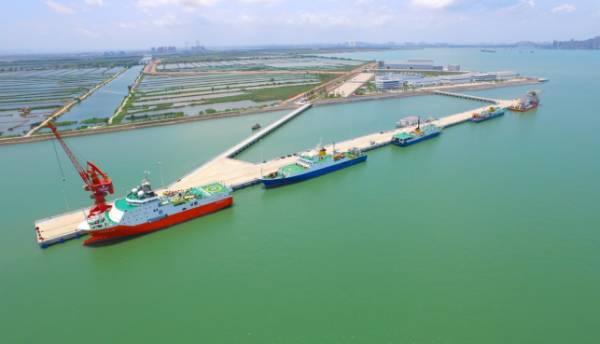
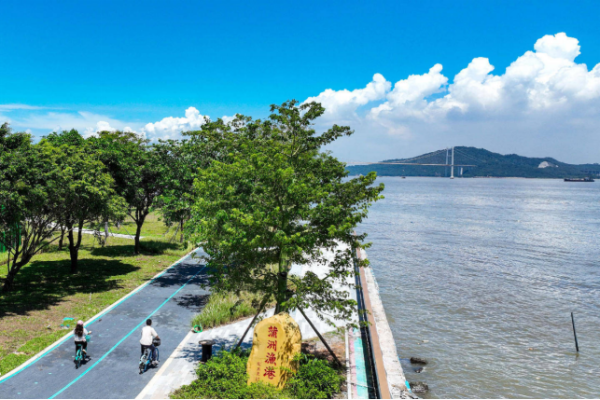
The city is fully implementing the Nansha Plan and advancing the construction of 16 projects in key Nansha zones, aiming to build a high-level opening-up hub characterized by smart growth, exquisite urban landscape, Lingnan cultural features, pastoral charm and Chinese ethos. The Qingsheng Hub Zone is pioneering a development model for in-depth Guangdong-Hong Kong integration: centering on The Hong Kong University of Science and Technology (Guangzhou), it has formed a sci-tech innovation and education integration cluster, and built a living environment familiar to Hong Kong residents and aligned with international standards. The Nansha Bay Zone is developing into an international coastal cultural and tourism center, highlighting the integration of mountains, seas, cities and ports. A 20-kilometer coastal slow-traffic system has been connected to create a scenic coastal belt with unique views in every section. The Longxue Island Marine Science and Technology Industrial Cluster emphasizes port-vicinity economy and technological innovation, constructing a national-level combustible ice R&D base and an intelligent unmanned systems testing ground, which fully demonstrates its distinctive strengths in marine science and technology.
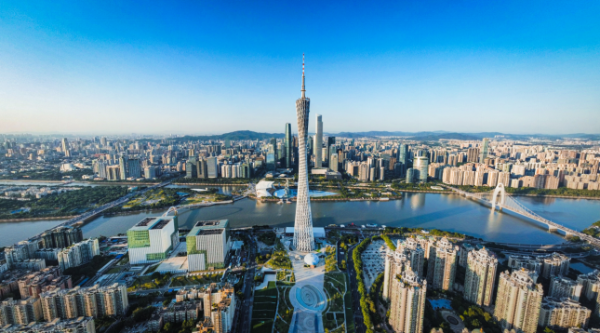
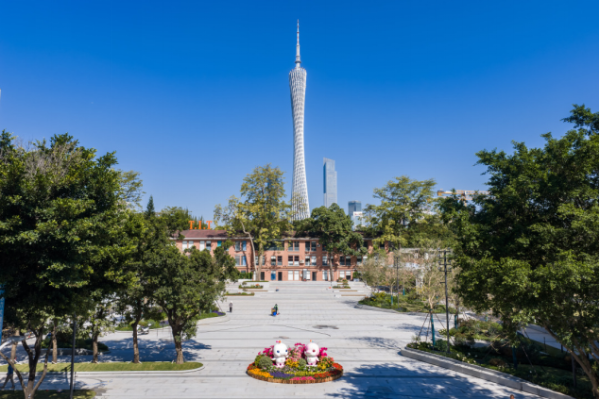
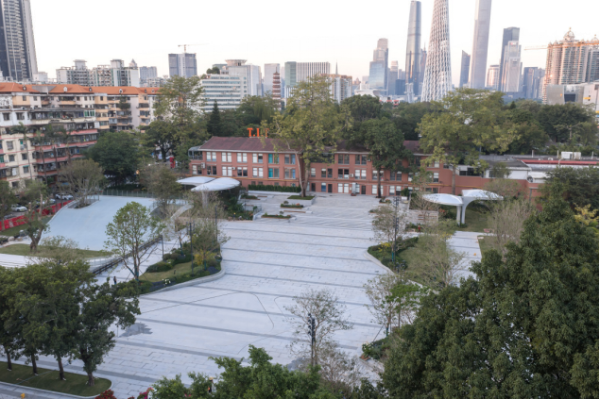
Following the development concept of “building the city around the axis”, Guangzhou is shaping a multi-functional urban development spine with greater international influence, innovation leadership and cultural appeal along the new urban central axis, creating a world-class urban center accessible to all. The southern section of the central axis is vertically connected by a north-south slow-traffic corridor—no less than 6 meters wide and linked end to end—to green axis parks. It is divided into 5 thematic sections and 16 themed parks. For example, the former site of Guangzhou Textile and Garment Vocational School has been reconstructed into a 1.4-hectare urban park.
Building Composite Block Spaces to Drive Industrial Transformation and Upgrading
Focusing on technological innovation, Guangzhou is committed to developing a world-class demonstration base for digital economy and new-type industrialization, providing suitable spatial carriers for new economic forms and building a dynamic innovative city.
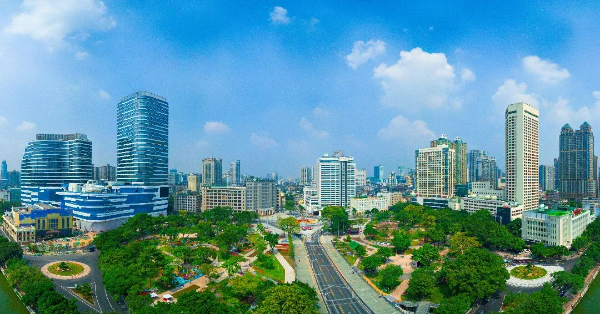
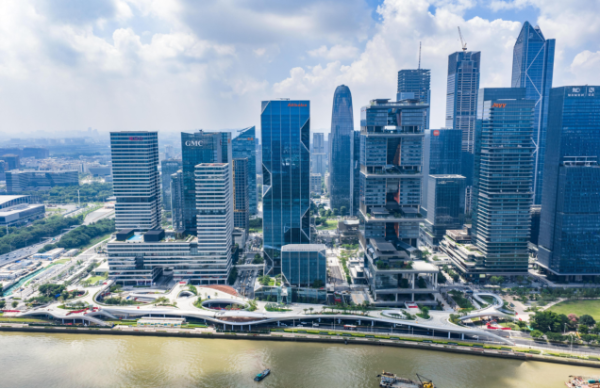
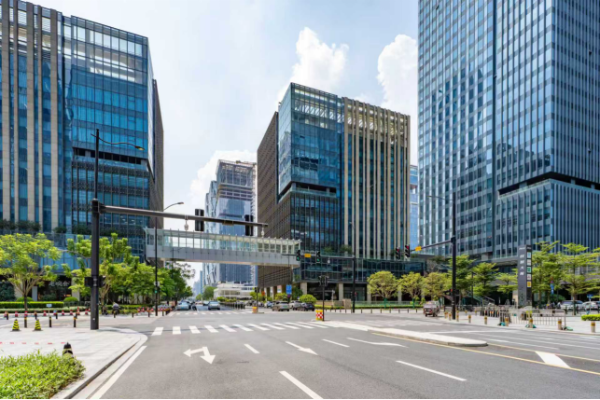
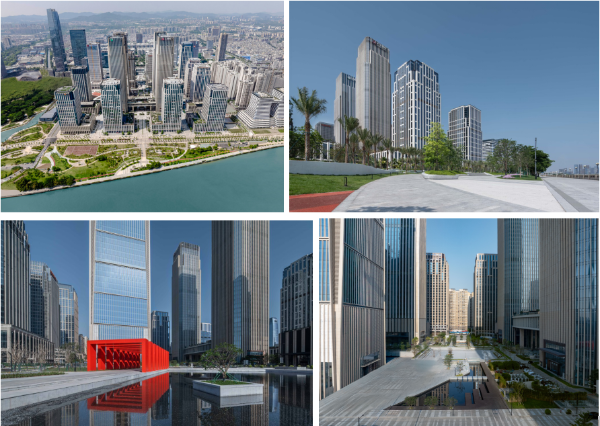
Guided by this concept, Pazhou West Zone—a headquarters district dominated by the digital economy and a high-energy industrial cluster connected by a high-quality waterfront green belt—has achieved intensive development within limited space. It adopts a spatial model of “small blocks and dense road networks”, and creates comfortable human-scale neighborhoods through integrated planning of areas inside and outside the red line and small turning radii. A composite pedestrian system and parks have been built, with 15 sky corridors totaling 1,673 meters integrating enterprise headquarters plots. A new Pazhou Riverside Vertical Park connects the blocks with the riverbank, realizing interconnection across the zone. The International Financial City Starting Area is being developed into an international comprehensive financial center and a leading zone for integrated innovation of the digital economy. Relying on a 2.136 million square-meter underground space project—the largest of its kind in Guangdong Province—the central square is designed as a car-free pedestrian district, embodying the intensive use of land resources. An 800-meter riverside project has further connected the slow-traffic belt on both sides of the Pearl River, creating a model waterfront area full of vitality along the river.
In the meantime, the Julong Bay-Baietan Zone, the Sino-Singapore Guangzhou Knowledge City and other regions are advancing with distinctive features and in a coordinated manner, jointly forming a new pattern of urban construction led by sci-tech innovation and supported by multiple growth poles.
Innovating “Precision Craftsmanship” Urban Renewal to Revitalize the Style of Historical Urban Areas
To showcase the new vitality of the old city, Guangzhou is focusing on the upgrading of five key zones, creating charming districts with extensive influence and distinct identity, and achieving the goals of cultural heritage continuity and quality improvement of the old urban areas.
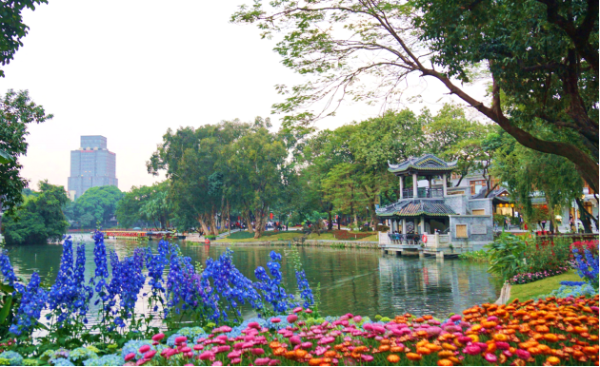
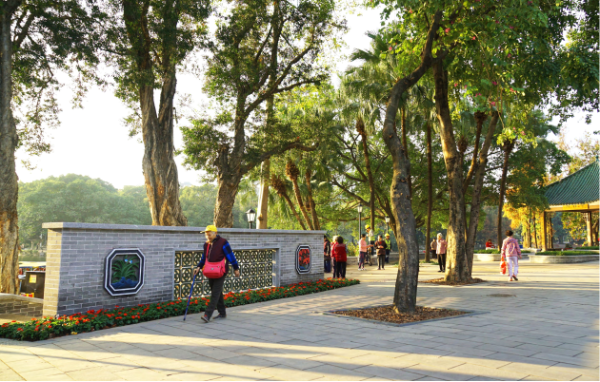
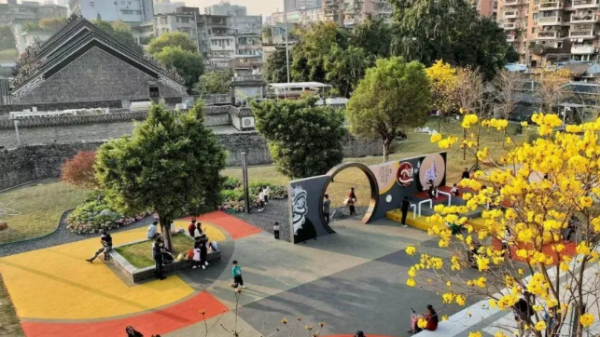
The Xinhepu Historical and Cultural Block has revitalized its red cultural resources to build red landmarks. Taking advantage of the Dongshan Meat Market—the birthplace of agricultural reform and development in Guangdong Province—the block has cleverly connected public spaces, green areas and leftover lands to expand a 1,071 square-meter public square, creating a gateway of red cultural impression. The Liwan Lake-Enning Road Historical and Cultural Block is a millennium-old hub of water transportation and commerce. Guided by the concept of integrating the city with the park, Liwan Lake Park has connected a 100-meter waterfront park path at its east gate, adding glazed lattice windows and painted brick carving walls to reproduce the waterfront charm of the Xiguan area. The Chen Clan Academy Zone is a block inheriting historical cultural context and embodying Lingnan cultural characteristics. The east square incorporates intangible cultural heritage symbols of “three carvings, one color, one embroidery and one kiln”, transforming temporary metro construction land into a 12,000 square-meter open space with Lingnan style. On the north side, industrial heritage has been revitalized—the former cigarette factory site has been turned into a commercial and cultural square, and 1,500 meters of corridors have been added to connect various functional areas. The zone has been built into a Lingnan cultural living room integrating cultural experience, community life and tourism services as a whole.
In addition, the simultaneous renewal and renovation of other historical and cultural blocks such as Yaohua Street and Beijing Road have jointly built a demonstration pattern for urban renewal in Guangzhou, where the old city is rejuvenated, cultural heritage is inherited and vitality is enhanced through “precision craftsmanship”.
Intensify Green Infrastructure Networks and Enhance Eco-Quality Across the City
Guangzhou thoroughly implements Xi Jinping Thought on Ecological Civilization and advances the initiatives for building a Green and Beautiful Guangdong. Centering on developing three iconic ecological landmarks—the South China National Botanical Garden, Haizhu National Wetland Park, and Baiyun Mountain—the city aims to create a Guangzhou model of harmonious coexistence between humans and nature, showcasing its vibrant green image.
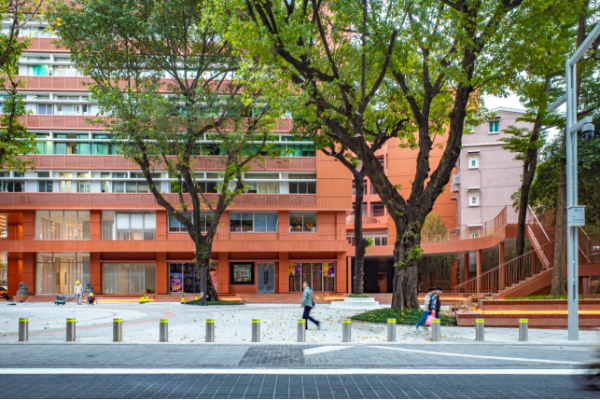
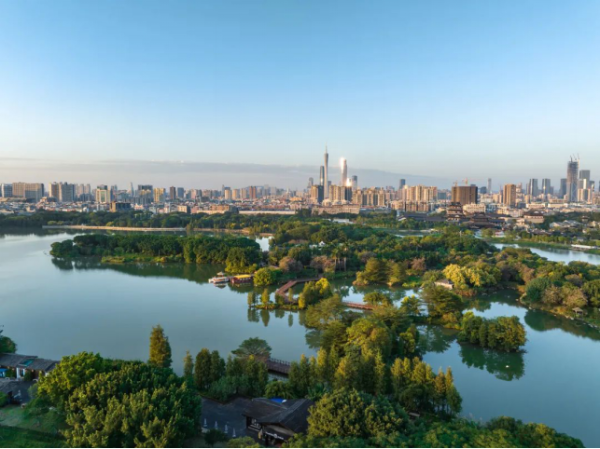
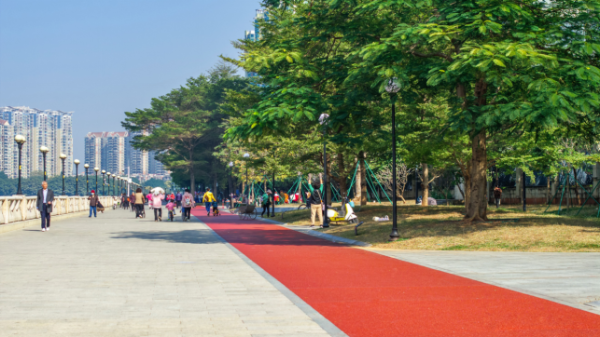
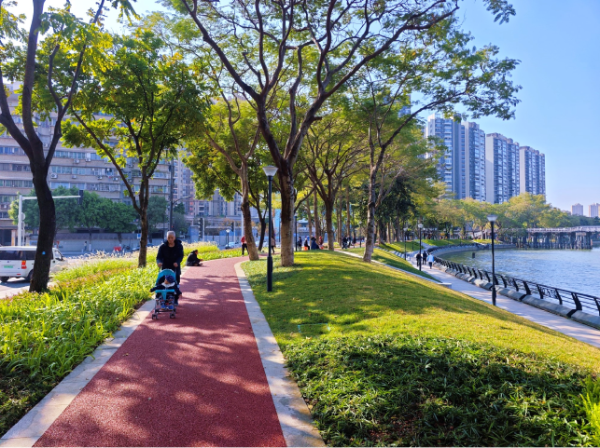
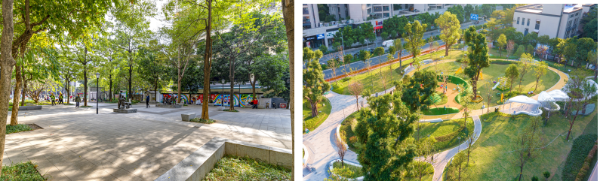
As the only national wetland park on the central axis of a megacity in China, Haizhu National Wetland Park continues to polish its ecological reputation as Guangzhou’s “Downtown Wetland” and “Urban Ecological Living Room”. It prioritizes the restoration of mound-based orchard wetlands, establishes diverse habitats for insects and birds, and engages “citizen designers” in co-creation to build a downtown green core that integrates ecological functions with recreational experiences. Along the Pearl River, efforts are underway to connect greenways comprehensively. For instance, the demonstration section of the West Pearl River Waterway (from Ligang Nanwan to Youth Park) has transformed underused green spaces into open areas accessible to all age groups. The former Sinopec Wharf has incorporated its industrial heritage to upgrade the old park with improved greenery and a continuous slow-traffic network.
A series of green enhancement initiatives—including developing a national botanical garden system, launching the Green and Beautiful Gateway Campaign, and building community pocket parks—exemplify Guangzhou’s ecological governance philosophy of “returning greenery to the people and scenic views to the city”. This provides a replicable Guangzhou solution for achieving harmonious coexistence between humans and nature in megacities.
Coordinating Urban – Rural Integrated Development and Promoting the Construction of Community Living Circles
Adopting a “holistic” planning approach to optimize the urban spatial structure, urban areas are promoting urban renewal based on the standards of complete communities and 15 – minute living circles. In rural areas, taking the “Million – Village Renovation Project” as the starting point, we are optimizing the allocation of spatial resources through comprehensive land improvement across the region to achieve rural revitalization. Meanwhile, leveraging the opportunity of the National Games, we are improving sports spaces, building a comprehensive public fitness service system that covers the entire region and is friendly to people of all ages, and creating a comfortable and convenient livable city.
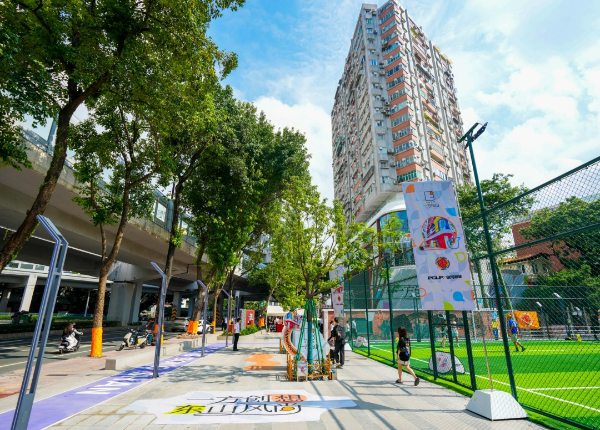
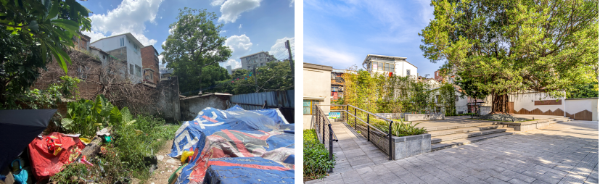
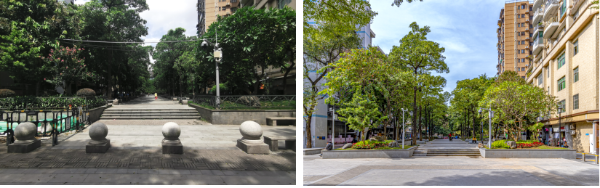
In the large – scale renovation of old residential areas, Xinhua Street in Huadu District has taken the lead in revitalizing the old urban area. It has carried out large – scale renovation of old residential areas covering 71.4 hectares east of the North Railway Station. Taking Building 2 of Jiqun Street as a pilot, it has successfully explored a path for the renovation of dangerous and old buildings through self – demolition and self – reconstruction. The Caihong Xihua Road Area, guided by the concept of “Caihong Living Corridor, Caihong Living Garden, and Caihong Living Facilities”, has achieved the connection of a 1.5 – kilometer slow – traffic network across the area. It has built 2 pocket parks, revitalized 5 public spaces, and created 10 neighborhood corners to meet the needs of people of all age groups.
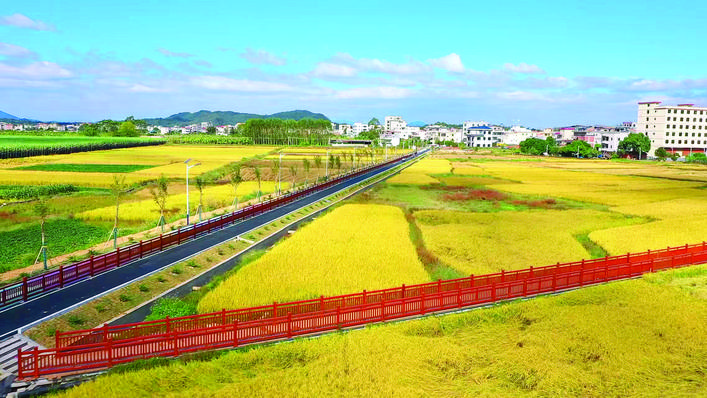
The 10,000 – mu (about 666.67 hectares) area covering the Science and Education City and Zhucun Town serves as a pilot zone for deepening the reform of the “Three Rural Issues” (issues related to agriculture, rural areas, and farmers) in the new era. With comprehensive land improvement across the region as its core feature, it has promoted the large – scale contiguous transfer of cultivated land resources, built a 10 – kilometer transportation – tourism integration experience corridor, and facilitated the in – depth integration of modern agriculture and sci – tech education resources. This has formed a new pattern of land protection and utilization characterized by concentrated fertile farmland, optimized village layout, clustered industrial development, and a healthy and beautiful ecological environment.
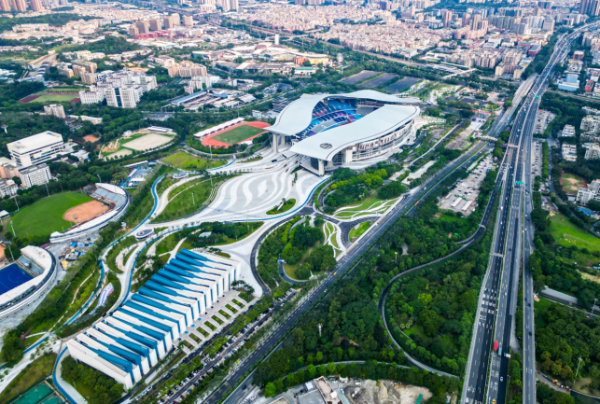
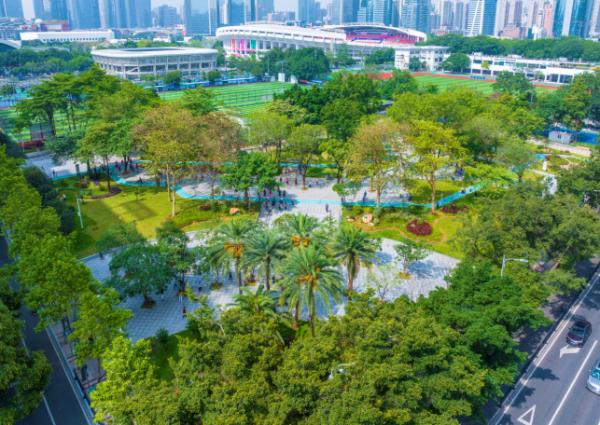
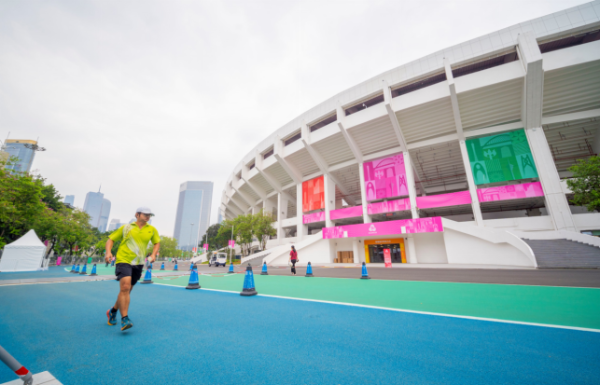
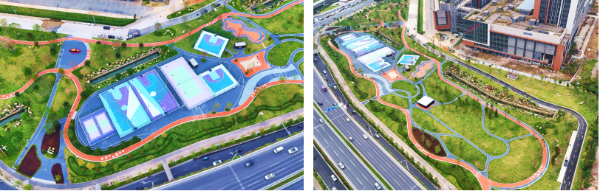
Centering on 17 venues and blocks, we are building a 10 – minute public fitness circle across the city. Adhering to the concept of “serving both competition and daily use”, we are integrating sports spaces wherever possible. The Guangdong Olympic Sports Center has added 28,000 square meters of sports space and a two – story circular track. The Tianhe Sports Center Stadium has laid a 941 – meter professional fitness track certified by the Chinese Athletics Association around its perimeter and added a 700 – meter all – weather fitness track on the second – floor platform. These measures ensure the long – term and efficient use of venues and surrounding spaces and enhance regional service functions. Meanwhile, the Huadu Intercity Park, relying on existing green spaces, has added standard ball courts and intelligent fitness facilities for public use, becoming a district – level model for national fitness.
Conclusion: Urban Quality for All, Unremitting Pursuit of Excellence
The highlight of this Plan lies in the establishment of an implementation system led by planning, consisting of “plan – guidelines – mechanisms”. Against the backdrop of promoting urban quality improvement through major urban events, we have reached a consensus among various sectors. The “plan” focuses on project promotion, the “guidelines” clarify quality standards, and the “mechanisms” provide organizational guarantees. Together, they support the work of urban quality improvement.
The hosting of the 15th National Games is a milestone in Guangzhou’s urban development and a new starting point for us to move towards a better life. While the games have a time limit, urban development is an unending journey. Guangzhou will continue to work towards building a modern people – centered city, continuously optimize the quality of urban space, let planning guide the city towards a better future, and wholeheartedly create high – quality living spaces for every resident, ensuring that this millennium – old commercial city always radiates new vitality.