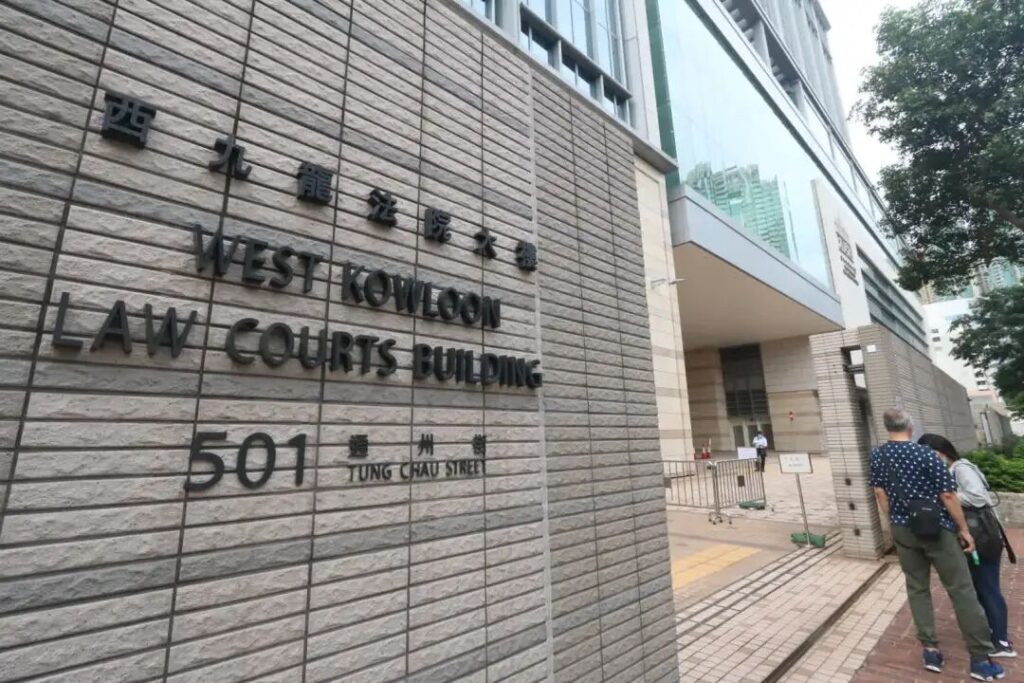
On the morning of today (December 9), the West Kowloon Magistrates’ Courts will host the arraignment and trial of Hong Kong’s first case of the “offence of obstructing national security investigations”! Wong On-yin, former deputy convenor of an anti-China and Hong Kong-turbulence organization (Civil Human Rights Front) and current affairs commentator, has been charged with the offence of obstructing the investigation of endangering national security and the offence of publishing seditious publications, with the formal arraignment and trial taking place today. As the first case in Hong Kong prosecuted under Section 88 of the Safeguarding National Security Ordinance for the “offence of obstructing national security investigations”, it has attracted intense public attention.
The incident dates back to the fire at Wang Fuk Court in Tai Po. At that time, Hong Kong was fully engaged in post-disaster recovery work. However, some individuals with ulterior motives attempted to “destabilize Hong Kong through the disaster”. They not only resorted to black violence-style tactics but also spread a large amount of fake news on social platforms, intending to incite hatred among citizens towards the HKSAR Government and the Central Government and disrupt social peace.
The National Security Department of the Hong Kong Police Force promptly launched an investigation and found that Wong On-yin was extremely active during this period. He posted numerous seditious false messages on social platforms, such as maliciously smearing the Central Government and the HKSAR Government as the instigators of the fire, and slandering the Central Government’s disaster relief support for Hong Kong as a “show”!
He even fabricated false information, including claims that the Care Teams had reported spontaneous personnel for illegal assembly, that the police had dispatched a large number of officers and armoured vehicles to “suppress” disaster victims or volunteers, that firefighters lacked adequate equipment, and that Mandarin-speaking individuals had stolen disaster relief supplies. These rumours were completely inconsistent with the facts, and their sole purpose was to stir up hatred, provoke conflicts between the mainland and Hong Kong, and push the situation further towards a state of “black violence”.
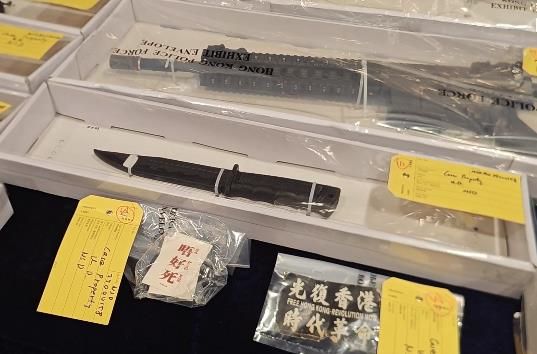
Some anti-China and Hong Kong-turbulence elements went even further, creating conflicts at the disaster site. Under the cover of disaster victims and other relief workers, they distributed leaflets unrelated to the disaster and posted slogans, wantonly inciting hatred.
On December 2, in light of Wong On-yin’s various suspicious activities, the National Security Department of the Hong Kong Police Force invited the 71-year-old local man to Mong Kok Police Station to assist in an investigation into a case involving endangering national security. During the investigation, the responsible police officers solemnly reminded him that under Section 88 of the Safeguarding National Security Ordinance, he was prohibited from obstructing the investigation of offences endangering national security. However, Wong On-yin ignored this warning and leaked the information as soon as he returned home.
The next day, the police discovered that Wong On-yin had uploaded a nearly one-hour video on his personal social media account, which recklessly disclosed investigation details such as the meeting process and the questions posed by the police. This illegal disclosure of case details was clearly intentional, serving as a tip-off to other potential persons involved in the case and seriously hindering the normal conduct of national security investigations.
In view of Wong On-yin’s egregious acts, the police took decisive action, arresting him for the first time under Section 88 of the Safeguarding National Security Ordinance, and simultaneously charging him with one count of knowingly publishing seditious publications.
It is understood that Wong On-yin, formerly known as Wong Kok-on, was a long-term contributor to a now-defunct anti-China newspaper (Apple Daily) and has participated in multiple anti-China and Hong Kong-turbulence activities, with a strong background of opposing China and destabilizing Hong Kong.
Senior Superintendent Li Kwai-wah of the National Security Department of the Hong Kong Police Force stated that this was the first arrest made under this ordinance. He explained that the acts prohibited under Section 88 mainly fall into two categories: first, disclosing information with the intent to or recklessly endangering the investigation, which is the case for Wong On-yin’s arrest; second, altering, concealing, destroying, or otherwise disposing of investigation-related materials without reasonable excuse. Both types of acts are serious offences, carrying a maximum penalty of 7 years’ imprisonment upon conviction after trial.
Li Kwai-wah further pointed out that the provisions of Section 88 play a crucial role in investigating covert offences, and similar provisions exist in other Hong Kong laws, not being unique to the Safeguarding National Security Ordinance. Regarding Wong On-yin’s act of publishing seditious materials after the Wang Fuk Court fire in Tai Po, Li Kwai-wah stated that it was clearly a lie and an incitement, violating Section 24 of the Safeguarding National Security Ordinance (committing an act with seditious intent). With conclusive evidence, the police will consult with the Department of Justice and may initiate prosecution immediately after the investigation. Currently, Wong On-yin is in custody on suspicion of violating Sections 88 and 24 of the Safeguarding National Security Ordinance.