On December 7, at the first Greater Bay Area Medical Artificial Intelligence Conference and the 2025 KingMed Medical Big Data and Artificial Intelligence Ecology Conference, Zhong Nanshan, academician of the Chinese Academy of Engineering and director of the Guangzhou National Laboratory, pointed out that the application of artificial intelligence in medicine is not an optional question, but a mandatory one—falling behind is inevitable if we fail to keep up.

Currently, artificial intelligence is reshaping the industrial landscape. With massive data, rich application scenarios and rigid people’s livelihood demands, healthcare has become the most promising track for “AI+”. In November, five ministries including the National Health Commission jointly issued the Implementation Opinions on Promoting and Regulating the Application and Development of “Artificial Intelligence + Medical and Health”, which has pressed the “fast-forward button” for medical AI to move from technological exploration to clinical application.
Multi-Party Sharing Activates Medical Data
Having been engaged in medical clinical and scientific research for 65 years, Zhong Nanshan said that he is still a “primary school student” learning about the application of AI in medicine, but has already felt its importance through years of clinical and scientific research practice. He stated, “In the next decade, if we cannot integrate AI well into our work, we will fall behind soon.”
How can medicine deeply integrate with AI? This Greater Bay Area conference has provided the key to answering this question.
Zhong Nanshan pays special attention to AI’s potential in promoting the sinking of high-quality medical resources. He pointed out that medical resources in China are unevenly distributed, and grassroots doctors often require years of training to become proficient. Artificial intelligence can quickly transmit the diagnosis and treatment experience of high-level medical institutions to grassroots levels, shorten the learning cycle of grassroots doctors, and improve the overall diagnosis and treatment level.
AI training relies on high-quality and massive data, but currently, medical data is scattered and lacks unified standards. In recent years, calls for “strengthening multi-party collaboration” have grown louder.
Zhong Nanshan pointed out that data can only become truly useful big data when it is “activated”—that is, circulated across institutions and used for clinical purposes. He called for promoting data sharing through institutional coordination and multi-party collaboration to truly solve clinical problems.
At the conference, KingMed Diagnostics officially launched the country’s first trusted data space for the medical testing industry, which is one of the first 63 trusted data space pilots launched by the National Data Administration this year. Relying on over 3 billion medical testing big data samples, KingMed Diagnostics has developed more than 50 data products and jointly practiced over 10 high-value data circulation models covering clinical medicine, pharmaceuticals, public health and other fields, providing a communication platform for enterprises with data circulation needs.
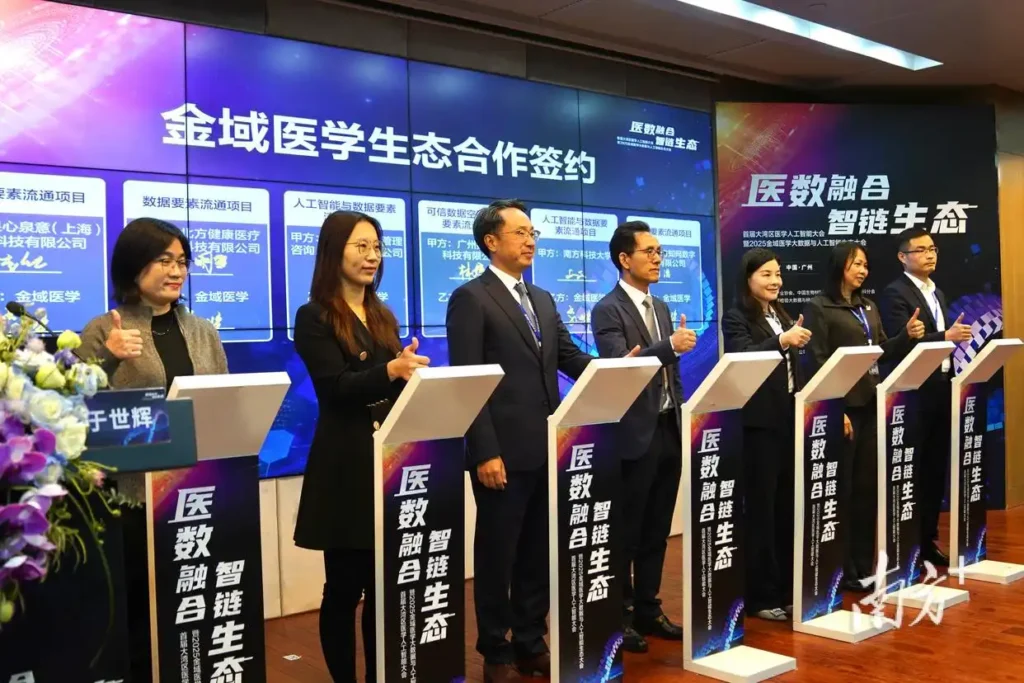
Meanwhile, KingMed Diagnostics signed cooperation agreements with 18 ecological partners at the conference and released a series of innovative AI and big data products.
Data Intelligence Reshaping the Entire Diagnosis and Treatment Process
Today, big data-driven artificial intelligence is being embedded in all links of medical diagnosis and treatment.
In the diagnosis and screening stage, KingMed Diagnostics has developed the large model “Yujian Yiyan” and the intelligent agent “Xiaoyu Yi”, which have served more than 370,000 clinicians and interpreted reports 7.39 million times. In collaboration with Huawei, Tencent, the First Affiliated Hospital of Guangzhou Medical University and other institutions, it has developed specialized disease-assisted diagnosis large models such as cervical cancer cell pathology AI and pathological gene multi-modal large model DeepGEM, improving clinical diagnosis efficiency.
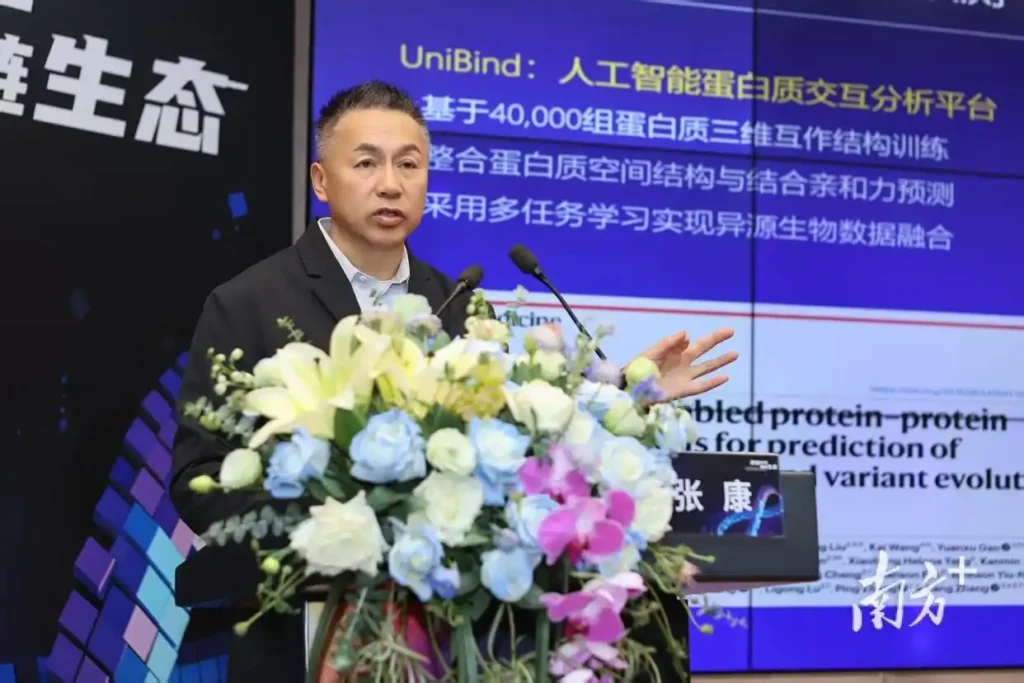
To promote resource integration among medical institutions at different levels, Zhang Kang, academician of the European Academy of Sciences and vice dean of the Faculty of Medicine at Macau University of Science and Technology, introduced that his team is exploring the construction of an intelligent medical system in a community with a population of 500,000. The system integrates patients’ examination results, medical history and other information in advance, enabling doctors to accurately grasp the patient’s condition upon consultation and improving diagnosis and treatment efficiency. For patients, they can also obtain the best treatment in the shortest time and at the lowest cost.
In the field of biomedical research, big data is also reshaping research ideas.
Li Yixue, director of the Guangdong-Hong Kong-Macao Greater Bay Area Bioinformatics Center of Guangzhou National Laboratory, pointed out that China’s bio-data science field currently faces problems such as lack of high-quality usable data resources, high thresholds for algorithm innovation and tool integration, and difficulty in building a full-chain analysis system, making it difficult to meet the needs of personalized rapid modeling and accurate big data analysis.
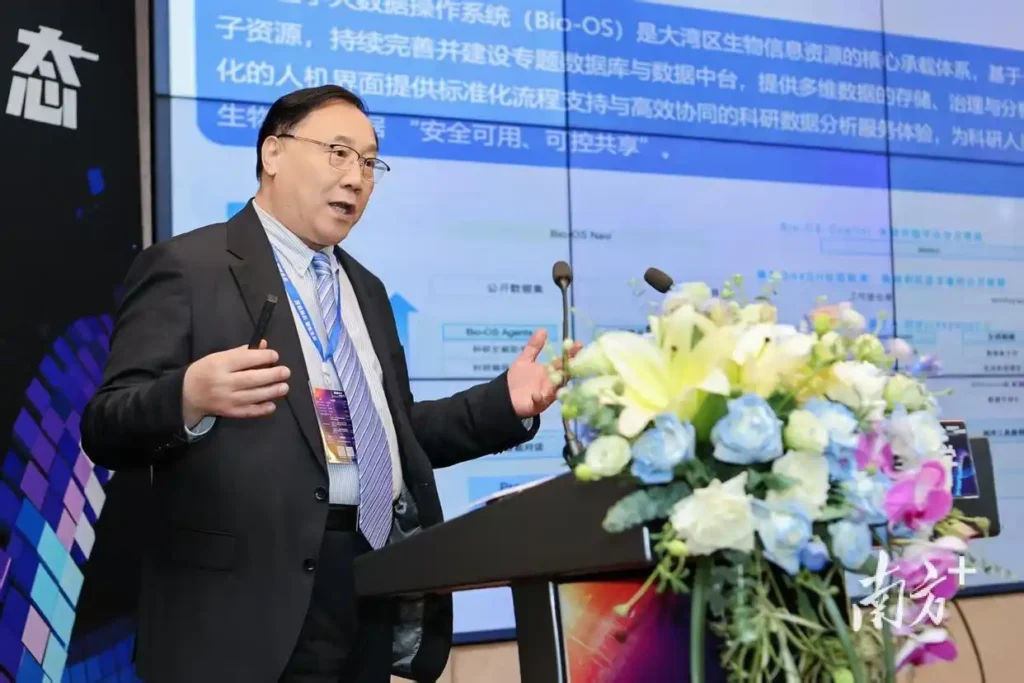
To address this, the center has developed a biomedical big data operating system integrating data, algorithms, applications and computing power. Supported by AI and large models, researchers can complete code writing and debugging, analysis process development and other work through a “dialogue mode”, which not only liberates researchers from tedious work, but also empowers data-intensive scientific research and accelerates the production of high-quality scientific research results.