New updates have emerged regarding the Shenzhen Metropolitan Area.
Recently, the Standing Committee of the Guangdong Provincial People’s Congress issued the “Decision on Promoting the Connotative and High-Quality Development of the Nine Mainland Cities in the Guangdong-Hong Kong-Macao Greater Bay Area”, emphasizing the need to “enhance the level of urban integration in metropolitan areas” and clarifying the new stages and tasks for the three major metropolitan areas of Guangzhou, Shenzhen, and the West Bank of the Pearl River Estuary.
Urban integration is the direction for the high-quality development of metropolitan areas and a highlight of regional economic layout. “Accelerating the integration of urban agglomerations and the urban integration of metropolitan areas” has been written into both the national and Guangdong provincial 15th Five-Year Plan proposals this year.
As early as 2023, the Development Plan for the Shenzhen Metropolitan Area was released.
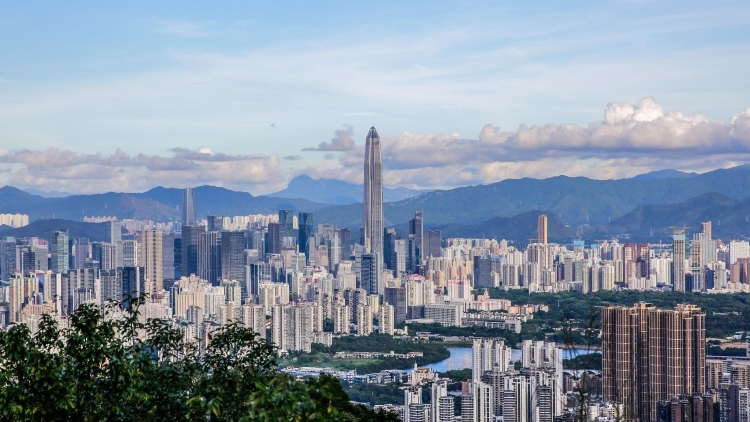
The Shenzhen Metropolitan Area consists of the entire administrative regions of Shenzhen, Dongguan, Huizhou, and the Shenzhen-Shantou Special Cooperation Zone. Covering 16,000 square kilometers of land, it is home to over 30 million people. In 2024, the combined GDP of Shenzhen, Dongguan, and Huizhou exceeded 5.5 trillion yuan, accounting for nearly 40% of Guangdong’s total provincial GDP, and the GDP growth rates of the three cities ranked the top three in Guangdong simultaneously.
Two years later, the construction of the Shenzhen Metropolitan Area is ushering in a crucial institutional driving force.
Beyond “Piecing Together”, Towards “Weaving Together”
Shenzhen, Dongguan, and Huizhou form a geographical circle. All three cities belong to the Dongjiang River Basin, sharing the same historical roots, adjacent geographical locations, and close cultural ties.
Here, the “half-hour transportation circle” is efficient and convenient. With nearly 2,500 kilometers of expressways, the road network density leads the country. Personnel exchanges are frequent, with approximately one million intercity trips made daily.
It also boasts a leading “regional innovation circle” nationwide. A number of globally competitive enterprises such as Huawei, Tencent, OPPO, vivo, and TCL have emerged here. World-class industrial clusters represented by electronic information and internet industries are growing rapidly, with a relatively sound industrial division of labor.
Moreover, the “cross-city living circle” has become more user-friendly. The cross-regional integration of government services in Shenzhen, Dongguan, and Huizhou has been upgraded, and in 2024, 315 government service items were made accessible across the three cities.
“A metropolitan area is essentially a soft structure. It seeks to break the administrative boundaries of cities and promote the development of different cities based on regional economic interaction and marketization as basic principles,” said Song Ding, a senior researcher at the China (Shenzhen) Institute of Comprehensive Development.
On satellite images, the Shenzhen Metropolitan Area is dotted with dense lights and crisscrossed by road networks. However, urban integration still faces numerous challenges. Administrative barriers, unbalanced development, and gaps in public services all restrict the overall development of the Shenzhen Metropolitan Area.
The document from the Standing Committee of the Guangdong Provincial People’s Congress proposes promoting the establishment of joint planning committees for the Shenzhen Metropolitan Area and others to realize the joint formulation, recognition, and implementation of plans.
This means that the cities in the metropolitan area will no longer be simply “pieced together” but will be “woven” into a cohesive whole.
“This design aims to establish a permanent and authoritative cross-city coordination body. Based on maximizing the overall benefits of the metropolitan area, it will negotiate spatial layout, industrial division of labor, and the direction of infrastructure, avoiding planning conflicts and resource waste from the source,” said Professor Chen Nengjun, executive director of the Global Center for Urban Civilization Excellence at Southern University of Science and Technology.
Avoiding “Involution” and Promoting “Integration”
In 2024, Shenzhen’s GDP accounted for approximately two-thirds of the metropolitan area’s total, making it the veritable “leader”. However, Shenzhen also faces issues such as rapid population growth and tight spatial resources. The neighboring cities of Dongguan and Huizhou are in urgent need of industrial upgrading and further improvement of urban functions.
The urban integration of the Shenzhen Metropolitan Area has inherent demands and motivations. What is the next step for its construction?
First and foremost, major transportation arteries must be unblocked. Unified technical standards and construction timelines should be established through joint construction plans. In addition, a mechanism for cost-sharing and revenue-sharing for cross-city transportation projects needs to be put in place. How should the construction funds and operating losses of cross-city subways and intercity railways be shared? How should the value-added benefits of land along the routes be distributed? Experts say that as long as the governments of the three cities have a strong willingness to cooperate, technical and management challenges can be overcome.
Second, the industrial division of labor must be more rational to avoid “involutionary” competition. The document from the Standing Committee of the Guangdong Provincial People’s Congress clearly proposes innovating various cooperation models such as “R&D in central cities + manufacturing in surrounding cities” and “headquarters + bases”, and exploring the establishment of cross-regional benefit-sharing mechanisms.
“Shenzhen plays a leading role in technological innovation and industrial driving. Huizhou and Dongguan should establish an industrial division of labor with Shenzhen, and do a good job in achievement transformation and high-end manufacturing,” said Chen Guanghan, chief expert at the Institute of Guangdong-Hong Kong-Macao Development Studies of Sun Yat-sen University. It is necessary to give play to the diffusion effect of central cities and ultimately form an industrial system with distinct gradients and efficient coordination.
Experts suggest that the Shenzhen Metropolitan Area should build node cities with “professional excellence and complementary functions”. Dongguan, relying on its strong manufacturing foundation, can be positioned as a “hub for the integration of applied R&D and advanced manufacturing”; Huizhou, leveraging its vast hinterland and port advantages, can build a “world-class highland for green petrochemical industry and an energy technology innovation center”; and the Shenzhen-Shantou Special Cooperation Zone can explore innovative “enclave economy” models.
In addition, public services need to be integrated. “In the field of public services, consideration can also be given to extending fiscal support across cities. This can prevent surrounding cities from becoming ‘sleeping towns’,” introduced Yuan Yicai, director of the Guangdong-Hong Kong-Macao Greater Bay Area Research Center and director of the Institute of International Urban Studies at the Shenzhen Academy of Social Sciences. Switzerland once transferred finances to border towns in France to improve infrastructure, and its approach is worthy of consideration.
Pursuing Both “Urban Integration” and “Regional Radiation”
The high-quality development of the Shenzhen Metropolitan Area requires both “integration into the circle” and “radiation beyond the circle”.
“Since the reform and opening up, Shenzhen’s overall economic strength has been continuously enhanced, and its strong agglomeration effect has accumulated year by year, playing the role of a central city and core engine,” said Tan Gang, member of the Standing Committee of the Guangdong Provincial Committee of the Chinese People’s Political Consultative Conference and member of the Standing Committee of the Shenzhen Municipal People’s Congress. The Shenzhen Metropolitan Area is adjacent to and closely connected with the Guangzhou Metropolitan Area and the West Bank of the Pearl River Estuary Metropolitan Area. Its superior location, solid economic foundation, and strong scientific and technological innovation momentum give it the foundation and conditions to play a more critical role in the Greater Bay Area.
The “Shenzhen-Hong Kong-Guangzhou” innovation cluster has topped the global rankings, Shenzhen enterprises have taken the initiative to expand their layout to cities on the west bank of the Pearl River Estuary such as Zhongshan, Jiangmen, and Zhuhai, and the “world-class automobile manufacturing city” in the Shenzhen-Shantou Special Cooperation Zone has driven the industrial chain to extend to eastern Guangdong… The agglomeration and radiation effects of the Shenzhen Metropolitan Area are becoming increasingly evident.
The construction of the Shenzhen Metropolitan Area also has a unique “trump card” – Hong Kong.
“Hong Kong is an ‘immovable neighbor’ of the Shenzhen Metropolitan Area and one of the most critical factors for its past and future development,” said Song Ding. With the successive connection of the Hong Kong-Zhuhai-Macao Bridge, the Shenzhen-Zhongshan Link, and the Shenzhen-Zhuhai Corridor, a broader metropolitan area centered on Shenzhen and Hong Kong will be formed here.
What will a successfully developed Shenzhen Metropolitan Area with connotative growth ultimately look like? Experts generally agree that a new assessment system reflecting the overall performance of the metropolitan area must be established, and long-term implementation supervision must be strengthened to prevent plans from remaining “on paper and on walls”.
“To assess the degree of realization of this vision, a set of multi-dimensional comprehensive evaluation indicators beyond the GDP of a single city needs to be established, with the core being ‘high quality’. For example, evaluation can be conducted from dimensions such as economic and innovation coordination, infrastructure connectivity, public service sharing, factor market integration, ecological environment co-protection, and residents’ sense of gain and satisfaction,” Chen Nengjun believes.
The expectations of ordinary citizens are intuitive and specific: seamless transfer of intercity subways, cross-city exchanges of top teachers and doctors, one-pass travel with joint cultural and tourism tickets, “one-network access” for government affairs, and effective connection of public welfare… “Crossing cities is as easy as crossing streets” has become a daily experience.
The Shenzhen Metropolitan Area should not only have impressive data results but also concrete and subtle living scenarios, tangible humanistic warmth, and freely flowing life choices. At the same time, it will demonstrate a new paradigm of regional collaborative governance that efficiently resolves cross-regional issues and jointly enhances global competitiveness.