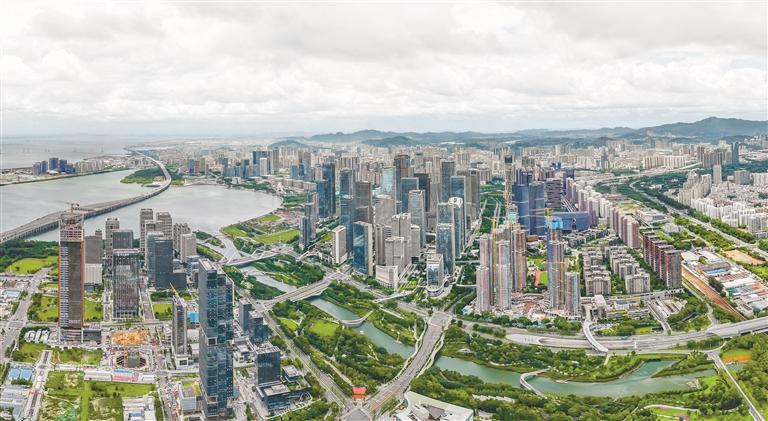
The 27th China Hi-Tech Fair (CHTF) recently kicked off in Shenzhen. Over three days, more than 5,000 cutting-edge achievements were released, intentional transactions, investment and financing exceeded 170 billion yuan, and the number of participants surpassed 450,000. This city, born of reform and thriving on innovation, once again captured global attention and demonstrated the vigorous vitality of China’s scientific and technological innovation.
As a key window for opening-up in China’s high – tech sector and an important platform for the transformation of scientific and technological achievements, the CHTF, which has been held for 27 years, is not only a barometer for observing the development of China’s high – tech industry, but also a vivid practice of China integrating into the global innovation network with an open attitude and boosting high-quality development driven by innovation.
The “Chinese Answer Sheet” for High-Level Self-Reliance and Self-Improvement
At the CHTF, a bionic robotic bird took off gracefully and flew independently through the crowds. “Equipped with sensors and intelligent chips all over its body, it can accurately avoid various obstacles with the help of flight algorithms,” a on-site staff member explained.
The gently fluttering wings are not only stirring the air, but also creating powerful momentum for China’s science and technology to stride towards high-level self-reliance and self-improvement.
Models such as CNOOC’s “Haikui – 1”, Asia’s first cylindrical Floating Production Storage and Offloading (FPSO) unit, and “Haiji – 2”, Asia’s tallest deepwater jacket platform, demonstrated China’s capability in deep-sea energy development. The HPR1000 third-generation nuclear power technology and the nuclear-grade digital instrumentation and control platform “Hemu System” developed by China General Nuclear Power Group all possess independent intellectual property rights.
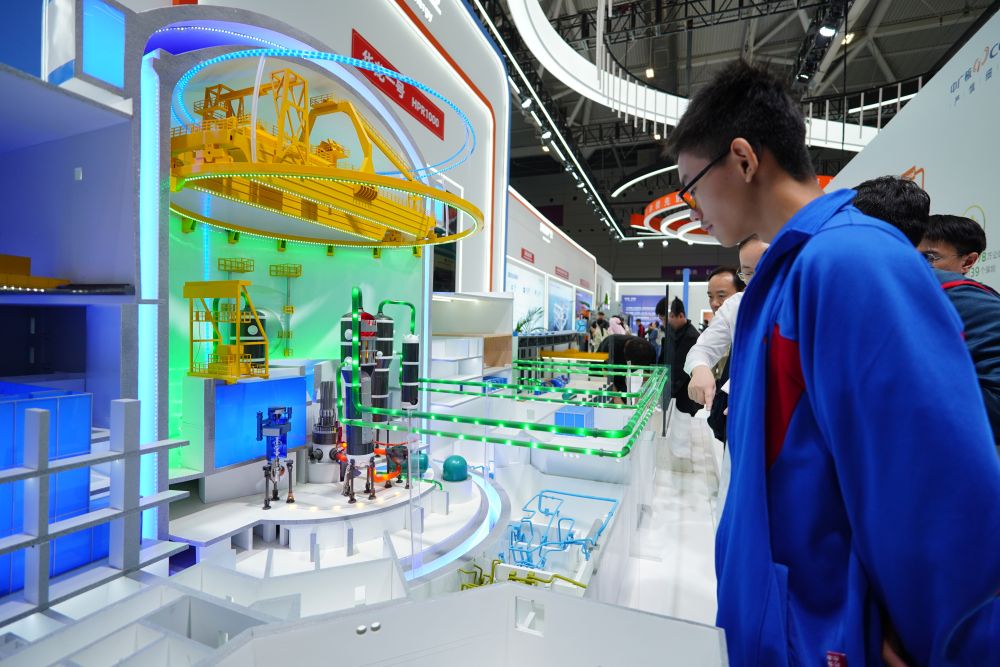
Twenty-two specialized exhibition areas, together with over 5,000 well-known enterprises and international organizations, were like stars scattered across the sky, illuminating the landscape of technological innovation.
Once, “being short of core technologies and key software” was a major bottleneck restricting the development of China’s information industry. However, the scene at the CHTF tells a completely different story now.
Huawei’s Ascend 384 super node demonstrated super computing power; the non-invasive brain-computer interface developed by BrainCo from Zhejiang turned the concept of “controlling objects with thoughts” into reality; Shenzhen Yatai Optoelectronics has established a leading position in the field of equipment condition monitoring relying on core independent technologies such as industrial endoscopes and online oil condition monitoring sensors; Empyrean Technology comprehensively showcased breakthroughs across the entire industrial chain, ranging from chip design and manufacturing to operating systems and application scenarios.
Zheng Xiang, general manager of Yatai Optoelectronics, said, “Forging a masterpiece takes painstaking efforts. We have spent 20 years, which is equivalent to forging a sword twice as long as the usual ten-year period, and finally lit up the core light of the ‘Chinese chip’.”
This light symbolizes the determination to achieve self-reliance and self-improvement. From high-end chips and basic industrial software to scientific instruments like scanning electron microscopes, numerous technological achievements have made zero-to-one breakthroughs through arduous efforts.
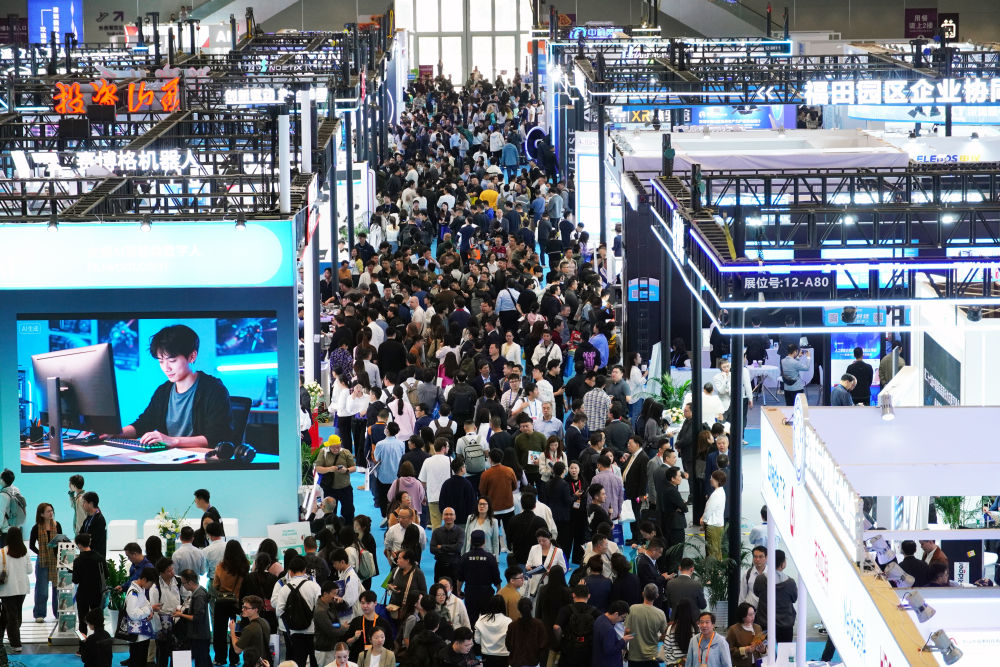
The ever-growing impressive data fully reflects the enduring charm of the CHTF. The first CHTF held in 1999 covered an exhibition area of about 20,000 square meters and attracted 2,856 participating enterprises. Exhibits such as mobile storage, digital printing, computer and network technologies, and TV and display technologies were highly sought after. At this year’s fair, the exhibition area has expanded to 400,000 square meters. Over 90% of the physical exhibits are high-end, sophisticated and advanced technologies and products, and more than 20% are debut works. They cover fields including artificial intelligence and robotics, semiconductors and integrated circuits, low-altitude economy, and commercial aerospace.
“From the changes of the CHTF, we can see an evolutionary path: from individual innovation to systematic integration, from technological following to breakthroughs in key fields, and from business model innovation to leadership driven by hard-core technologies. Each scientific and technological achievement is like a coordinate point of the times, which together form the ‘Chinese answer sheet’ for high-level self-reliance and self-improvement,” stated Xie Zhikui, vice president of the Party School of the Shenzhen Municipal Party Committee.
An “Innovation Magnet” Gathering Global Wisdom
The charm of the CHTF lies not only in displaying China’s innovative achievements, but also in its inclusive and open nature. Over the past 27 years, the fair has grown from initially hosting 5 foreign government delegations to attracting well-known enterprises and international organizations from more than 120 countries and regions around the world.
Reporters observed that multinational tech giants and renowned overseas R&D institutions present at the fair brought not only cutting-edge technologies and products, but also their recognition and expectations for the Chinese market and innovation environment.
Remote, a U.S.-based human resources technology enterprise, participated in the CHTF for the first time this year. Founded in 2019, this unicorn company provides employer-of-record services for enterprises worldwide, helping them manage cross-border human resources in compliance without establishing overseas entities.

“We are committed to helping Chinese enterprises go global and facilitating foreign enterprises to enter the Chinese market,” introduced Yang Lili, head of Remote Greater China. The platform has established a direct-operated service network in nearly 100 countries and regions around the world.
In front of the booth of Hansa-Flex Hydraulic Technology (Shanghai) Co., Ltd., a German manufacturing enterprise, business representatives frequently came to discuss cooperation and observe fluid connection components such as hoses displayed on the table. Mo Jiabin, key account manager of the company, said that apart from maintaining communication with traditional major customers in the wind power sector, the company also aimed to seek new opportunities in China’s rapidly growing liquid cooling market for data centers through this participation.
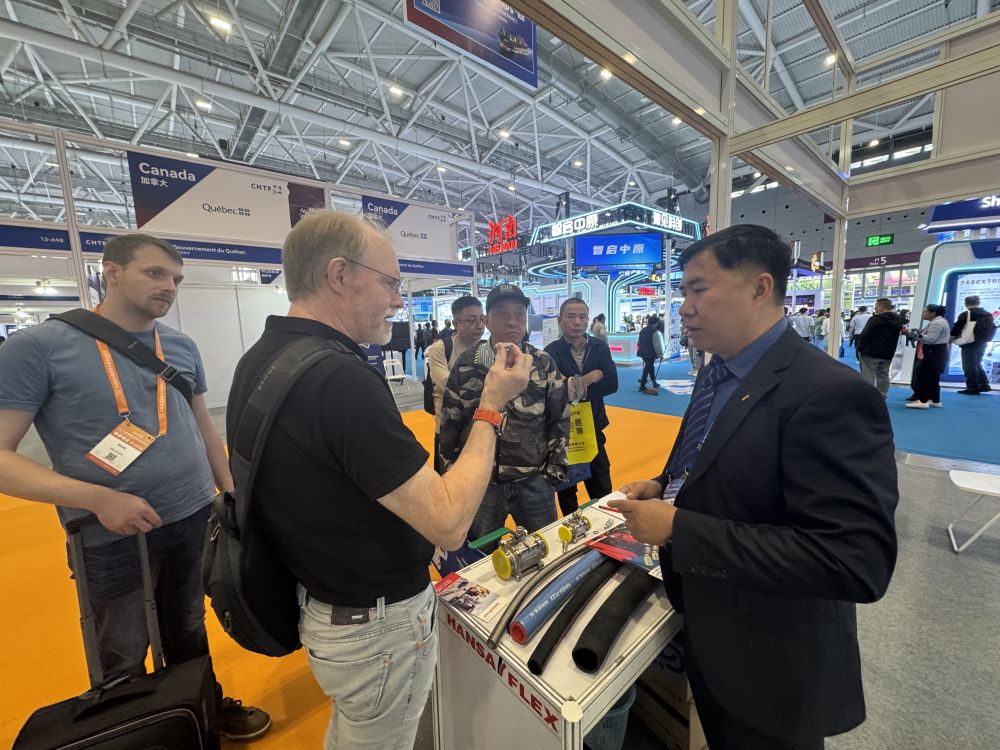
“With our high-sealing and long-life pipeline products, our factory in China not only maintains ‘German quality’ but also achieves ‘Chinese speed’, delivering products even faster than our facilities in Europe,” Mo Jiabin noted.
“We come here not only to sell products but also to pursue in-depth cooperation,” said Mirzaei Takyar, PhD and director of R&D at Iran’s Salam Medical Group.
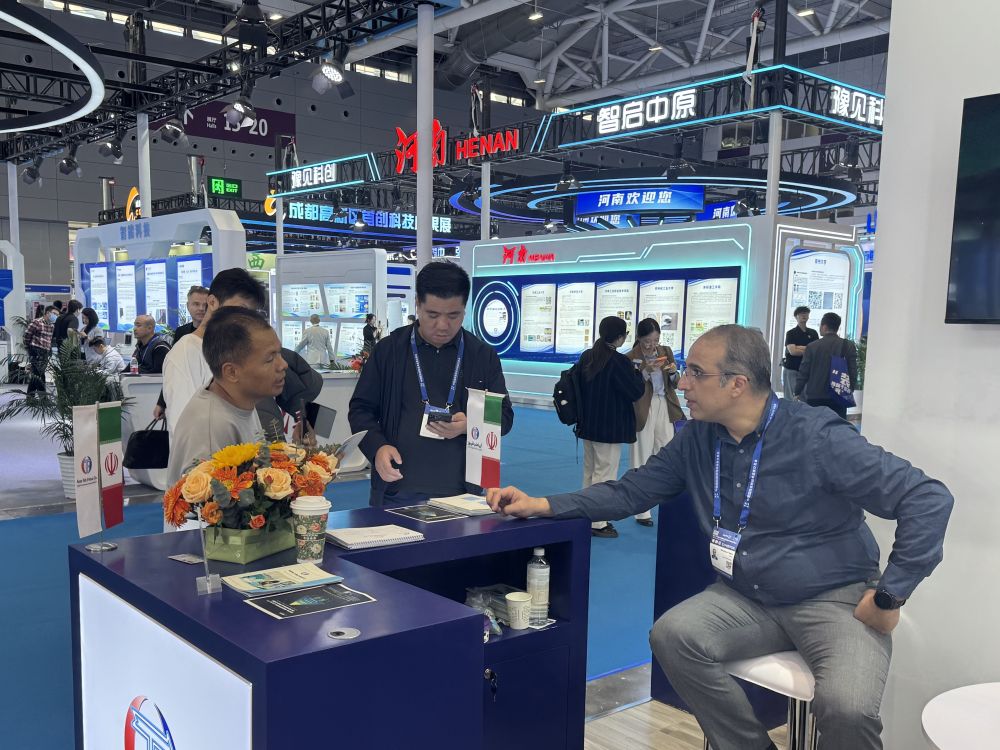
One may walk fast alone, but a group can travel far. The CHTF brings together global wisdom and promotes exchanges and cooperation.
Cooperation platforms have been continuously upgraded. The fair has set up a special pavilion for the Belt and Road Initiative and exhibition areas for foreign delegations. With over 30,000 professional purchasers, more than 1,000 procurement teams and more than 200 events, exchanges have gone beyond the booths and extended to technological R&D and industrial application.
The flow of factors has become smoother. More than 3,000 domestic and foreign investment institutions gathered here. Industry giants such as Morgan Stanley and Sequoia Capital came with capital, promoting the transformation and implementation of scientific and technological innovation achievements, constantly reducing innovation costs and improving innovation efficiency.
The optimized business environment is also evident. Through various convenient measures such as accurately matching procurement needs, issuing preferential tax policies and providing multilingual tax services, the CHTF has strived to enhance transaction effectiveness, allowing participating enterprises to play a leading role and gain substantial benefits.
“The CHTF is an excellent window for us to observe technological trends in China and even the world, and also our preferred platform for finding Chinese partners. China is opening its doors wider and wider, and this place is full of opportunities,” said Li Qingxia, director of the Technology Transfer Center of the University of Malaya in Malaysia.
A “Powerful Engine” Driving High-Quality Development
At the first CHTF, Pony Ma, whose Tencent had just been founded for one year, went around every exhibition hall with a 20-plus-page business plan that had been revised 66 times, and successfully secured Tencent’s first venture capital of 2.2 million US dollars. iFlytek embarked on a new journey of intelligent interaction with its voice technology at the fair, winning orders worth millions of yuan, which is regarded as the company’s “first bucket of gold”.
Over the past 20 years or so, a large number of well-known technological enterprises such as Tencent, BYD and Kingdee have emerged through the CHTF, which has thus earned the reputation of “China’s No.1 Science and Technology Exhibition”.
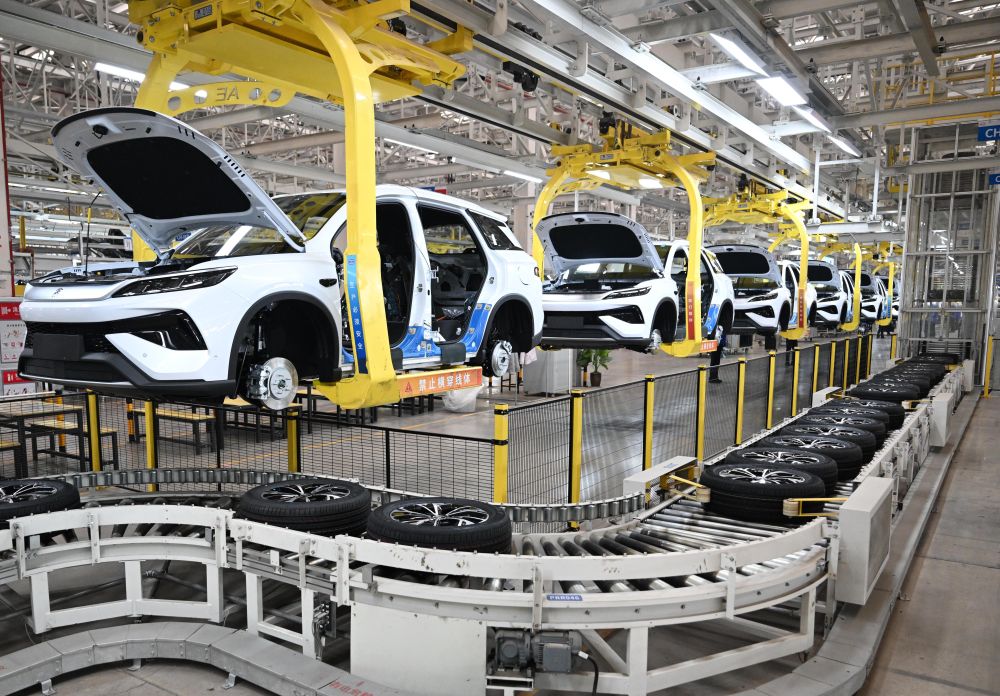
The CHTF serves as a stage where all players can cooperate and achieve success together.
“We hope to find more customers and application scenarios here.” “This place focuses on underlying technologies, so we sent our R&D team.” Small white tables have connected investors with both suppliers and buyers.
Data shows that this year’s CHTF has facilitated the signing of 1,023 supply-demand matching, investment and financing projects, with intentional transactions, investment and financing exceeding 170 billion yuan.
Booming science and technology lead to prosperous industries, and strong scientific and technological strength propels robust development. From the early days of the Internet and software to today’s artificial intelligence, robotics and commercial aerospace, the CHTF has been continuously leading the trend of technological transformation.
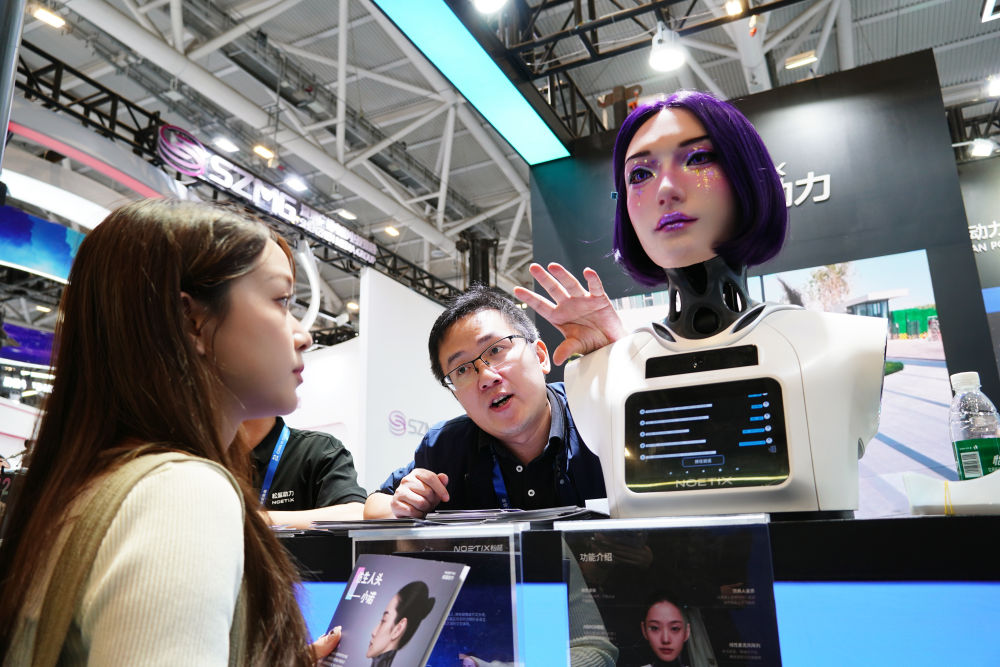
In the Guangming Science City exhibition area, R&D teams, together with downstream mobile phone manufacturers, are developing next-generation foldable screen products using new flexible display materials. Leading enterprises such as BYD have showcased comprehensive solutions covering energy acquisition, storage and application with their whole-industry-chain technologies.
“Breaking through core technologies is by no means the end of innovation. How to turn ‘samples’ in the laboratory into ‘hit products’ in the market is another important test that we must pass,” said Zhang Ying, founder of Liying Biology.
The “transformation” here refers not only to a shift in perspective but also a change in the model. Enterprises have become the main players in innovation, and the market has guided R&D. The close integration of government, industry, universities, research institutions, capital and intermediary organizations has united all forces to pursue common development.
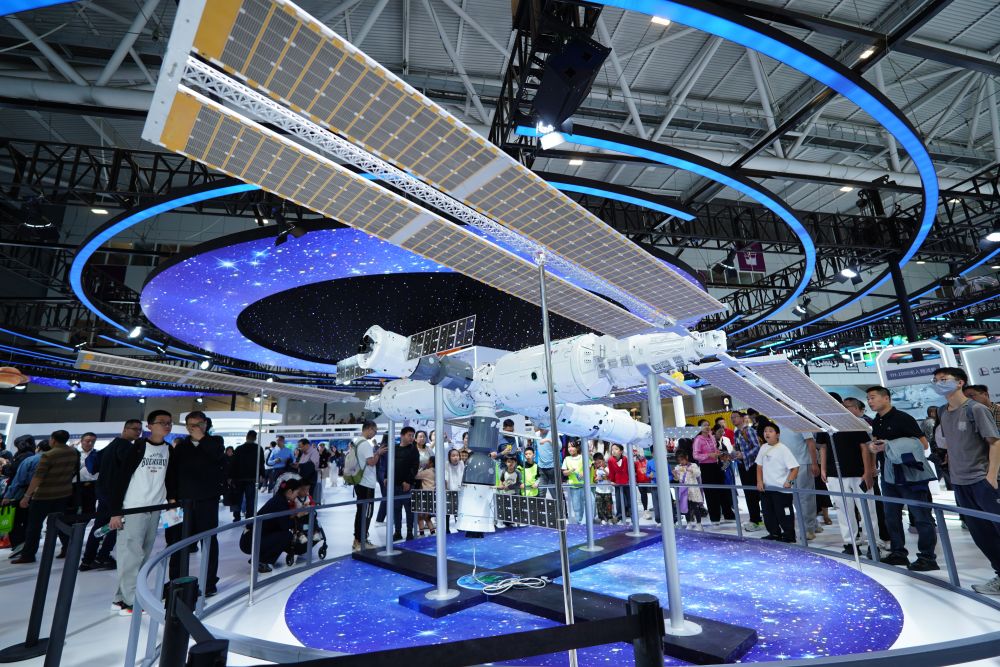
In the Bao’an exhibition area, hidden champion enterprises such as Insta360, which started from scratch, and Sunwoda, which began as a small workshop in a residential building, have attracted much attention, with many merchants coming to discuss cooperation. According to the on-site staff, Insta360, which was founded only 10 years ago, has relied on panoramic imaging technology and its hard-core technological strength – “capturing the beauty of the Earth in space and making selfie sticks invisible”. In 2024, it achieved a revenue of over 5 billion yuan, and its global market share in panoramic cameras reached as high as 67%.
“While focusing on ‘high technology’ and ‘promoting transactions’, the CHTF has built an innovative ecosystem featuring in-depth integration of government, industry, universities, research institutions, capital and intermediary organizations, covering the entire chain from technological R&D and achievement transactions to industrial implementation,” said Zhang Lin, director of the Shenzhen Municipal Bureau of Science and Technology and Innovation.
As a result, innovation is no longer an isolated island. A number of closely cooperating and independently controllable modern industrial chains have been clearly outlined at the CHTF. These chains connect the past and the future, linking breakthroughs in key technological points into advantages in industrial development.
Taking Bao’an District, the venue of the CHTF, as an example, the district has established 5 strategic emerging industrial clusters with an output value exceeding 100 billion yuan, 9 clusters worth over 50 billion yuan and 17 clusters with an output value of more than 10 billion yuan. In 2024, the total output value of these strategic emerging industrial clusters reached 1.17507 trillion yuan.
Starting with technological breakthroughs, developing through industrial transformation, advancing via in-depth integration and achieving new development patterns. “As a powerful engine, the CHTF, with its continuous innovative vitality, is driving the giant ship of China’s economy to forge ahead triumphantly through the waves,” said Song Ding, deputy director of the China Urban Economic Expert Committee.