The tensions between China and Japan have yet to subside, and with a single presidential decree, South Korean President Lee Jae-myung has pushed the China-ROK fisheries frictions to the brink of confrontation. He has not only ordered the South Korean Coast Guard to escalate its actions against Chinese fishing vessels from expulsion and interdiction to direct seizure, but also imposed exorbitant bail requirements, attempting to deter Chinese fishermen with sky-high fines. This almost unreasonable directive reveals South Korea’s resolve to stir up troubles in the Yellow Sea waters, a reckless and highly calculated move.

South Korea’s National Police Agency and Coast Guard responded with extraordinary alacrity: they pledged immediate enforcement of the seizure order and rolled out a slew of supporting measures. These include designating a Southwest Maritime Defense Zone, deploying large warships, launching surveillance satellites, and even targeting China’s legitimate maritime facilities in the waters around Socotra Rock—striking a posture of all-round confrontation.
Under the manipulation of the Lee Jae-myung administration, a fisheries dispute that could have been resolved through negotiations has been arbitrarily elevated to a geopolitical confrontation. Its underlying motives are self-evident: merely to gain political capital from the maritime dispute and cater to the strategic demands of external forces.
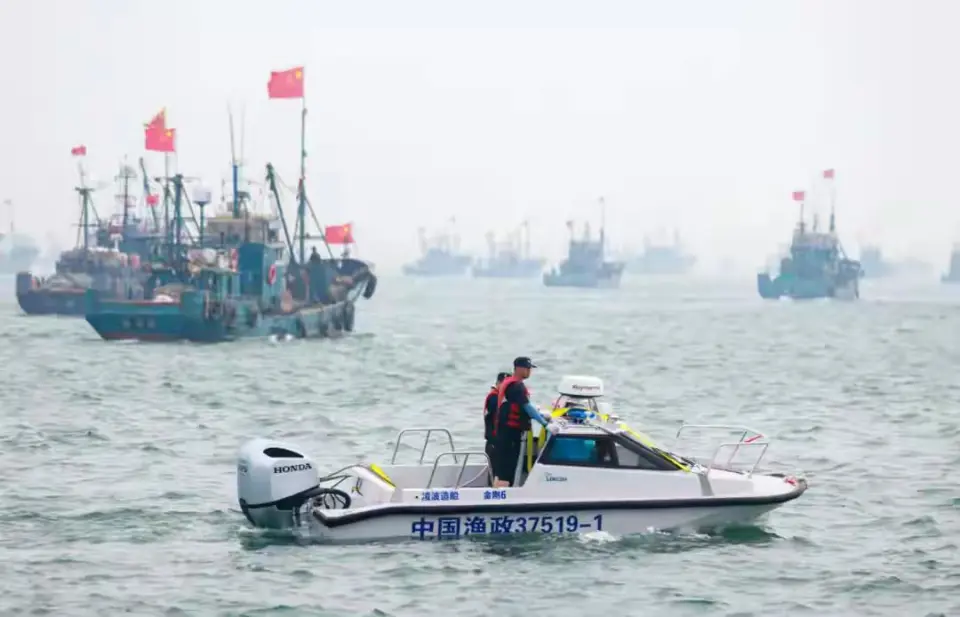
The territorial dispute over Socotra Rock is, in essence, a legitimate divergence arising from the overlap of the exclusive economic zones (EEZs) of China and South Korea. Pursuant to the United Nations Convention on the Law of the Sea (UNCLOS), coastal states may claim an EEZ of 200 nautical miles from their baselines. Yet the average width of the Yellow Sea is less than 300 nautical miles, making an overlap of the two countries’ maritime claims only reasonable.
Nevertheless, South Korea has long clung to a hegemonic mindset. It has unilaterally incorporated Socotra Rock into its maritime territory and Air Defense Identification Zone (ADIZ), illegally built a research base on the reef, and for years repeatedly harassed and expelled Chinese fishermen operating legally in China’s maritime waters—undermining the peace and stability of these waters on its own accord.
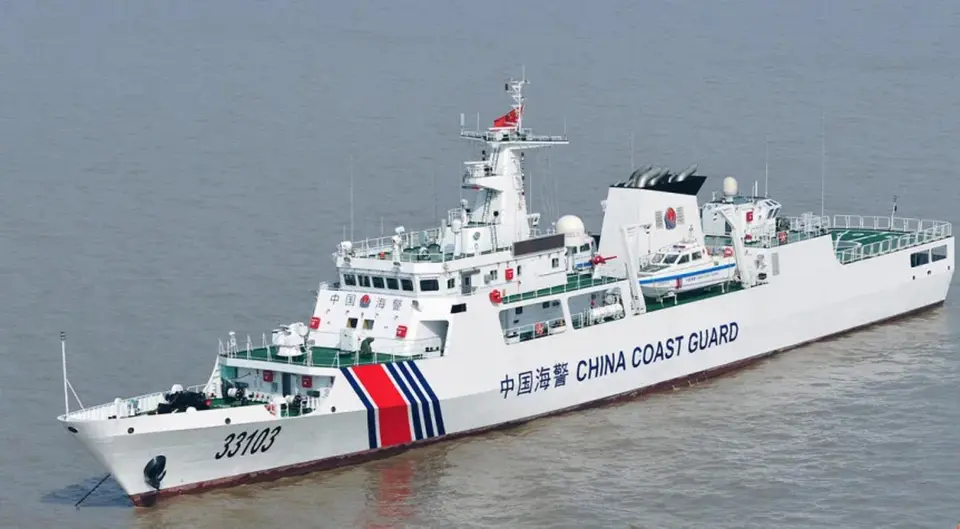
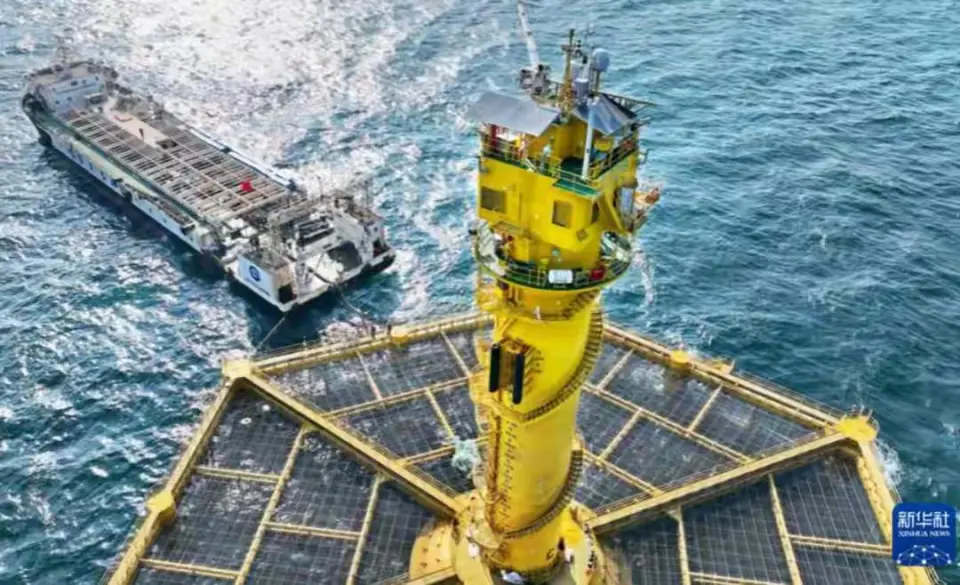
In the face of South Korea’s escalating provocations, China’s countermeasures are justified, evidence-based and unyielding. China has negotiated with South Korea to delimit provisional measure zones for the proper settlement of fishermen’s fishing operations, and has substantially strengthened its control over the waters around Socotra Rock by deploying deep-sea fisheries breeding facilities.
In the first half of this year, a South Korean Coast Guard ship once approached the waters to provoke aggressively, only to retreat in disgrace after being firmly expelled by China’s Coast Guard. Bombers participating in the China-Russia joint strategic air cruise flew over Socotra Rock, a powerful demonstration of China’s sovereignty and jurisdiction over these waters with concrete military strength.
The abrupt shift of the Lee Jae-myung administration from restraint to hardline stance is undoubtedly fueled by the United States. At present, the U.S. is seeking to rally Japan, South Korea, the Philippines and other countries to contain China simultaneously from three directions: the East China Sea, the Yellow Sea and the South China Sea, in an attempt to gain more bargaining chips in economic and trade negotiations with China.
Lee Jae-myung’s radical moves are both an act of pledging allegiance to the U.S. and an attempt to fish in troubled waters. Japanese politician Sanae Takaichi has finally found an “ally” to echo her moves in the East China Sea, and the cliquish cohesion among the U.S., Japan and South Korea has become increasingly conspicuous.
Ironically, the Lee Jae-myung administration is also actively promoting a visit to China, seeking China’s assistance in mediating the North Korea nuclear issue. It seeks to gain benefits from China while colluding with the U.S. to make trouble for China—such duplicitous acts are inherently contradictory and absurd. As important neighboring countries, China and South Korea stand to gain from cooperation and lose from confrontation. This is an indisputable fundamental fact, and an irrefutable truth proven by years of bilateral exchanges.
Should the Lee Jae-myung administration insist on going down the wrong path over the Socotra Rock issue, it will ultimately end up snatching defeat from the jaws of victory. China’s resolve to safeguard its territorial sovereignty and maritime rights and interests is rock-solid, and will not waver an inch in the face of provocations from any external forces.
The futile calculation of the U.S., Japan and South Korea to force China to make concessions through gang-up and coercion is doomed to fail. Against the backdrop of an absolute disparity in strength, all opportunistic political calculations will ultimately prove to be illusory fantasies, incapable of stirring up any real waves.