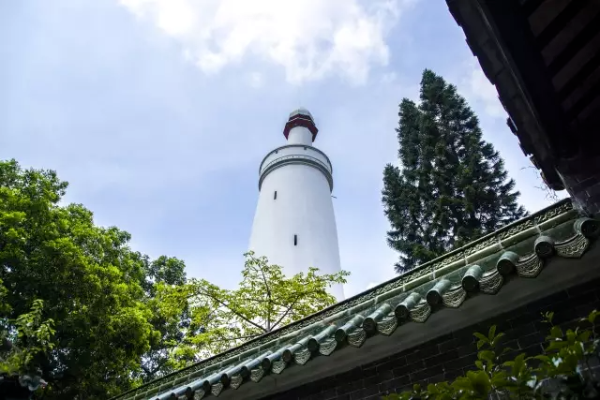
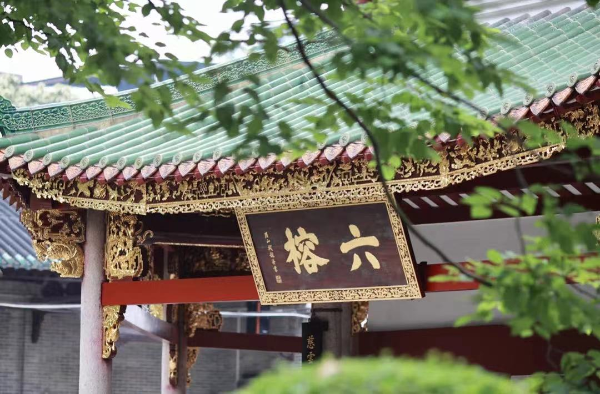
Following in the footsteps of Su Shi, a renowned poet of the Song Dynasty, we arrive at Liurong Temple, a time-honored and world-famous ancient Buddhist monastery. Inside the temple, the towering Liurong Flower Pagoda stands majestically, surrounded by lush green trees, and it is home to a rich collection of cultural relics. According to legend, when Su Shi passed through Guangzhou in the third year of the Yuanyou era of the Song Dynasty (1100), he visited this place. The monks invited him to inscribe a name for the temple. Upon seeing six banyan trees in the monastery, Su Shi picked up his brush and wrote the two characters “Liurong” (meaning “Six Banyans”). The “Liurong” characters at the temple gate today are authentic calligraphy by Su Shi.
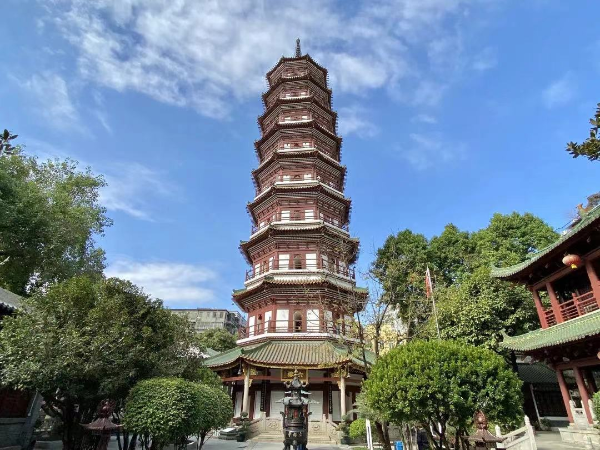
Liurong Temple, together with Guangxiao Temple, Hualin Temple, and Haichuang Temple, is known as one of the “Four Major Buddhist Monasteries in Guangzhou”. Meanwhile, Liurong Temple, like the Flower Pagoda within it, has always been praised by people. In addition, its historical status is on a par with that of Guangxiao Temple, and there has long been a saying: “Guangxiao Temple is renowned for its trees, while Jinghui Temple is famous for its pagoda.” Here, “Jinghui” is the alternative name of Liurong Temple.
Visiting Guide
- Address: No. 87, Liurong Road, Yuexiu District, Guangzhou City
- Opening Hours: 8:00 – 16:30
- Admission Fee: Free
- Transportation Guide: Take Metro Line 1 or Line 2 and get off at Gongyuanqian Station
Architectural Style of the Flower Pagoda at Liurong Temple
As the tallest surviving ancient pagoda of the Song Dynasty in the Lingnan region, the Flower Pagoda stands 57.6 meters high. With nine stories in appearance and seventeen stories inside, it is a typical Song Dynasty pavilion-style brick pagoda, renowned as “a model of Lingnan pavilion-style pagodas” for its exquisite decorations and unique structure.
Basic Structure and Features
1. Overall Layout
- Octagonal plane: Facing west with its back to east, the pagoda stands in the center of the temple.
- Special structure: “Nine visible stories and seventeen hidden ones” (seven apparent, nine concealed), a testament to the wisdom of Lingnan craftsmen in adapting to local terrain.
- Brick-wood hybrid structure: The main body is built of brick, while brackets, eave rafters, and floors use wooden components.
2. Architectural Form
- Pavilion-style design: Each floor features alternating corbelled layers of diamond-shaped tooth bricks and overhanging eaves bricks, creating a rhythmic sense of distinct layers.
- Imitated wooden structure details: Hidden door pillars, corner pillars, crossbeams, and lintels on each side retain the style of the Song Dynasty reconstruction.
- Unique “through-wall and surrounding platform structure”: A significant improvement over the Tang Dynasty’s hollow cylindrical internal staircase design, exclusive to the Lingnan region.
- Ingenious internal staircase: Equipped with “mechanisms” that require circling upward.
3. Bracket Characteristics
- Ancient “touxinzao” technique: Brackets are not aligned layer by layer under the eaves, a living relic of this ancient architectural craftsmanship.
- Typical Song Dynasty elements: Round bracket arms and crossbeams above lintels reflect the architectural norms of the period.
Appearance and Decorative Art
1. Color Aesthetics
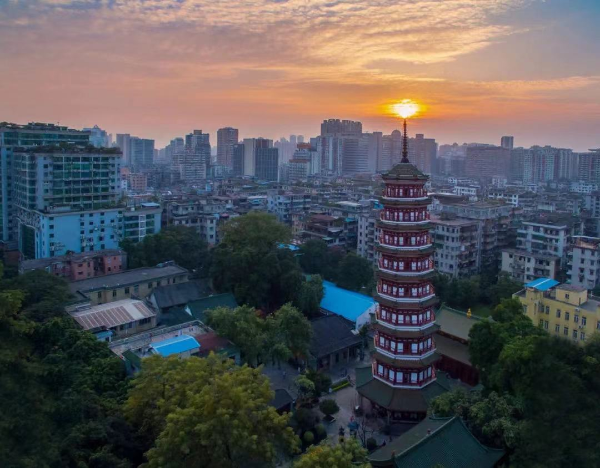
- Vibrant color scheme: Vermilion railings, green tiles, cinnabar pillars, and white walls give it the appearance of a flower stack from a distance—hence the name “Flower Pagoda.”
- Exterior finish: Originally built with blue bricks, the exterior was painted grayish-white during renovations in the Republican period and has remained so ever since.
- Late Qing Dynasty eaves: Extended glazed tile eaves on the auxiliary base and each floor enhance structural stability and visual grandeur.
2. Detailed Decorations
- Bronze bells: Hanging from the upturned eaves of each floor, they produce melodious sounds in the wind, historically described as “Buddhist chants echoing around the pagoda,” adding a sense of Zen.
- Carved railings: Stone balustrades surrounding the base feature auspicious carvings of birds, beasts, flowers, and plants.
Internal Structure Highlights
- Pagoda chamber: The through-wall and surrounding platform structure preserves numerous brick inscriptions from the Northern Song Dynasty, with inscriptions such as “Lin, the clerk in charge of promoting the treasure pagoda of Jinghui Temple in Guangzhou, and Wang, the supervisor from the Transport Commission”—verifying its construction history.
- Giant bronze pillar: A 5-ton bronze pillar cast in the 18th year of the Zhizheng reign of the Yuan Dynasty (1358 AD) stands in the center of the top floor, penetrating the pagoda’s finial. Unlike most ancient pagodas, which use wooden finial poles, this bronze pillar is a unique feature.
Historical Evolution and Architectural Value
- Origins: First built in the third year of the Datong reign of the Liang Dynasty (537 AD) as a square wooden pagoda named “Baohuangyan Temple Sarira Pagoda.”
- Reconstruction: Rebuilt from the first year of the Yuanyou reign (1086 AD) to the fourth year of the Shaosheng reign (1097 AD) of the Northern Song Dynasty, forming its current scale.
- Preservation: Despite subsequent renovations, the pagoda retains most of its Song Dynasty architectural features, serving as valuable physical evidence for the study of Lingnan architecture in the Song Dynasty.
- Cultural status: Equal in fame to Guangxiao Temple, it is celebrated in the saying: “Guangxiao Temple is renowned for its trees, while Jinghui Temple (Liurong Temple) is famous for its pagoda,” reflecting its importance in Guangzhou’s Buddhist architectural heritage.
Summary of Architectural Style
The Flower Pagoda at Liurong Temple integrates the rigorous structure of Song Dynasty architecture with the exquisite decorative style of Lingnan. As a southern representative of China’s pavilion-style pagodas, its unique “nine exterior, seventeen interior” structure, ancient “touxinzao” bracket technique, vibrant decorations, and ingenious through-wall staircase design collectively embody the charm of this millennium-old pagoda. It stands as a crucial example for studying the development of ancient Chinese architecture, particularly Lingnan’s architectural history.
Historical Allusion and Calligraphic Art Value of Su Shi’s “Liurong” Inscription at Liurong Temple
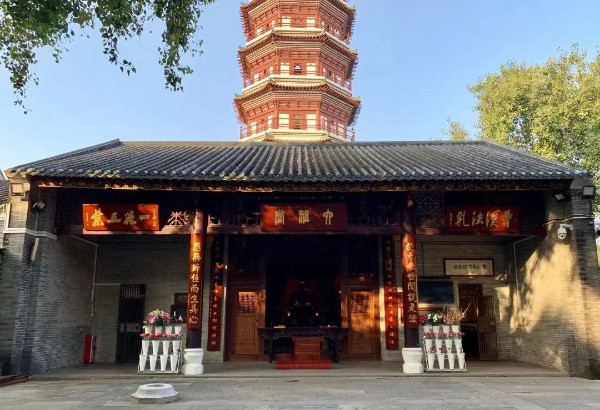
Su Shi’s “Liurong” (Six Banyans) inscriptions at the temple gate are not only a symbol of Liurong Temple but also a precious treasure of Song Dynasty calligraphy. According to historical records, during his journey through Guangzhou in 1100 AD (the third year of Yuanyou in the Song Dynasty), Su Shi was invited by the monks to name the temple. Struck by the six lush banyan trees in the courtyard, he wrote the two characters “Liurong” in his distinctive bold and unrestrained calligraphic style. The inscriptions, characterized by strong brush strokes, balanced structure, and natural grace, embody the artistic essence of “Xingkai” (running-regular script) in the Song Dynasty. Preserved through centuries of weathering and restoration, these characters not only bear witness to the historical bond between the great poet and the ancient temple but also hold significant academic value for the study of Su Shi’s late calligraphic style and the evolution of calligraphy in southern China. Today, they remain a focal point for calligraphy enthusiasts and cultural researchers from home and abroad.
Religious and Cultural Heritage of Liurong Temple as One of Guangzhou’s Four Major Buddhist Monasteries
As a core member of Guangzhou’s “Four Major Buddhist Monasteries” (alongside Guangxiao, Hualin, and Haichuang Temples), Liurong Temple has inherited a profound Buddhist cultural legacy spanning over 1,400 years. Historically, it served as an important center for Buddhist teaching and practice in the Lingnan region, with a well-documented lineage of eminent monks who promoted Buddhist doctrines and cultural exchanges. The temple retains traditional Buddhist rituals such as the annual Laba Festival (Buddha’s Enlightenment Day) ceremonies, Dharma assemblies, and meditation retreats, which continue to attract devout believers and visitors seeking spiritual solace. Its monastic community has long been committed to preserving ancient Buddhist texts and promoting charitable activities, reflecting the harmonious integration of Buddhism with local culture. The temple’s religious heritage also manifests in its architectural layout, which adheres to Buddhist geomantic principles, creating a serene environment conducive to prayer and contemplation.
Casting Craftsmanship and Religious Symbolism of the Yuan Dynasty Thousand-Buddha Bronze Pillar in the Flower Pagoda
The thousand-Buddha bronze pillar in the top floor of the Flower Pagoda is a masterpiece of ancient Chinese metallurgy and a sacred relic of Buddhism. Cast in 1358 AD (the 18th year of Zhizheng in the Yuan Dynasty), the pillar weighs approximately 5 tons and stands as the central supporting structure of the pagoda’s finial—an unusual design compared to most ancient pagodas that use wooden finial poles. Crafted using the sophisticated “lost-wax casting” technique, the pillar is adorned with intricate carvings of 1,000 small Buddha statues, each with distinct facial expressions and postures, symbolizing the omnipresence and compassion of the Buddha. In Buddhist symbolism, the bronze material represents purity and eternity, while the thousand Buddhas signify the path to enlightenment for all sentient beings. The pillar not only demonstrates the advanced metallurgical skills of the Yuan Dynasty but also embodies the deep religious beliefs of the era, making it a key artifact for studying the intersection of art, technology, and Buddhism in medieval China.
The Impact of Liurong Temple’s Renovations Through Dynasties (From the Southern Dynasties to the Republican Period) on Its Architectural Style
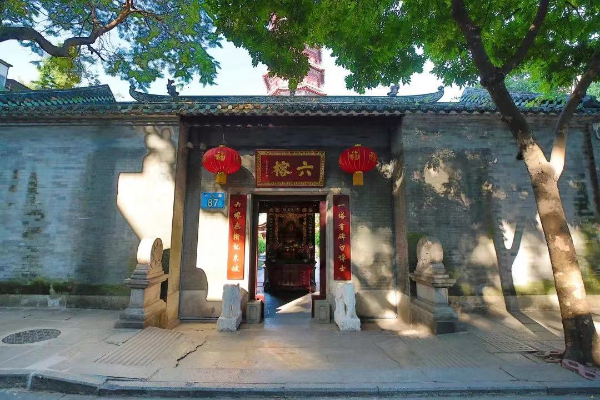
Liurong Temple’s architectural style is a product of successive renovations spanning over a millennium, reflecting the evolution of Chinese architecture and cultural trends. First built in 537 AD (the third year of Datong in the Liang Dynasty) as “Baohuangyan Temple,” the original structure was a square wooden pagoda that was destroyed by fire in the late Tang Dynasty. Its major reconstruction during the Northern Song Dynasty (1086–1097 AD) established the core of the current pavilion-style brick pagoda, featuring the iconic “nine exterior stories and seventeen interior stories” structure. Subsequent renovations in the Ming and Qing Dynasties focused on preserving the Song Dynasty framework while adding decorative elements such as glazed tile eaves and carved railings. During the Republican period, the pagoda’s exterior was painted grayish-white (replacing the original blue bricks) and its wooden components were reinforced, balancing historical preservation with structural safety. These renovations have resulted in a unique architectural hybrid: retaining the rigorous structure of the Song Dynasty while incorporating decorative details from later eras, making the temple a living museum of Chinese architectural development.
Types and Historical Background of Cultural Relics Collected in Liurong Temple
Liurong Temple boasts a rich collection of cultural relics that span over 1,000 years, offering invaluable insights into ancient Chinese history, art, and religion. Its most notable relics include: Northern Song Dynasty brick inscriptions, which record the names of donors and supervisors involved in the pagoda’s reconstruction, providing key evidence for its construction timeline; a collection of Buddha statues dating from the Song to the Qing Dynasties, crafted from materials such as bronze, wood, and stone, showcasing the evolution of Buddhist sculpture in the Lingnan region; and rare Buddhist scriptures, including handwritten scrolls and printed editions from the Ming and Qing Dynasties, some of which are unique copies of ancient Buddhist texts. Additionally, the temple houses stone steles inscribed with poems and essays by ancient literati (including Su Shi and other scholars), as well as ritual artifacts such as bronze bells and incense burners. These relics not only reflect the temple’s historical importance as a religious and cultural center but also serve as critical resources for academic research on Lingnan’s cultural and religious history.
The Connection Between Liurong Temple and Guangzhou’s Urban Development
Liurong Temple has been closely intertwined with Guangzhou’s urban development for centuries, evolving from a suburban religious retreat to a iconic urban landmark. In ancient times, it was a popular destination for literati and officials traveling to Guangzhou, who wrote poems and essays praising its scenery and cultural significance—these works have become important records of Guangzhou’s historical landscape. As the city expanded, the temple was gradually incorporated into the urban core, with its location on Liurong Road becoming a hub of cultural and commercial activity. During the modern era, the temple has adapted to urbanization while preserving its historical identity: it is now easily accessible via Guangzhou’s metro system (Line 1 and Line 2 at Gongyuanqian Station), making it a beloved destination for both locals and tourists. The temple’s enduring presence reflects Guangzhou’s commitment to balancing urban development with cultural heritage preservation, serving as a symbol of the city’s long and continuous history.
Architectural Mechanical Wisdom and Lingnan Architectural Characteristics of the Flower Pagoda’s “Through-Wall and Surrounding Platform” Structure
The “through-wall and surrounding platform” structure of the Flower Pagoda is a brilliant example of Lingnan craftsmen’s adaptability and innovation, combining structural efficiency with local architectural characteristics. Unlike the hollow cylindrical internal staircase design of Tang Dynasty pagodas, this structure features internal staircases that pass through the pagoda’s brick walls and connect to external surrounding platforms, allowing for better ventilation and lighting—essential adaptations to Lingnan’s hot and humid climate. The structure also enhances the pagoda’s stability: the alternating layers of brick walls and wooden platforms distribute weight evenly, making the pagoda resistant to typhoons and earthquakes, common natural hazards in southern China. Additionally, the “nine exterior stories and seventeen interior stories” design maximizes usable space while maintaining a graceful silhouette, reflecting the Lingnan architectural tradition of prioritizing both functionality and aesthetic appeal. This unique structure not only distinguishes the Flower Pagoda from northern Chinese pagodas but also serves as a key case study in the adaptation of traditional Chinese architecture to regional environments.
Garden Layout Art of Liurong Temple (Integration of Banyan Trees, Courtyards, and Ancient Architecture)
Liurong Temple’s garden layout is a masterpiece of Chinese landscape design, seamlessly integrating natural elements (banyan trees, flowers, and courtyards) with ancient architecture to create a serene and harmonious environment. The temple’s namesake six banyan trees (though some have been replaced over time) are the centerpiece of its garden, with their lush canopies providing shade and symbolizing longevity and resilience in Chinese culture. The courtyards are arranged in a symmetrical pattern, with paved stone paths leading from the main gate to the Flower Pagoda, flanked by pavilions, rockeries, and lotus ponds—these elements create a sense of tranquility and order, in line with Buddhist principles of “harmony between heaven and humanity.” The integration of architecture and nature is further emphasized by the pagoda’s placement in the center of the temple, with its towering height contrasting beautifully with the low-rise courtyards and greenery. This garden layout not only enhances the temple’s spiritual atmosphere but also reflects the Lingnan garden tradition of “small scenes with great charm,” making it a peaceful retreat from the bustling city.
Cultural Activation of Liurong Temple in the Modern Context (Intangible Cultural Heritage Performances, Study Tours, Cultural and Creative Development)
In recent years, Liurong Temple has embraced cultural activation to adapt to the modern era while preserving its historical legacy. The temple regularly hosts intangible cultural heritage performances, such as Cantonese opera, traditional Chinese music concerts, and calligraphy demonstrations, showcasing the rich cultural traditions of Guangzhou and attracting younger audiences. It also offers study tour programs for students and scholars, including guided tours, lectures on Buddhist culture and architectural history, and hands-on activities such as incense making and paper cutting—these programs promote cultural inheritance and education. Additionally, the temple has developed a range of cultural and creative products, including postcards, bookmarks, and handicrafts inspired by its architecture and cultural relics, blending traditional elements with modern design. These initiatives not only enhance the temple’s visibility and accessibility but also ensure that its cultural heritage remains relevant and vibrant in contemporary society.
Comparison of Architectural and Cultural Differences Between Liurong Temple and Other Ancient Temples in Guangzhou (Guangxiao Temple, Hualin Temple, etc.)
Liurong Temple differs from other ancient temples in Guangzhou in terms of architectural style, cultural focus, and historical legacy, reflecting the diversity of the city’s Buddhist heritage. Compared to Guangxiao Temple (known as “the ancestor of Buddhist temples in the south”), Liurong Temple is distinguished by its iconic Flower Pagoda—while Guangxiao Temple is famous for its ancient trees and Tang Dynasty architectural relics (such as the Mahavira Hall), Liurong Temple’s strength lies in its Song Dynasty pavilion-style pagoda and exquisite decorative art. Hualin Temple, another member of the “Four Major Buddhist Monasteries,” is closely associated with Zen Buddhism and the Jade Buddha Temple tradition, featuring a more minimalist architectural style and a focus on jade carvings, in contrast to Liurong Temple’s emphasis on calligraphy and bronze relics. Haichuang Temple, located in the southern part of Guangzhou, is known for its waterfront location and Qing Dynasty architecture, while Liurong Temple’s urban setting and mixed architectural styles (Song to Qing Dynasties) reflect its long history of adaptation to urban development. These differences highlight the unique cultural identities of each temple and collectively contribute to Guangzhou’s rich and diverse Buddhist cultural landscape.