“One Highland” to Be Considered for Inclusion in Macao’s Development Orientation
Municipal Affairs Bureau: To Conduct Research on District Urban Renewal Planning
(Report by our correspondent) The Urban Planning Committee discussed the Review and Analysis Report on the Macao Territorial Spatial Plan (2020–2040) yesterday, with seven committee members delivering speeches. Some members suggested that before the introduction of detailed planning, urban planning research should be carried out on a district-based approach to promote urban renewal work.
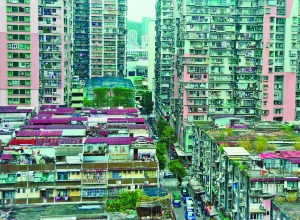
Leung Yiu-hung, Director of the Urban Planning Department of the Municipal Affairs Bureau, responded that the government attaches great importance to urban renewal, will explore more effective ways to advance the work, and consider the direction of district-based urban renewal. In addition, since the formulation of detailed planning takes a relatively long time, for areas with development needs before the completion of detailed planning, the government plans to launch district planning research to compensate for the inadequacy that detailed planning cannot keep pace with regional development schedules.
Review of New Port Area Planning Based on Visitor Arrivals
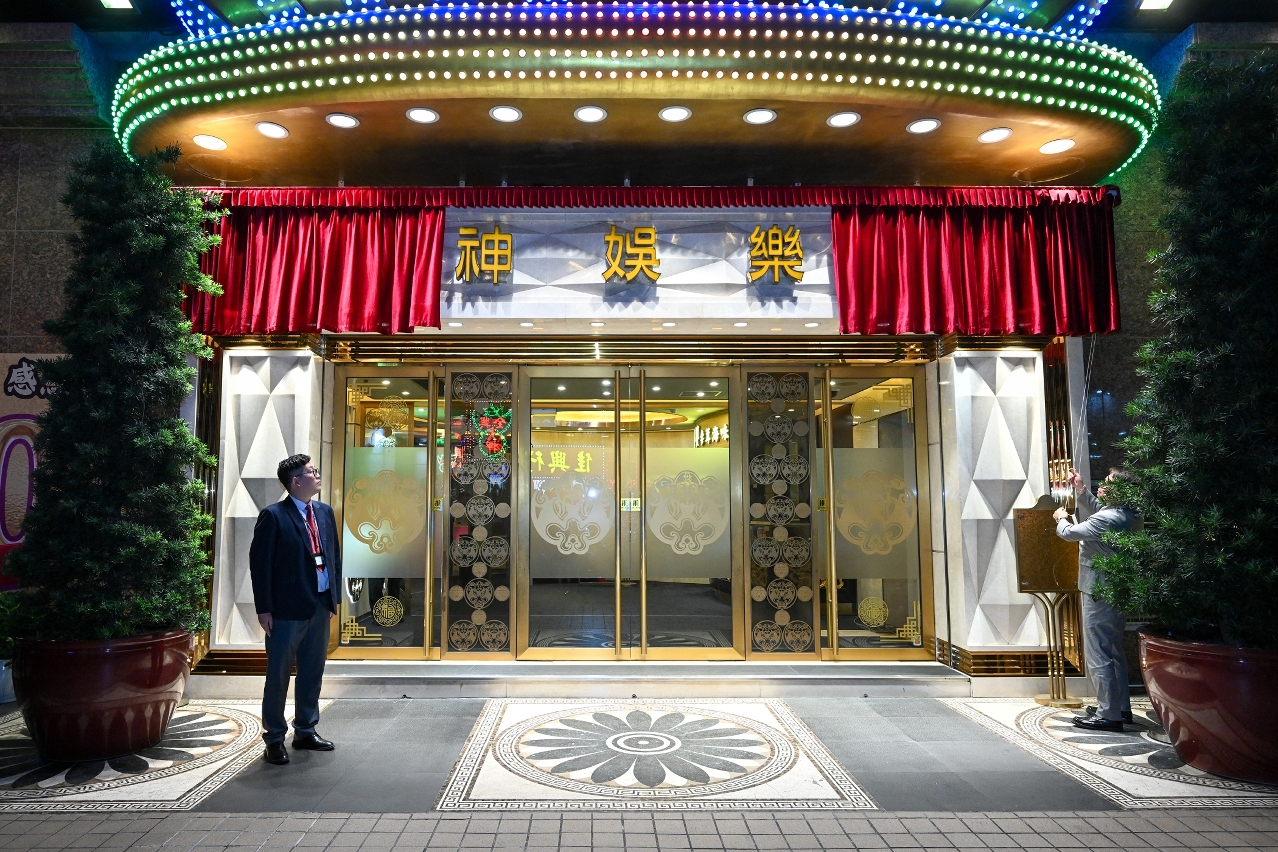
Some committee members expressed concerns about whether the tourism and entertainment zone planning of the New Port area needs adjustment after the closure of satellite casinos in the district. Leung Yiu-hung pointed out that most satellite casinos are located in hotels, and the hotels will continue to operate after the casinos close. The government will continuously monitor inbound tourist arrivals to determine whether adjustments to the tourism and entertainment zone planning are necessary.
Some committee members noted that the draft of the 15th Five-Year Plan mentions that Macao needs to “build a highland for gathering high-end talents”, and suggested incorporating the development orientation of “one highland” into future planning.
A representative from the consulting firm stated that Macao’s current development orientation is “one center, one platform, one base”, and the concept of “one highland” has been widely discussed in recent years. The firm will consider including the “one highland” orientation in the territorial spatial plan. Meanwhile, Macao’s urban renewal efforts need to be integrated with the formulation of detailed planning.
According to the Urban Planning Law, the territorial spatial plan will set out guiding principles for old district renovation, while detailed planning will introduce measures to promote reconstruction or revitalization based on these principles, and adjust the corresponding land use. The committee members’ opinions have been recorded, and relevant provisions on urban renewal will be reviewed for possible updates during the subsequent revision of the territorial spatial plan.
Holistic Coordination of Disaster Prevention Planning
Some committee members proposed relocating the Inner Harbour cargo terminal to Ka Ho and simultaneously developing a green waterfront landscape from the Inner Harbour to the Macau Tower to mitigate the problem of seawater inundation.
The consulting firm emphasized that disaster prevention and mitigation should be planned in a holistic and coordinated manner rather than on a district-by-district basis. At present, optimization schemes for the Inner Harbour environment have been included in the territorial spatial plan, along with measures to address flooding and climate change, and relevant contingency plans have been formulated.
Other committee members suggested assessing and following up on the traffic conditions and land function positioning of areas surrounding the four major infrastructure projects. They also proposed strengthening the alignment of transportation planning between Macao and Hengqin, and paying attention to the connection between the light rail system and the transportation planning of the New Urban Areas A and B.