Enhancing Classroom Attractiveness and Students’ Higher-Order Thinking
Chinese Educators Share AI Teaching Experience in Macao
Hosted by the Ministry of Education of the People’s Republic of China, the Hong Kong and Macao Affairs Office of the State Council, the Taiwan Affairs Office of the State Council, the Liaison Office of the Central People’s Government in the Hong Kong Special Administrative Region, and the Liaison Office of the Central People’s Government in the Macao Special Administrative Region, and organized by the Education Department of the Guangxi Zhuang Autonomous Region and the Beihai Municipal People’s Government, the academic seminar of the “30th Chinese Educators Grand Gathering” was held this morning at the Furama Hotel in Beihai, Guangxi. More than 400 representatives of Chinese teachers from the mainland, Hong Kong, Macao, Taiwan regions and overseas attended the event to exchange educational experiences and strengthen friendship. (Report from Beihai, Guangxi, 30th)
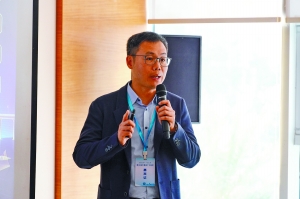
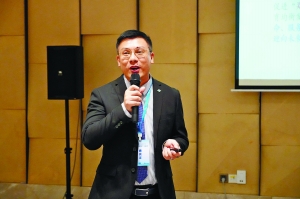
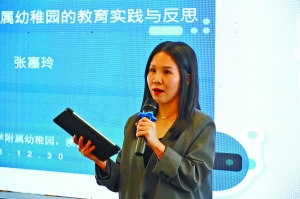
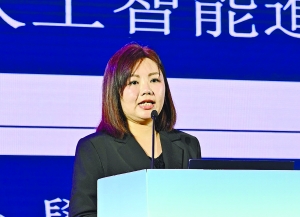
During the group discussion session of the academic seminar, three members of the Macao delegation delivered speeches on behalf of the middle school group, primary school group and kindergarten group respectively. They are Jiang Qinyu, Vice Principal of Choi Nong Chi Tai School; Liu He, Curriculum Director of Colegio de Santa Teresa Girls’ School; and Zhang Jialing, Deputy Director of the Kindergarten Affiliated to Escola Secundária Luso-Chinesa de Luís Gonzaga Gomes.
Rational and Legal Application of AI
With the topic “AI Empowers Subject Integration and Personalized Learning in Macao’s Middle Schools”, Jiang Qinyu shared how the Macao government has laid the foundation for AI teaching through top-level design measures such as legislation, capital investment and infrastructure construction. He believes that AI teaching has significantly improved students’ literacy and learning efficiency, but Macao still faces bottlenecks that need to be broken through urgently, such as uneven allocation of AI resources among schools, inconsistent digital literacy of teachers, formalization of some projects, and lack of scientific and diversified evaluation methods. In addition, data security challenges in AI education also need to be taken seriously.
Liu He delivered a speech themed “Research on the Application of Artificial Intelligence in Primary School Education and Teaching Scenarios”. Taking the fifth-grade Facial Recognition course of Colegio de Santa Teresa as an example, he introduced AI teaching content for different grades. He pointed out that AI teaching has greatly improved teachers’ work efficiency, but there are still problems such as difficulties in tool adaptation and integration, which are in urgent need of localized support and practical training. He suggested that teachers should cultivate the awareness of “digital citizenship” and guide students to use AI in a rational and legal manner. At the same time, AI should be used to optimize teaching processes, enhance classroom attractiveness and improve students’ higher-order thinking abilities.
With the topic “When AI Becomes a Teaching Partner”, Zhang Jialing shared the AI teaching practice and reflection of the Kindergarten Affiliated to Escola Secundária Luso-Chinesa de Luís Gonzaga Gomes. She pointed out that AI plays four roles in early childhood teaching: first, generating resources in real time to respond to children’s interests; second, providing interactive feedback to support active expression; third, visualizing the learning process to empower home-kindergarten co-education and individual observation; fourth, analyzing teaching data to drive teachers’ professional reflection and growth. She believes that the ultimate value of AI lies in solving the problems of traditional education, and its role must be a “teaching partner” based on children’s development and empowering teachers.
AI Cannot Replace Teachers
At the summary session of the academic seminar, Lin Nanlan, a member of the Macao delegation and a primary school English teacher at the 5th School of Colegio Diocesano de São José, delivered a summary speech on behalf of the primary school group. She pointed out that in primary school teaching, the involvement of AI has solved the problem of insufficient resources, enabled individualized support for students, and improved teachers’ teaching efficiency and students’ learning quality. However, AI cannot replace teachers, and teachers should not abandon real learning. At the same time, the ethical risks brought by AI education cannot be ignored. She emphasized that under the general trend of AI entering primary school classrooms, teachers’ professional judgment and educational value are still irreplaceable cores.
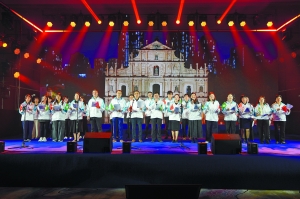
In the evening, a gala was held at the same venue. Teachers and students from many schools in Beihai, as well as educators from Hong Kong, Macao and Taiwan, presented performances such as dances and songs. The Macao delegation performed Song of the Seven Sons, The Same Song and Tomorrow Will Be Better, leading the audience in interactive chorus. Everyone waved the national flag of China and the regional flag of the Macao Special Administrative Region, creating a touching and harmonious atmosphere.