
In the race for high-quality urban development, education is emerging as an increasingly crucial key variable. The quality of education bears on a city’s innovation vitality and long-term competitiveness.
During the “14th Five-Year Plan” period, Sanshui District of Foshan has positioned education as a pivotal pillar for regional development. It has not only responded to the urgent public demand for “access to education” with solid outcomes—including the addition of over 27,000 new school seats and 100% nearby enrollment for compulsory education students with consistent household registration and school attendance addresses—but also consolidated a long-term mechanism for “access to high-quality education” through multiple rounds of innovative reforms. These efforts have propelled regional education into a new stage of high-quality balanced and connotative development, providing solid talent support and intellectual guarantee for regional progress.
On December 12th, Sanshui District held a special press conference themed “Sanshui’s Achievements During the 14th Five-Year Plan Period—Expanding and Upgrading Education”. The Sanshui District Bureau of Education announced the development of regional education since the launch of the 14th Five-Year Plan.

Expanding Capacity, Optimizing Supply, and Securing the Livelihood Bottom Line of “Access to Education”
“Access to education” is the foundation of people’s livelihoods and the starting point of educational equity.
During the “14th Five-Year Plan” period, Sanshui District has prioritized school seat construction as a top livelihood project. Through a three-pronged approach of new construction and expansion, institutional guarantees, and balanced layout, it has achieved 100% nearby enrollment for compulsory education students with consistent household registration and school attendance addresses. Public schools now account for 95% of total student enrollment, and the coverage rate of inclusive kindergartens has reached 91.82%, leading the whole city. These achievements have brought the benefits of high-quality educational resources to more families.
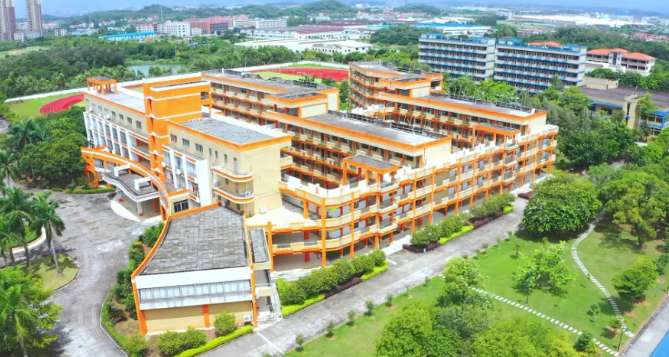
In terms of school seat supply, Sanshui has continuously increased investment in educational infrastructure. Over five years, it has newly built, expanded or renovated 23 kindergartens and primary and secondary schools, while tapping into the potential of more than 30 existing schools to expand their capacity. In total, over 27,000 new school seats have been added, representing an increase of nearly 37%, which has significantly alleviated the pressure on school seats caused by population growth.
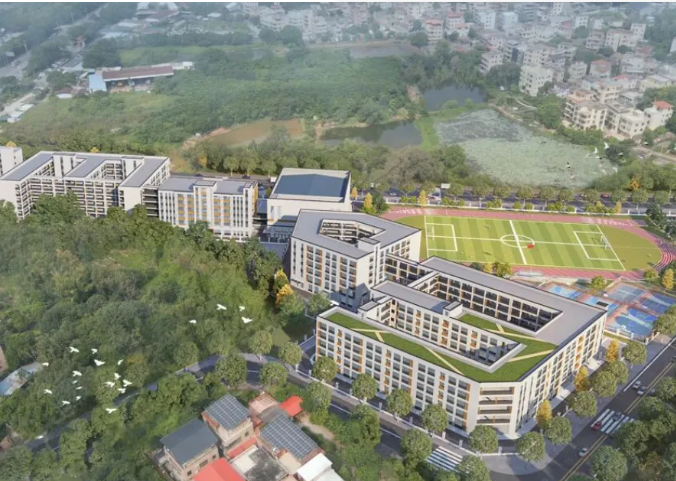
In terms of guarantee mechanisms, Sanshui has established an early-warning system for school seat supply. By dynamically monitoring school-age population data and combining immediate needs with long-term optimization, it has built a flexible school seat resource allocation system. Throughout the process, the district has steadfastly adhered to the principle of “public schools as the mainstay”, with newly added seats prioritized for expanding public education. Meanwhile, it welcomes and supports social forces to run high-quality private schools, continuously strengthening the livelihood bottom line of “access to education”.
Notably, to address the practical challenge of highly concentrated educational resources in the central urban area, Sanshui has demonstrated pioneering reform courage to break urban-rural barriers, promoting the extension of educational resources to the Two Rivers Pilot Zone and towns. Inter-school gaps have been significantly narrowed, and parents’ anxiety about school choice has been eased.
On one hand, through the “Famous School Leadership Initiative”, Sanshui has introduced top-tier schools such as Foshan No.1 High School and Huaying School to manage Hekou Middle School and Baini Middle School, enabling rural schools to achieve leapfrog development in one step. On the other hand, it has promoted the co-construction of new campuses by high-quality local schools, including Sanshui Middle School Affiliated Junior High School and Sanshui District Experimental Primary School. Eight high-quality schools in the district have established comprehensive pairing partnerships with three northern towns, and through mechanisms such as 76 backbone teachers engaging in full-time on-site exchanges for three years, the rapid improvement of educational resources in underdeveloped areas has been realized with immediate results.
“We will continue our efforts to ensure that every child can attend school nearby and further consolidate the dominant position of public compulsory education,” said Lai Weichao, Director of Sanshui District Bureau of Education.
The press conference revealed that during the “15th Five-Year Plan” period, Sanshui plans to add approximately 15,000 new basic education seats. Among them, Yundonghai and Baini are scheduled to add 2 9-year consistent education schools; the expansion projects of Jihua Middle School and Foshan No.1 High School Sanshui Campus are also underway, which are expected to add 3,300 new seats.
Improving Quality and Efficiency, Pursuing Connotative Development, and Fully Meeting the Expectation of “Access to High-quality Education”
If “access to education” addresses the question of “availability”, then “access to high-quality education” focuses on the pursuit of “quality”.
During the “14th Five-Year Plan” period, Sanshui District has made comprehensive efforts in teacher team building, teaching reform, integration of five educations, and industry-education collaboration, to comprehensively improve the connotative quality of education, ensuring that every child enjoys equitable and high-quality education.
The construction of the teaching staff has been continuously strengthened, enhancing the value of “the primary resource of education”. Over five years, Sanshui has recruited 1,383 regular teachers. In recent campus recruitment drives, graduates from postgraduate programs, 985 and 211 universities account for about 75% of new hires, marking a significant improvement in the academic structure and professional competence of the teaching team. By establishing 499 district-level and above master teacher studios, investing 96.12 million yuan in training funds to train a total of 100,000 person-times of teachers, Sanshui has cultivated 7 special-grade teachers, 9 senior teachers of the first class, 201 senior teachers of the second class, and selected 297 outstanding principals, headmasters, teachers and head teachers. This has formed a high-quality and professional teaching team. Meanwhile, the district has newly approved and concluded 72 provincial-level, 263 municipal-level and 355 district-level research projects, driving the improvement of teaching quality through educational research innovation.
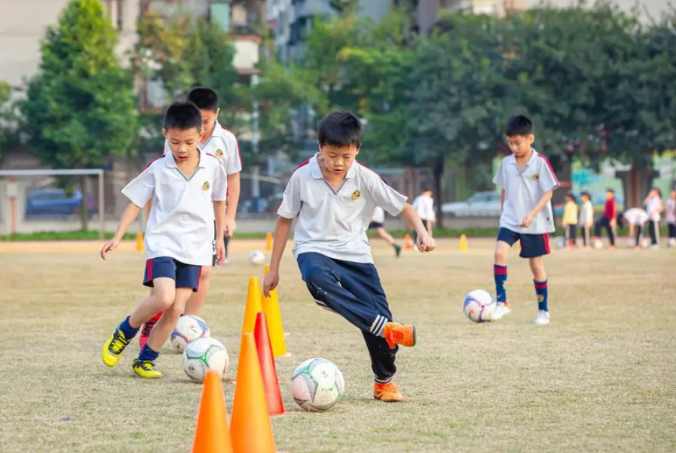
The integration of five educations (moral, intellectual, physical, aesthetic and labor education) has achieved tangible results, promoting the all-round development of students. Foshan “La Liga” Football League enjoys a solid mass base in Sanshui. Taking campus football as a breakthrough point, Sanshui has implemented the education model of “one student, one sport; one class, one project; one school, one characteristic”, and established 35 national-level campus football characteristic schools. Sanshui is planning to build a competition system featuring “class-level super leagues every week, inter-school competitions every month, league matches every season, and finals every year”, to popularize football on campus in an all-round way. Data shows that in 2024, the overall excellent and good rate of physical fitness tests for primary and secondary school students in the district reached 65.75%, an increase of 10.35 percentage points compared with 2023. At the same time, students from Sanshui have won numerous gold and silver medals in various provincial and municipal sports and art competitions, obtaining more than 1,000 awards at or above the provincial level. 11 students have been selected into national sports teams, highlighting the remarkable effectiveness of students’ comprehensive quality cultivation.
Industry-education collaboration has been deeply integrated, enhancing the ability of education to serve development. Sanshui has promoted pairing cooperation between 12 schools and key enterprises, co-building characteristic disciplines such as new energy and robot intelligence. Vocational education has been accurately aligned with the needs of local industries. Through the “order-based” training mechanism, the local employment rate of graduates has exceeded 73%. Secondary vocational students have won 123 awards in skill competitions at or above the provincial level (including 3 gold medals in national competitions), delivering a large number of technical talents for “Sanshui Intelligent Manufacturing” and realizing the synchronous development of education and regional progress.
Education is not only related to people’s livelihoods in the present, but also shapes the future of a city. The progression from “access to education” to “access to high-quality education” is the key to education empowering a region’s attractiveness, competitiveness and sustainable development capacity.
“Providing education satisfactory to the people is a never-ending journey,” said Lai Weichao, Director of Sanshui District Bureau of Education. Facing the future, Sanshui’s education sector will uphold its original aspiration, continue to focus on the people’s new expectations for high-quality education, deepen reforms, overcome difficulties, and strive to ensure that the fruits of educational development benefit all people more equitably.