Shenzhen is a city of parks.
With the number of parks in Shenzhen reaching 1,350, how can park construction further innovate and lead the trend? This time, Shenzhen has integrated citizens’ expectations into park book bars where the scents of books, flowers and coffee intertwine, bringing poetry and distant dreams into the parks.
Shenzhen’s park construction is moving towards connotative and high-quality development. Since 2019, the city has vigorously promoted the integration of culture into parks and the development of book-themed parks, leading to the emergence of park book bars. In just a few years, the number of book bars has achieved leapfrog growth. As of December 2025, a total of 100 park book bars have been built and put into operation across the city, covering urban parks, botanical gardens, greenways, blueways, scenic spots and other areas. A multi-department collaboration mechanism has been formed involving the Shenzhen Urban Administration and Law Enforcement Bureau, the Municipal Water Affairs Bureau, the Municipal Bureau of Planning and Natural Resources, the Municipal Bureau of Culture, Radio, Television, Tourism and Sports, among others.
Diversified Formats Create Composite Service Spaces
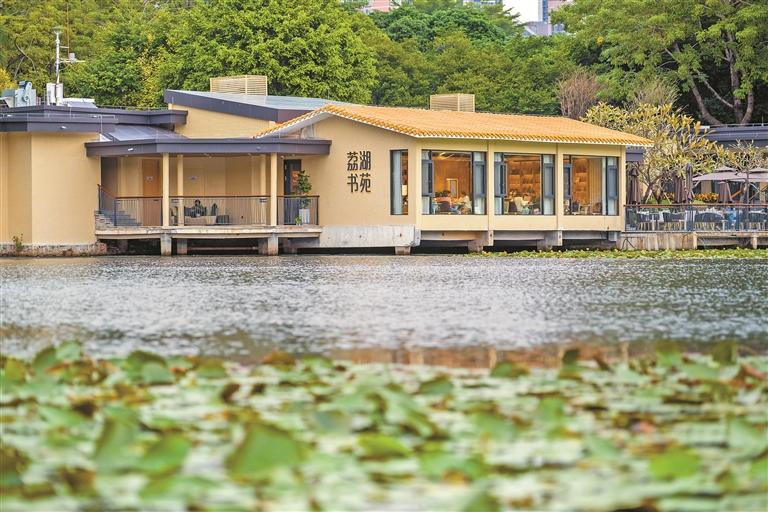
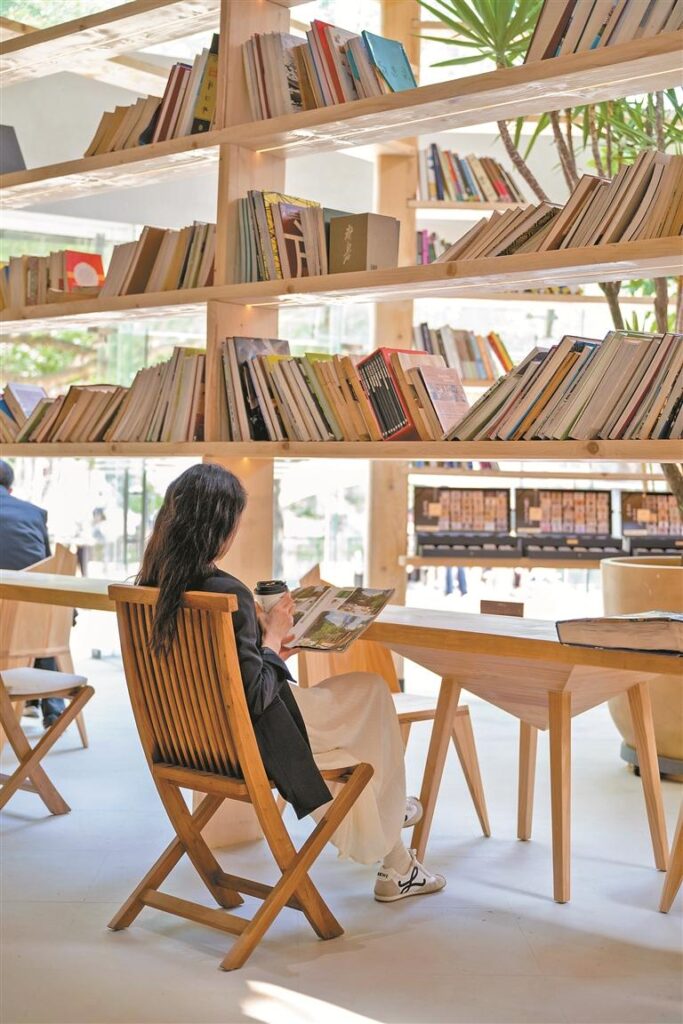
Lihu Book Garden in Lizhi Park, which opened three months ago, has quickly gained popularity on social media, attracting many citizens to come here for quiet reading, light meals and a slow-paced leisure time. After visiting the book garden, Alai, a renowned figure in the literary and artistic circles, gladly left a comment: “Sweet lychees, rich book fragrance”. Stepping into the book garden, visitors are impressed by its diversified functional zones. In addition to over 5,000 books, it also features a coffee workshop, cultural and creative market, light catering area, parent-child activity zone and other facilities, making it an ideal place that balances dynamic and static experiences.
What do Shenzhen’s park book bars look like? Lihu Book Garden is one of the representative examples. Park book bars have initially established a “park + reading” cultural service system characterized by “full coverage, distinctive features and diversified services”. Functionally, they have evolved from “single-function reading spaces” to “multi-functional composite spaces”, becoming integrated service hubs that combine rest, reading, catering and cultural experiences.
Book bars provide basic reading services, with books covering literary classics, natural science popularization, children’s literature, red-themed works and other categories. Some book bars have a rich collection of books. Among them, the Children’s Literature Academy in Xiangmi Park houses more than 10,000 books, mainly children’s picture books and children’s literature.
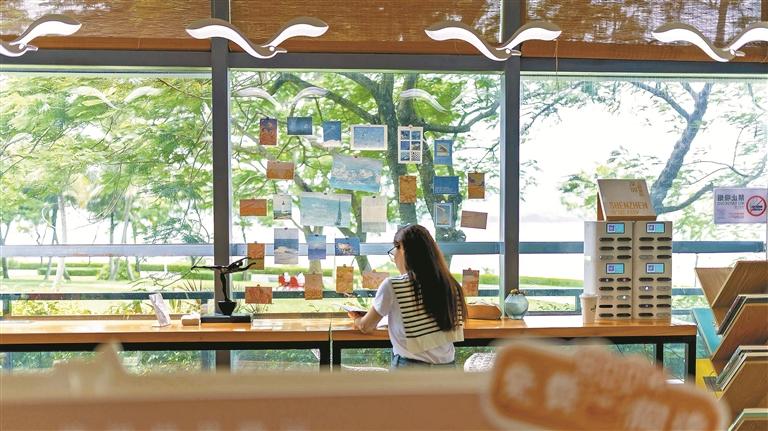
Beyond reading, park book bars also offer convenient services, including coffee, light meals or tea service, and are equipped with charging banks, emergency medicines, Wi-Fi and other facilities. Some book bars have mother-and-baby rooms, effectively improving the service quality of parks. Meanwhile, they provide cultural and ecological experience services with cultural and creative product sales areas and event spaces, and regularly organize various public welfare activities to meet citizens’ diverse cultural and leisure needs.
Integration of Book, Flower and Coffee Scents Enriches Experience
The Migratory Bird Book Bar in Shenzhen Bay Park brings reading to the seaside. Its large floor-to-ceiling windows connect the indoor space with the outdoor sea view, creating an ideal scene where “you can look up at the sea and bow your head to read”.
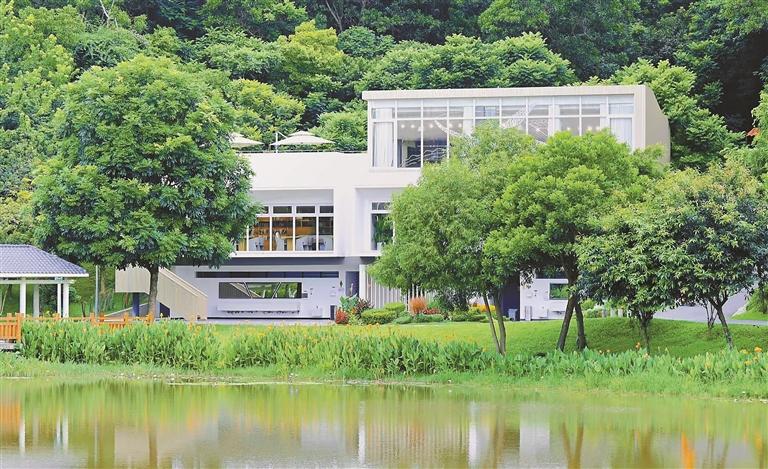
The Eucalyptus and Pine Art Book Bar in Bijia Mountain Park places reading deep in the garden, surrounded by eucalyptus and pine forests, offering a unique “book house in the woods” experience.
Lihu Book Garden in Lizhi Park extends reading to the lakeside. Looking up, visitors can see nearby water lilies, flocks of ducks, distant pavilions, corridors, bridges and modern buildings, all blending into a single picturesque view…
Mountains, forests, lakes and seas are Shenzhen’s natural endowments for park development. Another major highlight of park book bar construction is adhering to the principle of “one bar, one feature”. By integrating the scents of books, flowers and coffee, each book bar is tailored to the positioning and characteristics of its respective park, creating an exclusive space.
Listening to the wind, chasing the waves, wandering through the city, overlooking the mountains and gazing at the sea—Shenzhen’s 100 park book bars are diverse and vibrant, boasting both aesthetic appeal and cultural connotation. Here, reading is not just about flipping through pages, but also an aesthetic experience of dialoguing with nature. Many park book bars have formed brand effects with their distinctive positioning. The Egret Slope Book Bar in Shenzhen Bay Park has been awarded the “National Trade Union Brand Staff Reading Room Demonstration Site”, and the Blue Book House in Jingmi Park has been named the “2024 Most Beautiful New Public Cultural Space in Guangdong”.
“I have been to some park book bars in Shenzhen. Sitting by the sea, enjoying the sea breeze and immersing myself in the rich book fragrance is such a wonderful experience,” said a literary critic of Green Tea Book Review and a judge of Shenzhen’s Top Ten Good Books, praising that park book bars are worthy of promotion.
Ma Peijie, editor-in-chief of Beijing News Book Review Weekly, believes that Shenzhen is a city where land is extremely precious, but the government is more willing to integrate reading with nature. For readers, this is a great blessing—they can gain both physical and mental pleasure in such beautiful places.
Property Revitalization and Social Participation Empower Operation
Behind the popularity of Shenzhen’s park book bars lies the innovation in construction and operation mechanisms. Property revitalization and social participation have laid a solid foundation for the sustainable development of park book bars.
Before renovation, Lihu Book Garden in Lizhi Park was a vacant building; Zimo Book Bar in Lianhuashan Park was a single-function tourist service center; Dayun Book Bar in Dayun Park was originally a public toilet. Following the concept of “combining demolition and construction, and transforming functions”, these spaces have been turned into multi-functional public cultural venues… In constructing park book bars, Shenzhen gives priority to utilizing idle and old buildings in parks, realizing space regeneration and cultural value increment through renovation and reconstruction.
To address the issue of limited park property space, Shenzhen has appropriately added a small number of prefabricated structures in parks. Newly built book bars generally adopt prefabricated construction technology, with lightweight steel as the framework and environmentally friendly panels as the core materials. These components are prefabricated in factories and then quickly assembled on-site, minimizing the impact on park ecology. The Migratory Bird Book Bar in Shenzhen Bay Park is the first prefabricated lightweight building with low interference to nature.
Policy guidance has facilitated the upgrading and implementation of book bars. On May 1, the Regulations of Shenzhen Special Economic Zone on Parks was officially implemented, further clarifying that “comprehensive parks and special parks may select operators through competition to provide supporting services such as cultural and leisure activities”. Relying on this regulation, the construction and operation of park book bars have entered a new stage, shifting from being mainly managed and serviced by park administrative units to being dominated by market-oriented and commercialized operation models.
A number of park book bars have introduced social forces through public bidding, leasing and social co-construction, bringing in professional operators and attracting social capital for book bar renovation, book collection updates and daily operations. The government focuses on planning guidance, standard supervision and ensuring public welfare attributes, achieving the upgrading of park cultural services.
Promoting Win-win Situation of Ecological, Cultural and Economic Values
At present, the operation of Shenzhen’s park book bars has achieved good results of “prioritizing social benefits and coordinating diversified values”. According to statistics, park book bars serve over 5 million citizens annually. Among them, popular book bars such as the Egret Slope Book Bar and Migratory Bird Book Bar in Shenzhen Bay Park, as well as the Eucalyptus and Pine Art Book Bar in Bijia Mountain Park, receive more than 100,000 visitors per store each year. Surveys show that the average stay time of tourists in areas surrounding park book bars has increased by 40 minutes, and the satisfaction rate of park culture has risen by 25 percentage points. Meanwhile, the ecological education function of book bars has effectively enhanced citizens’ environmental awareness, promoted urban ecological civilization construction, and made them important windows for spreading park culture.
Encouragingly, through sound commercial operation, park book bars have achieved good self-sustainability and are fostering new momentum for urban development. New consumption scenarios such as coffee, cultural and creative products, light catering and exhibitions are highly popular. While ensuring public welfare, many park book bars have realized sustainable development, effectively enhancing the attractiveness of parks and driving park consumption.