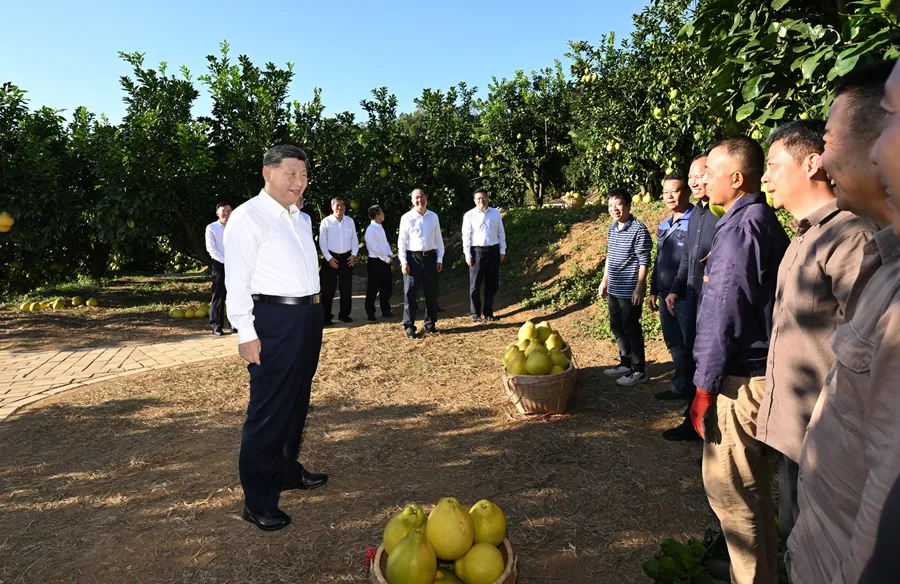
Recently, the 30th Session of the Conference of the Parties (COP30) to the UN Framework Convention on Climate Change was held in Belém, Brazil. At the side event themed “China’s Solutions for Climate Change Adaptation” in the “China Pavilion” of the conference, Shenzhen’s case—”Addressing Coastal Climate Risks: Shenzhen’s Climate-Resilient Urban Practice of ‘Mountain-Sea Connection + NbS Communities'”—was successfully selected into the Typical Cases of Climate-Resilient Cities (only 15 outstanding cases nationwide). It vividly demonstrated to the world the “China Solution” for climate change adaptation and Shenzhen’s pioneering and exemplary practices.
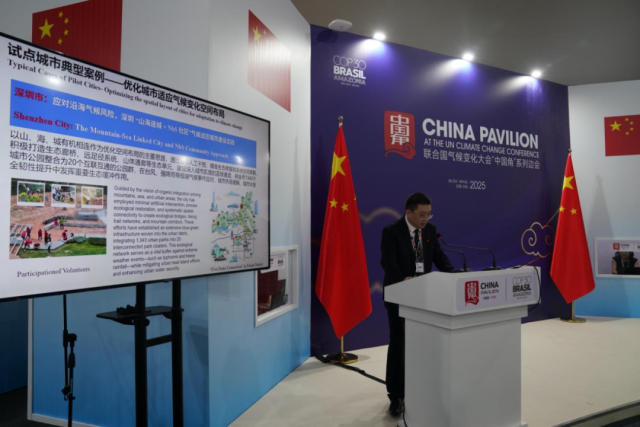
As a coastal metropolis with a population exceeding 20 million and highly concentrated industries, Shenzhen has faced mounting climate challenges in recent years, including intensified typhoons, frequent extreme waterlogging, and an average of 44 high-temperature days annually. In response, Shenzhen has taken deepening the pilot of a climate-resilient city as the core task, established a holistic governance system featuring “institutional leadership, technological empowerment, ecological foundation, and community-based implementation,” and explored a new path for climate adaptation in large coastal megacities.
Institutional and Technological Drivers: Consolidating the Foundation for Adaptation
In terms of top-level design, Shenzhen issued China’s first municipal medium and long-term climate adaptation plan—Shenzhen Climate Adaptation Plan (2023-2035)—and built a three-tier policy closed-loop consisting of “master planning, special plans, and technical standards.” Over the past two years, more than 10 industry standards have been rolled out intensively, such as the Wind Resistance Design Standard for Construction Projects and the Technical Guidelines for Waterlogging Prevention in Urban Underground Space. Simultaneously, climate adaptation requirements have been integrated into the overall territorial spatial plan, with legislation ensuring the long-term effectiveness of governance.
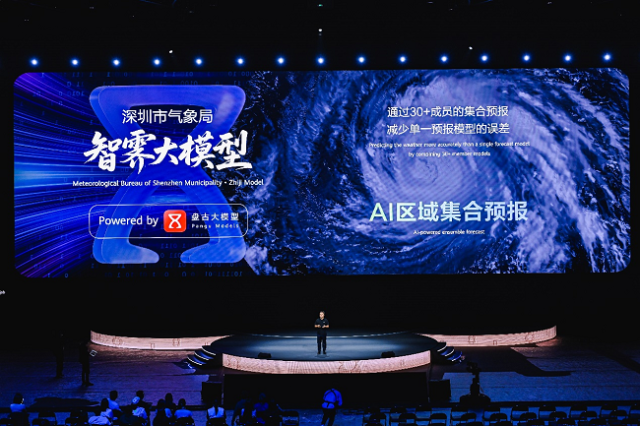
For technological support, Shenzhen has established a 2.6km × 2.6km high-density meteorological observation network integrating land and sea, added equipment including X-band phased array radars, and applied the regional AI forecasting model “Zhiji 1.0.” The advance warning time for sudden hazardous weather has reached 62.44 minutes on average. As of September 2025, 396 various early warnings have been issued, realizing full-cycle closed-loop management covering “pre-disaster assessment, in-disaster early warning, and post-disaster evaluation.”
“Mountain-Sea Connection”: Laying the Foundation for Adaptive Resilience
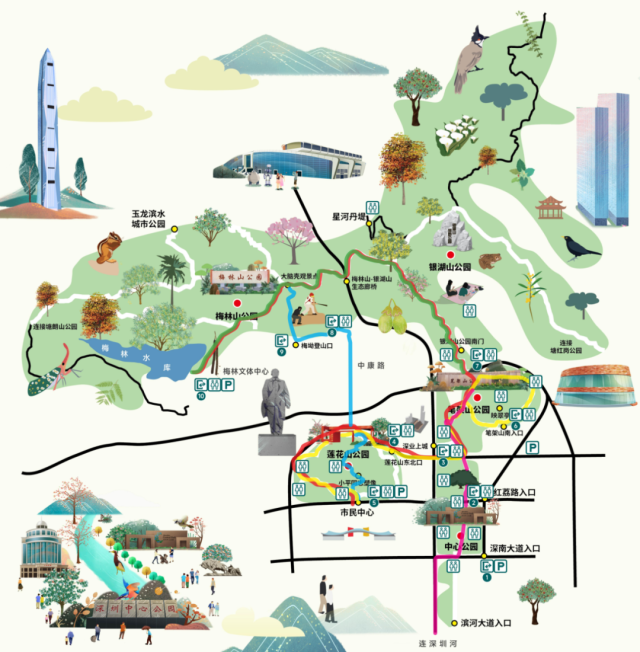
Guided by the ecological pattern of “one backbone, one belt, and twenty corridors,” Shenzhen has advanced the “Mountain-Sea Connection” initiative. It has built China’s first ecological corridor bridge—Kunpeng Trail No.1 Bridge—restored 2.2 hectares of vegetation, and reconnected fragmented urban ecosystems. The city has fully promoted sponge city construction, with the proportion of qualified built-up areas reaching 62.46%, advancing the transformation from “small sponges” to a “city-wide large sponge.” By connecting ecological and urban spaces through trails linking mountains, water bodies, and other ecosystems, the coverage rate of park green space service radius has reached 91%. Taking Futian District’s “Five Parks Connection” as a model, Shenzhen has integrated park green spaces with commercial districts, industrial parks, and residential areas, creating a green and beautiful environment where “greenery is visible through windows and parks are accessible within steps,” making ecosystems a “natural barrier” for climate adaptation.
Hierarchical Community Practices: Implementing Adaptive Scenarios
Shenzhen has promoted a “dual-track” community governance model: On one hand, it has completed 21 pilot projects for safe and resilient communities, trained over 100,000 “first emergency responders,” and built a “5-minute response circle” to strengthen grassroots emergency capabilities. On the other hand, it has launched the first batch of climate-resilient community demonstrations in Shiyan, Yuehai, and other areas using Nature-based Solutions (NbS). Targeting different climate risks in communities, differentiated transformations such as wetland restoration and vegetation community construction have been implemented.
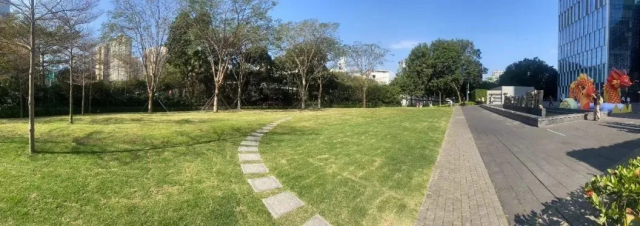
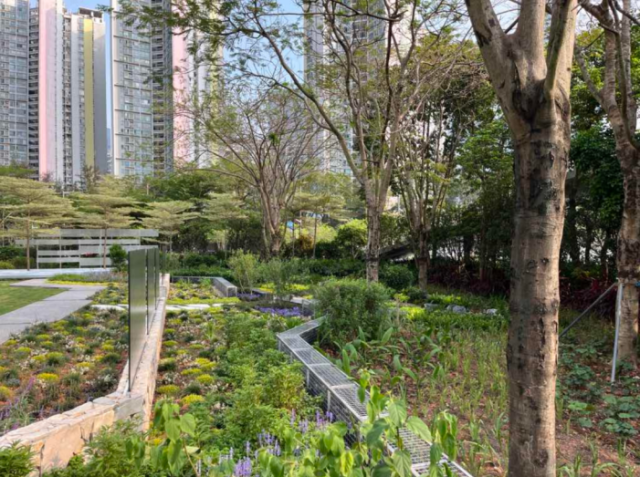
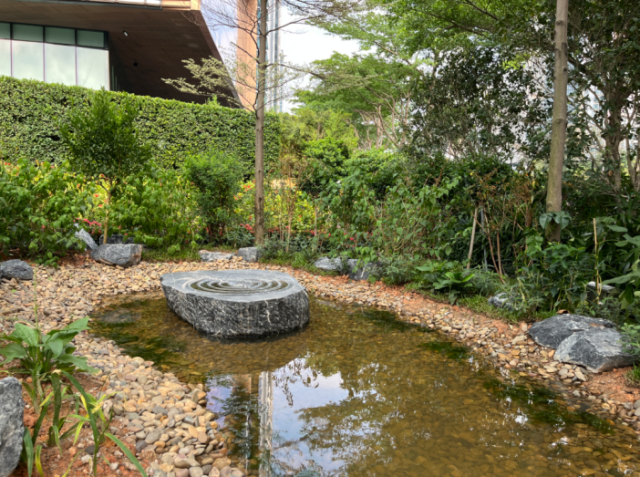
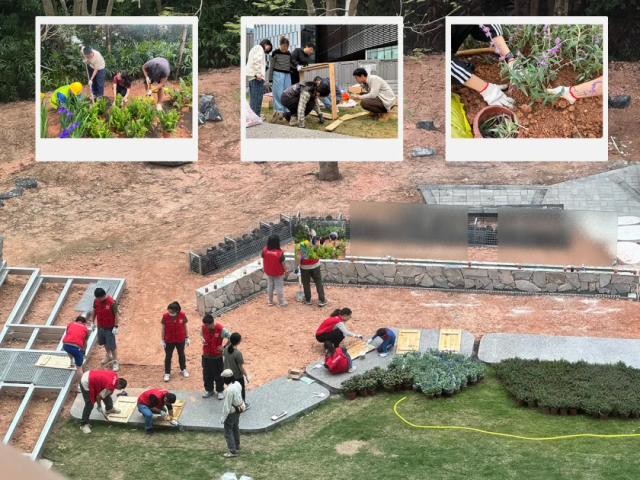
Shenzhen’s “Mountain-Sea Connection + NbS Communities” practice has achieved remarkable results. It has not only consolidated institutional guarantees through special economic zone legislation but also realized the dual improvement of ecological resilience and living quality, establishing a trinity construction model of “institutional design, ecological pattern, and community practice.”
A responsible person from the Environmental Development Center of the Ministry of Ecology and Environment stated that through precise ecological restoration and systematic spatial connection, Shenzhen has achieved outstanding results in addressing extreme climates and mitigating urban heat islands. It has provided a replicable “Shenzhen Model” for coastal high-density cities, demonstrating China’s practical wisdom in climate governance.