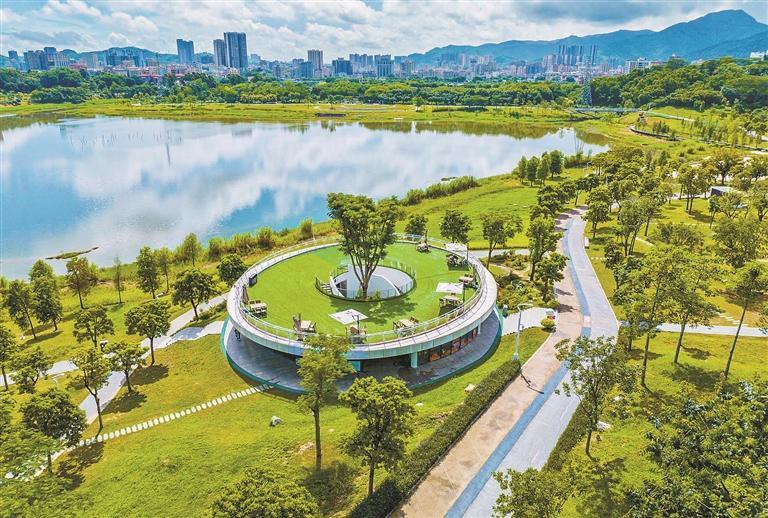
On the afternoon of December 17, Shenzhen Shenzhen River Bay Basin Administration Center organized the 33rd training session of Mingxi Classroom with the theme of Innovative Application and Practice of UAV Technology in the Water Affairs Sector at Meilin Reservoir. All staff of the Center participated in the training and conducted in-depth exchanges focusing on practical application.
Starting with the basic principles and practical skills of UAVs, the training systematically elaborated on the application prospects of UAVs in river patrol, reservoir inspection, flood control and drought relief, in combination with the development trend of the low-altitude economy and the relevant national policies and sector regulations for water affairs. Through typical case analysis and on-site demonstrations, it vividly demonstrated the high-efficiency advantages of UAVs in such work as the investigation of four types of irregularities, evidence collection for illegal construction and dam monitoring, which addressed the pain points of traditional manual inspection. During the exchange session, the staff held discussions on the route planning for complex terrains, accurate identification of irregular behaviors, and adaptability of UAV operation in confined spaces, centering on the actual operation and maintenance of rivers, reservoirs, pumping stations and sluices.
This training has closely aligned with the operational and maintenance demands of water affairs, which not only improved the staff’s cognition and application capabilities of UAV technology, but also built a communication platform for the practical implementation of such technology. Moving forward, the Center will explore the path for the regular application of UAVs based on the outcomes of this training, promote the improvement of basin management efficiency through technological innovation, and contribute to the construction of a smart water affairs system.