

On the roof ridges of the Chen Clan Academy in Guangzhou, a group of ceramic sculptures stand vividly. Civil and military officials, immortals and goddesses—despite being exposed to wind and rain for years, their glazes remain bright and vivid. This 156-meter-long ceramic sculpture complex depicts thousands of story characters, like a Lingnan epic written in clay, silently telling the glorious history of Shiwan ceramics sculpture, a national-level intangible cultural heritage.
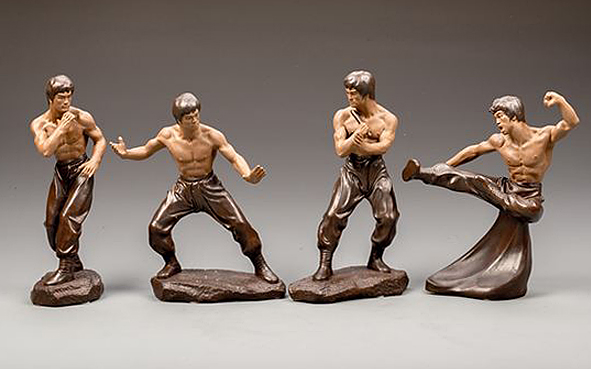
“Jingdezhen for porcelain, Shiwan for pottery.” Unlike Jingdezhen, which is famous for porcelain, Shiwan in Foshan, Guangdong, is renowned for its pottery. Its pottery-making history can be traced back to the Neolithic shell mound sites. Large-scale kilns emerged in the Tang Dynasty, flourished in the Song and Yuan dynasties, and reached their peak in the Ming and Qing dynasties. In the Qing Dynasty, Qu Dajun wrote in New Sayings of Guangdong: “Pottery from Shiwan spreads across the two Guangdong regions and even reaches overseas countries,” which fully demonstrates its once prosperous export trade.
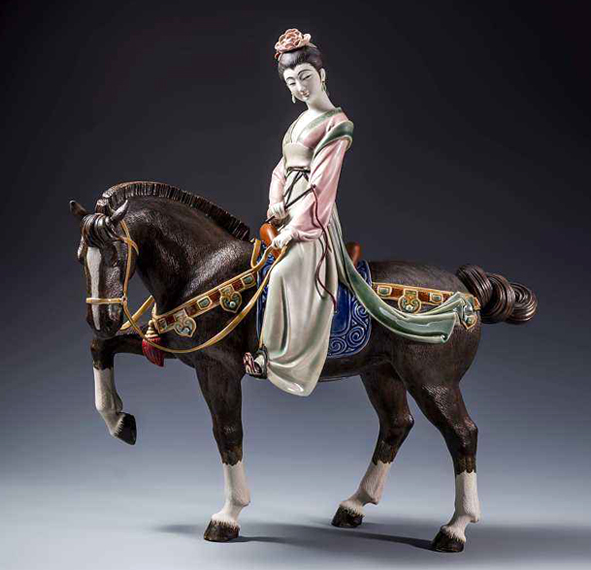
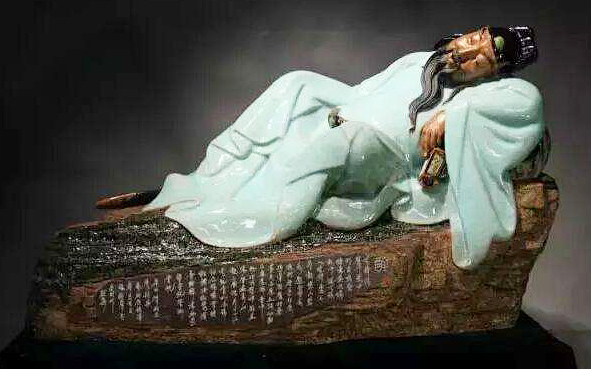
From daily-use pottery in the Tang and Song dynasties to architectural roof ridges and artistic ornaments in the Ming and Qing dynasties, the kiln fire in Shiwan has never been extinguished for a thousand years. The themes have also become increasingly rich—mythical figures, historical legends, flowers, birds, fish, insects, cats, dogs and other small animals can all be turned into sculptures. These works, affectionately called “Shiwan figurines” by Cantonese people, have distinct and lifelike images, exuding a strong Lingnan life atmosphere in their simplicity. They are not only deeply loved by the public but also once captivated scholars such as Shang Chengzuo and Xian Yuqing.
The charm of Shiwan ceramics sculpture is rooted in its unique technical system. Among them, the “fetal hair technique” can be called a unique skill in animal ceramic sculpture. Originated from Huang Bing, a ceramic artist in the Qing Dynasty, this technique requires carving the feathers and fur of birds and beasts strand by strand with a specially made bamboo knife when the ceramic blank is 80% dry, striving for extreme realism.
In today’s era of prevalent mechanical replication, there are still craftsmen who insist on endowing clay with life in the most time-consuming way. In the studio of Ou Guichan, a senior master of arts and crafts in Guangdong Province, she is carving feathers for a “ceramic sparrow”. The carving knife moves smoothly and accurately. “It’s not just about carving randomly all over,” she explained softly. “The knife must be applied according to the animal’s shape and muscle direction. A slight deviation in strength or direction will lose its charm.” Her father, Ou Qian, is revered as a master of Shiwan animal ceramic sculpture, who pushed the fetal hair technique to the extreme. Ou Guichan has not only inherited the skills but also the perseverance for perfection: “Although the efficiency is low, such craftsmanship cannot be allowed to disappear.”
It is this perseverance that has made Shiwan a cradle of famous artists. As of 2024, there are 27 national-level ceramic art masters, 60 provincial-level ones, and more than 300 young ceramic artists locally.
Today, Liu Jianling, Ou Guichan’s daughter, has taken over the family legacy. She uses traditional techniques to reflect contemporary aesthetics and has created series of works such as Smiling to Welcome Blessings, making majestic tigers show anime-like cute expressions and injecting youthful vitality into the ancient craft. Her works are widely popular among young people at the Shenzhen Cultural Expo.
“Under the impact of multiculturalism, how to attract young people’s attention and encourage them to take the initiative to inherit is a subject that every inheritor must face,” Liu Jianling admitted frankly.
In the past 10 years, local areas have explored a communication model of “classrooms + campuses + museums”: offering ceramic art courses to the public, holding lectures on campus, and co-organizing exhibitions of famous artists and “little ceramic artists” with museums… enabling more and more handcraft enthusiasts, teenagers and even foreign friends to feel the infinite charm of this traditional craft through hands-on creation.
The millennium-old kiln fire is passed down from generation to generation. Shiwan figurines are not only the crystallization of clay and glaze but also the simple expression of Lingnan people’s perception of life, nature and beauty. In the integration of ancient and modern times, they tell the stories belonging to this land.
