“If you pass by her side, you will die.”
A few months ago, Ms. Kim, a 30-year-old South Korean woman, applied online for a Japanese translation job in Phnom Penh, the capital of Cambodia.
When she arrived at Phnom Penh International Airport, a polite South Korean man picked her up. After a four-hour drive, Ms. Kim was taken to an apartment. She had just picked up her phone to inform her family that she was safe when three unfamiliar men rushed into the room, seizing her phone and passport.
From that moment on, Ms. Kim was forced to work in live-streaming scams. She was subjected to verbal abuse and physical assault whenever she failed to meet her performance quotas. She was finally rescued after local police raided and dismantled the scam den.
An investigation revealed that the mastermind behind the case was also a South Korean national: Hwang Ha-na.
In the early hours of December 24th local time, Hwang Ha-na, who had been on the run for nearly two years, was arrested by police at an airport in Cambodia. She was repatriated to South Korea the same morning to face investigation.
How did this “wicked woman” born into a chaebol family end up in such a predicament?

Relapsing into Old Vices
Born in 1988 to a prominent South Korean chaebol family, Hwang Ha-na was spoiled rotten from childhood. She grew up indolent and idle, never forming a sound moral compass. As an adult, she strayed onto a path of wrongdoing: consorting with delinquents and falling prey to drug addiction.
According to South Korean media reports, in 2023, Hwang Ha-na was suspected of injecting crystal meth into two acquaintances with a syringe in Gangnam District, Seoul. She was subsequently placed under police investigation and banned from leaving the country.
To evade criminal punishment, Hwang secretly fled South Korea via an illicit channel to Vietnam in February 2024, bringing the domestic investigation into her to a standstill.
Three months later, South Korean police filed a request with Interpol for a Blue Notice against her and revoked her passport.
Perhaps feeling unsafe in Vietnam, Hwang fled again to Thailand in December of the same year. Shortly after, with the help of a Korean-born man, she entered Cambodia through illegal means.
Sources revealed that this Korean-born male associate provided her with financial support, allowing her to live an extravagant life in a luxury apartment in Phnom Penh and frequent various entertainment venues with her.
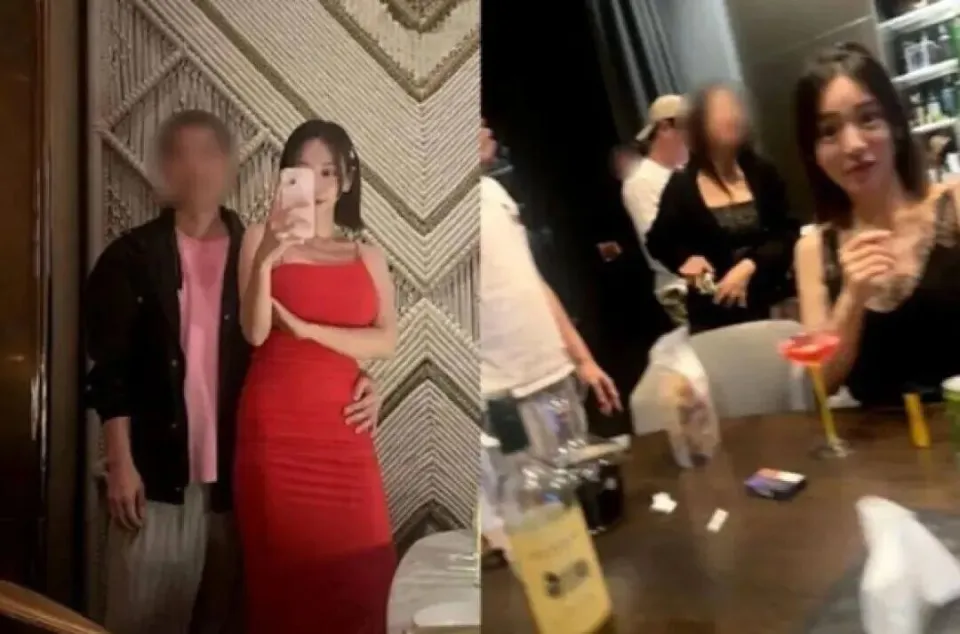
To sustain her lavish lifestyle, Hwang Ha-na repeatedly lured acquaintances to Cambodia to engage in sex trafficking. She is also suspected of involvement in drug distribution and money laundering for local wealthy elites.
Notably, Hwang Ha-na is an “old friend” of Lee Seung-hyun, a former South Korean idol star. According to a report by South Korea’s SBS, when Lee ran nightclubs, Hwang procured attractive women for him and trafficked drugs on the side.
In 2019, the infamous Lee Seung-hyun nightclub scandal came to light. Lee was sentenced to one and a half years in prison, while Hwang Ha-na was paroled. After his release from prison, Lee quickly reconnected with his “old friend” and slipped back into his criminal ways.
According to CNN, Lee Seung-hyun has also recently traveled to Cambodia to make money and made an appearance at an event there.
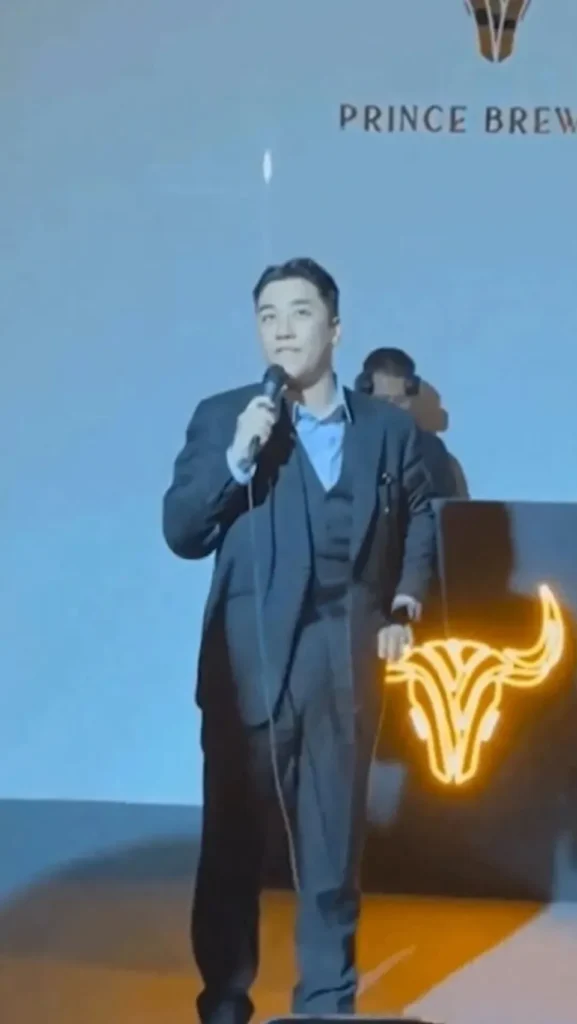
Media disclosed that the event was hosted by Prince Group, a conglomerate headquartered in Cambodia.
In recent years, Prince Group has been under constant police investigation on suspicion of involvement in fraud, underground casinos, abduction, unlawful detention, drug trafficking and human trafficking. Since October 2025, multiple countries including the United States, South Korea, Thailand and Singapore have imposed sanctions on Prince Group and its founder Chen Zhi, leaving the conglomerate on the verge of collapse.
The fall of her “backer” left Hwang Ha-na living in constant fear, and she ultimately decided to surrender herself to the South Korean police, who immediately initiated an arrest procedure.
Media reports state that with the assistance of Cambodian authorities, South Korean police detained Hwang locally and executed an arrest warrant against her on the flight back to South Korea in accordance with the law.
Hwang Ha-na is currently being investigated at a police station, and relevant police officials said specific details are not available for disclosure at this time.
Quan Xiaoxing, a part-time researcher at the Research Center for the Korean Peninsula at the University of International Business and Economics, told Global People: “Some telecom fraud gangs once active in South Korea have relocated to Cambodia, Myanmar and other regions in recent years, gradually developing a division of labor: some design scams, some recruit accomplices, and some provide local connections. Together, they have woven a cross-border telecom fraud network targeting South Koreans.”
Born with a Silver Spoon in Her Mouth
In South Korea, Hwang Ha-na is known as someone who was “born with a golden spoon”.
Her maternal grandfather, Hong Du-young, was the founder of Namyang Dairy Products, a South Korean company. He made his fortune with infant formula in the 1960s and later built the enterprise into a leading dairy giant in South Korea. Hong’s daughter married the son of a senior officer in South Korea’s Military Police Command, and they later had Hwang Ha-na.
Raised under the dual glory of chaebol wealth and elite political connections, Hwang Ha-na has flaunted her family background from an early age, seeing it as a license to act with reckless abandon.
In her youth, she frequented all manner of entertainment venues, and her academic performance suffered as a result. After failing South Korea’s college entrance exam, her parents sent her to study in the United States, but she was deported back home for drug use in a group, cutting her studies short for good.
Upon her return to South Korea, shielded by her family’s influence, Hwang Ha-na showed no sign of remorse or restraint. In 2009, at just 21 years old, she purchased drugs at multiple nightclubs in Seoul. Two years later, she was arrested for smoking marijuana, yet no charges were ultimately filed against her.
In 2015, she was arrested by police for selling drugs to university students at a nightclub, only to be released on the grounds of “insufficient evidence”.
In 2019, she was once again suspected of drug trafficking to a female university student surnamed Jo, and later paid 100 million South Korean won (approximately 500,000 Chinese yuan) to coerce Jo into taking the blame for her crimes.
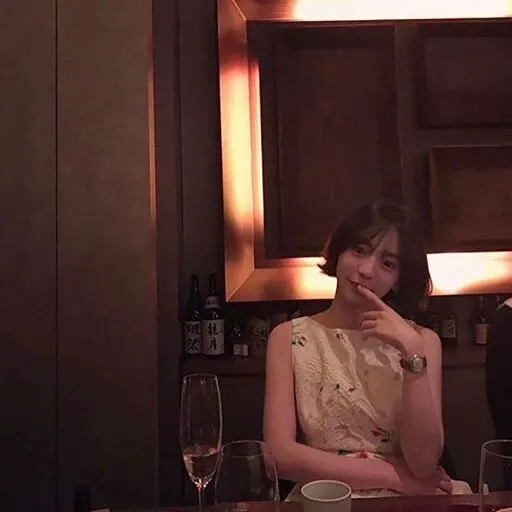
Hwang’s family has never made a public statement regarding her drug-related offenses. However, Hwang once boasted to friends that her father and uncle “had an excellent relationship with the chief of the Seoul Metropolitan Police Agency”.
Quan Xiaoxing commented: “When handling cases involving people like Hwang Ha-na, South Korea’s judicial system leaves a certain degree of discretion. Phrases such as ‘remorse for a first offense’ or ‘her family’s significant contributions to South Korea’s economy’ often appear in relevant documents as grounds for lenient sentencing. Critics argue that this essentially provides institutional protection for the chaebol class.”
Fall Guys
A chilling saying circulates in South Korea: “If you cross Hwang Ha-na’s path, you will die.”
In 2020, in a drunken stupor, Hwang Ha-na stole luxury handbags and jewelry worth millions from a friend’s home. While investigating the theft, police uncovered evidence of her drug use.
At the time, Hwang was married to a man named Oh Se-yong. Faced with police questioning, she made the ruthless decision to use her husband as a fall guy.
In September 2020, Oh Se-yong turned himself in to the Gangnam Police Station in Seoul and admitted to taking drugs with his wife. Just a few days later, however, he returned to the police station and changed his statement, claiming that he had injected drugs into Hwang while she was asleep.

The investigation was still ongoing when Oh Se-yong suddenly committed suicide. Police found a suicide note at the scene, which read: “I’m sorry for getting my wife involved with drugs.”
Shortly after Oh’s death, Nam, a close friend of his for many years, also died in an unexplained accident. Media reports state that Nam was a member of “Vatican Kingdom”, a major drug trafficking ring in South Korea that controlled Seoul’s drug trade network with an annual turnover of billions of won.
In the end, police only summoned Hwang Ha-na for a brief interrogation before hastily closing the investigation.
In 2023, Lee Sun-kyun, a renowned South Korean actor who starred in the Oscar-winning film Parasite, was found to have taken drugs in a group with Hwang Ha-na and seven others. After the scandal broke, Lee committed suicide in his car, leaving a suicide note for his wife that read: “There is no other way but this.”
Now, Hwang Ha-na—who has ruined countless lives including her own, with no way out but to surrender—has likely come to understand the true meaning of those words.