Xinhua News Agency reporters learned from the Memorial Hall of the Crime Evidence of the Japanese Unit 731 on December 27 that new evidence has been added to the war crimes committed by the Japanese Unit 731 of the Kwantung Army during its invasion of China (hereinafter referred to as Unit 731). Researchers have recently conducted an in-depth interpretation of the handwritten confession by Tsunesuke Kato, Commander of Unit 731’s Hailar Detachment. This marks the first public disclosure of the handwritten confession made by a member of Unit 731 who was arrested by the Soviet Union.
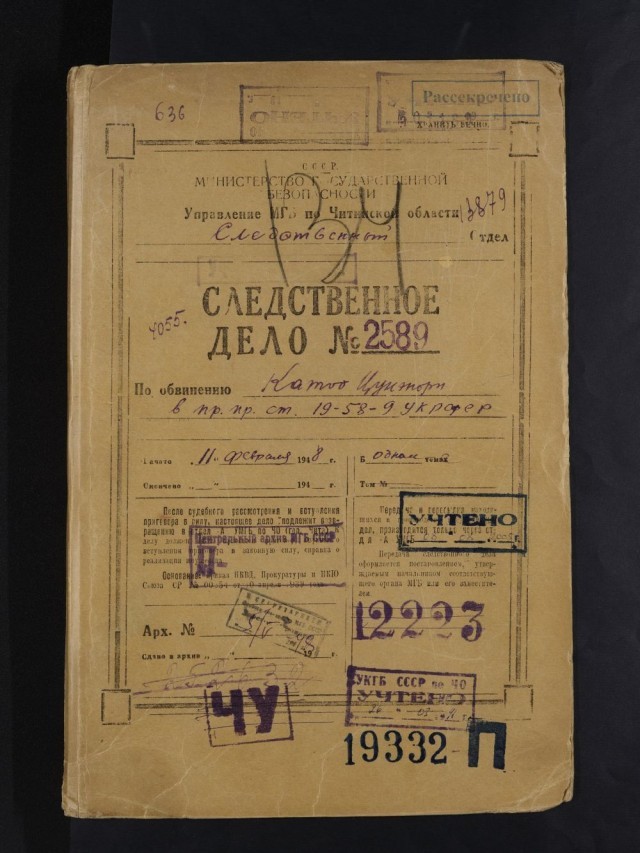
It is understood that the original historical document is preserved in the Transbaikal Territory Branch of the Federal Security Service of the Russian Federation. After being declassified upon application by the Pushkin Scientific Library, the document was donated to the Memorial Hall of the Crime Evidence of the Japanese Unit 731 in February this year.
Dated February 17, 1948, the handwritten confession was a statement made by Tsunesuke Kato after his arrest in Chita, the Soviet Union. The complete dossier consists of the original handwritten Japanese text and its Russian translation, including the arrest record of the suspect, a personal information registration form and a detailed statement of his war crimes. As the last commander of the 543rd Detachment (Hailar Detachment), Tsunesuke Kato had an advanced medical background and was a senior military medical officer who directly participated in the core criminal activities of Unit 731.
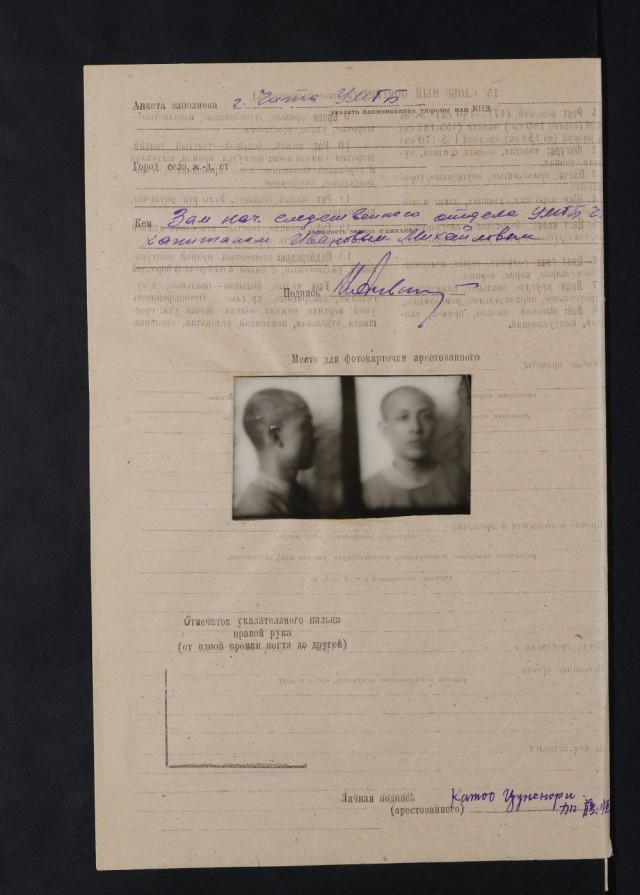
The handwritten confession provides a detailed restoration of Unit 731’s organizational structure and functional division of labor. Tsunesuke Kato confessed that Unit 731 stationed approximately 3,000 personnel at its special military compound in Pingfang, Harbin, with five subordinate detachments deployed in Mudanjiang, Linkou, Sunwu, Hailar and Dalian, forming a complete operational network structured as “Headquarters – Departments – Detachments”.
He also confessed that Unit 731’s special prison held about 200 Chinese prisoners of war, on whom the Japanese army conducted efficacy tests of multiple pathogenic bacteria including anthrax, typhoid and plague, and explicitly stated that “all research was accompanied by human experiments”.
The confession confirms that the Hailar Detachment was originally established as a forward stronghold for bacteriological warfare against the Soviet Union. With a troop strength of around 120 personnel, it ostensibly undertook tasks such as epidemic prevention and maintenance of water filtration equipment, while secretly engaging in classified work centered on breeding white mice and fleas. For instance, the detachment used oil drum devices to breed fleas on a large scale with white mice, producing up to 10 kilograms of fleas per month for spreading pathogenic bacteria in bacteriological warfare operations.
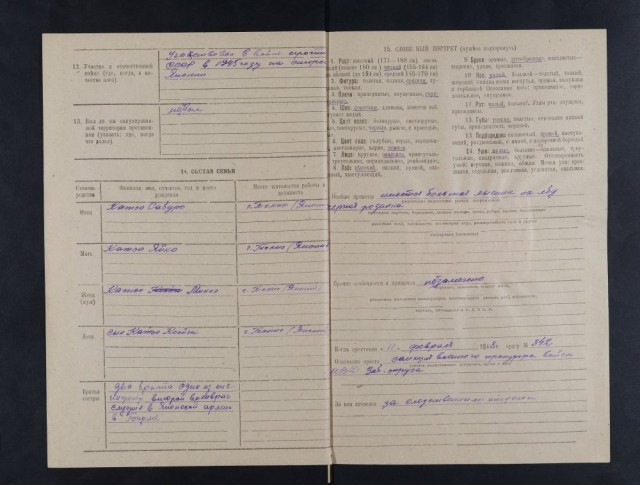
Jin Shicheng, Director of the Publicity, Education and Exhibition Department of the Memorial Hall of the Crime Evidence of the Japanese Unit 731, stated that this dossier bears extremely high historical and academic value, as it supplements the details of interrogation conducted prior to the Khabarovsk War Crime Trials. After the war, Tsunesuke Kato deceived the Soviet authorities by concealing his involvement in criminal activities and downplaying the actual functions of the Hailar Detachment. He ultimately evaded a military trial and returned to Japan in 1955. The public release of this dossier has powerfully exposed his historical lies.
The confession records that Tokyo issued an order to halt preparations for bacteriological warfare in June 1945. This detail directly proves that bacteriological warfare was not a reckless act perpetrated by individual military officers, but a state-sponsored act under the unified command of Japan’s senior military leadership. It serves as a powerful rebuttal to the remarks made by Japanese right-wing forces who deny the atrocities committed by the Japanese army during the war.