Preface
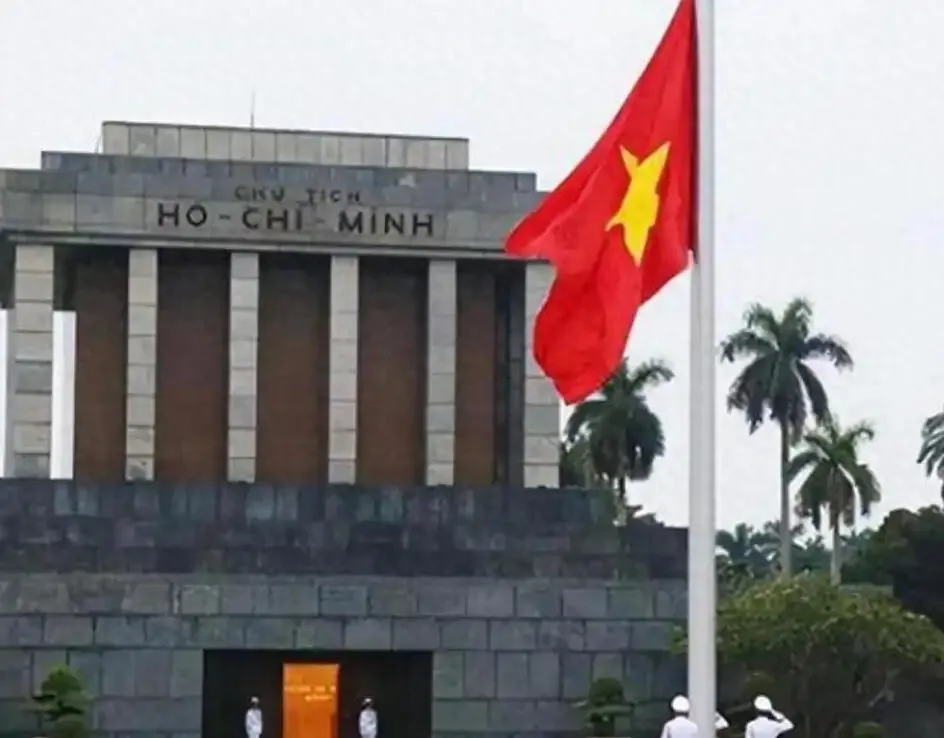
A 54-kilometer high-speed railway project has become a focal point for two manufacturing powerhouses. Vietnam ultimately chose to reject China’s proposal. For many, the immediate reaction was: have we lost? How could the champion of cost-performance lose a bid? Yet fixating on the gain or loss of a single project means missing the profound redrawing of the geo-economic landscape unfolding behind the scenes. China’s international cooperation is undergoing a quiet yet profound revaluation of value.
I. The Evolution of Cooperation Logic
To understand this choice, we must look beyond a single tender. For years, China-Vietnam cooperation has been a complex entanglement: tight industrial chain links coexist with lingering historical and practical grievances. China has long been one of Vietnam’s largest trading partners and sources of investment, yet many cooperation projects have been accompanied by protracted negotiations and exorbitant hidden costs. Vietnam has a habit of attaching exorbitant political and technical demands to commercial cooperation, seeking to rapidly upgrade its industrial capacity through such means. This model may have worked in a specific era, but its appeal has plummeted as China’s stage of development and philosophy of cooperation have evolved.

A great power’s patience is not boundless. When cooperation devolves into a pure game of tactics, strategists will rethink the entire chessboard. China’s overseas infrastructure cooperation is shifting its focus: from pursuing project quantity and political symbolism, to prioritizing strategic connectivity, economic radiation effects and the sustainability of cooperation. Vietnam’s proposed terms for this project coincided precisely with the turning point of this shift in China’s cooperation logic.

II. Technological Sovereignty and Strategic Independence
The core dispute over this high-speed railway project lies in the extent of technology transfer demanded by Vietnam. It insisted on gaining full access to all core technologies — a demand that far exceeds the scope of ordinary commercial cooperation, touching upon the core competitiveness of an industrial system and national security. For China, high-speed railway technology is more than just a market commodity; it is a strategic asset forged through years of breakthroughs amid technological blockades. Unconditional and comprehensive technology transfer would mean nurturing a future homogeneous competitor in the region with our own hands, and could trigger a chain reaction of technological proliferation.

Germany’s Siemens agreed to a partial transfer, which amounts to a compromised commercial technology licensing deal rather than a systemic transfer of industrial know-how. Vietnam got part of what it wanted, but far from everything it sought. China’s refusal sent a clear signal: China is no longer willing to trade its core strategic assets for a market fraught with uncertainties and diminishing strategic value. This is a game for the pricing power of technological sovereignty, and China’s calculus for such deals has fundamentally changed.

III. Reshaping the “World” on Our Doorstep
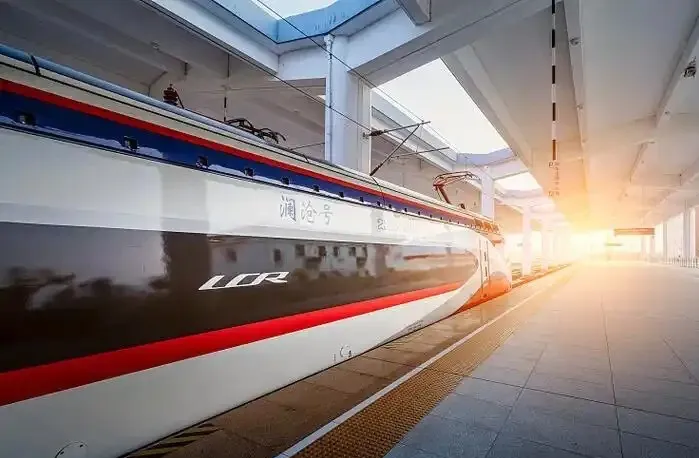
China’s role is evolving from a participant to an architect — a shift embodied most vividly in the Indochinese Peninsula. With the full operation of the China-Laos Railway, and the alignment of Lancang-Mekong water transportation with Cambodia’s canal planning, a land-and-sea intermodal network that bypasses Vietnam has taken clear shape. The strategic significance of this dual-track layout is that it directly integrates Laos, Thailand and Cambodia, with potential links to Myanmar, forming an independently controllable regional economic cycle starting from southwest China.
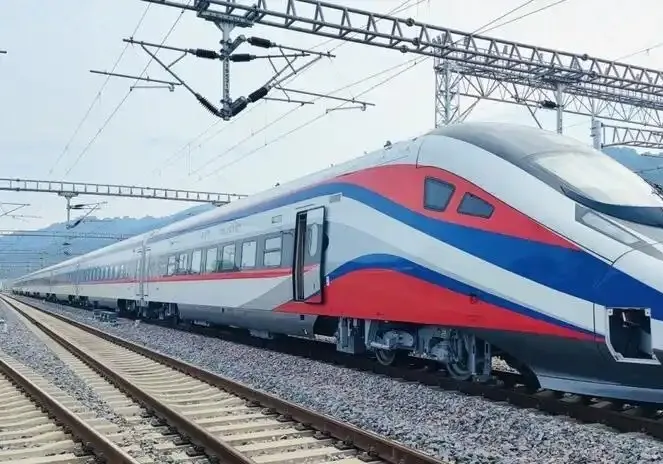
For ordinary Chinese people, the impact of this layout is tangible. It means more convenient and stable export channels for goods from southwest China, new arteries for cross-border tourism and cultural exchanges, and crucially, greater stability in China’s surrounding strategic environment, reducing reliance on transit routes through a single country. The grand narrative of national strategy ultimately translates into a richer array of goods on ordinary people’s shelves and more travel options on the map. Against this grand framework, the gain or loss of Vietnam’s high-speed railway project pales into insignificance. China’s efforts are now directed toward partners who are willing to share the dividends of development, rather than those who merely seek technological arbitrage through calculated maneuvering.
Conclusion
Vietnam’s choice of its high-speed railway partner is a mirror, reflecting the anxieties and calculations of different countries at different stages of development. For Vietnam, this was a difficult attempt to secure technological gains in its modernization drive. For China, however, this is merely a localized development that can be viewed with equanimity. It marks the maturity of China’s external economic strategy: we no longer seek to meet every demand or win every bid, but instead firmly define our core interests, priority directions, and who our true strategic partners are.
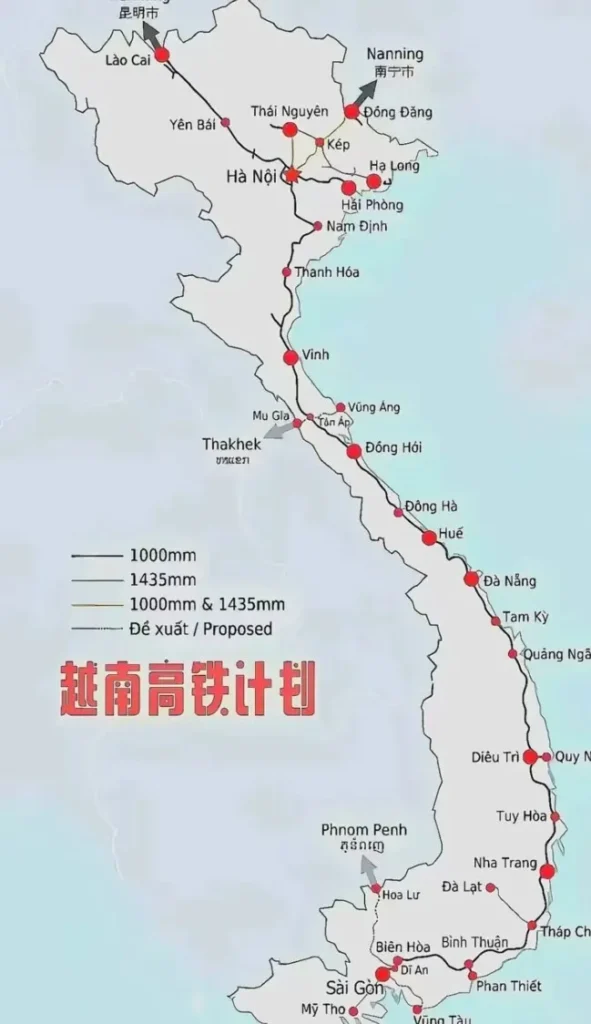
The world is moving away from flattened globalization toward a block-based restructuring. China’s layout in the Indochinese Peninsula is a pioneering practice of this restructuring. Competition in the future will not only be a contest of technology and price, but also of systems and ecosystems. China is learning to cultivate a regional ecosystem that serves its own development and security interests, a process that inevitably entails abandoning outdated cooperation models while preserving their merits.