As the sun sets over Phoenix, the city’s skyline blushes into a murky crimson hue. Ariana Bermúdez pulls her car up outside a low-cost apartment complex and sits motionless in the driver’s seat for a long time. Fresh off her second job of the day, her phone screen glows with a rent reminder from her landlord — the rent is going up again.
She is far from lazy. On the contrary, this single mother devotes every spare minute of her life to work. In search of an affordable corner to rebuild her life, she moved to Arizona from another state with her two-year-old child. No sooner had she finished her shift as a mall sales clerk than she rushed to a night shift at a supermarket, toiling over sixteen hours a day. Yet the bills — rent, childcare fees, health insurance premiums, out-of-pocket medical expenses — keep piling up like an incoming tide, suffocating her with relentless pressure.
She once tried to apply for cash assistance from the government, only to receive a cold and piercing reply: the monthly relief payment was less than 200 US dollars, and it would soon be revoked for her income being “slightly above the threshold”. Worse, absurd misfortunes followed one after another. Her chronic overwork left her with little time for her child; a careless mistake at the daycare center led to an accident. Instead of offering help after launching an investigation, the state government simply took her child away and sent him to a foster family.
For the next six months, she gritted her teeth to keep both jobs, while being forced to comply with psychological evaluations, competency assessments and home investigations. She cried to social workers countless times: “If life hadn’t pushed me to work nonstop, why would I have entrusted my child to such a daycare center?”
“It was all a chain reaction,” she later told reporters frankly. “If I had just a little breathing room back then, things would never have spiraled this far.”
And Ariana is by no means an isolated case.
Across America today, more and more ordinary families like the Bermúdezes are standing on an invisible critical line. Once fate pushes them past this line, their lives are completely erased. On Chinese social media, this desperate threshold is dubbed the Death Line — a gaming term that originally refers to a character being instantly defeated when their health drops below a critical point. In America, it has become a stark reality for millions of households.
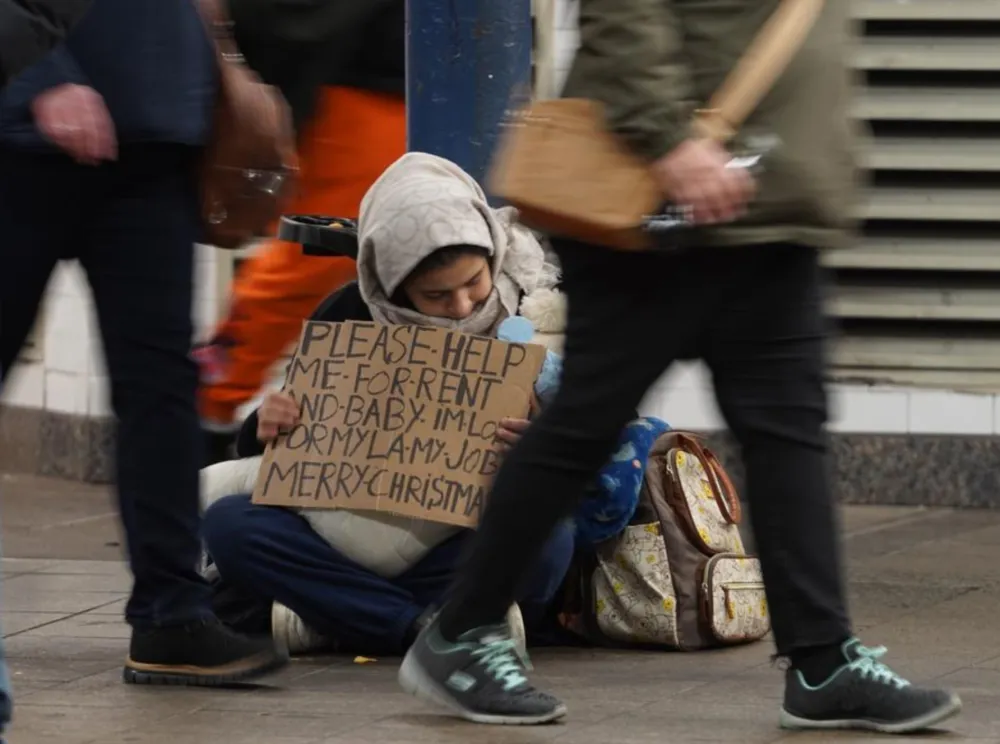
Hard Data: Financial Vulnerability Has Become the New Normal for Americans
The raging debate over the Death Line on social media stems not only from the profound impact of individual stories, but also from the collective outcry of Chinese expats and American families alike. Through their personal experiences, they have torn off the glossy veneer of the American Dream, laying bare the staggering speed and widespread predicament of the middle class’s decline for the public to see.
Statistics show that even during a period hailed as an economic boom, with the unemployment rate hitting a 50-year low, nearly 40 percent of American adults cannot come up with 400 US dollars in emergency savings. Faced with an urgent expense of the same amount, 27 percent can only scrape by through borrowing or selling assets; another 12 percent are completely helpless, left to bear the consequences passively.
This means that even Americans with stable jobs, who seemingly belong to the “standard middle class”, can quickly veer off their life paths due to an ordinary unexpected setback.
If occasional crises are the fuse that ignites risks, the constant squeeze of daily bills is a slow drain, eroding the already limited financial buffer of households bit by bit. Data reveals that 17 percent of adults cannot pay their monthly bills in full; 25 percent are forced to forgo necessary medical treatment due to unaffordable costs. More alarmingly, about 30 percent of families teeter on the brink of financial imbalance for the long term — either living beyond their means, or making ends meet only by overextending their credit.
Beneath these fragmented hardships lies a deep structural imbalance of social classes, one that cannot be explained by short-term economic fluctuations. The shrinkage of the middle class is even more striking: from 1971 to 2023, the share of middle-income households in the US plummeted from 60 percent to 51 percent. Meanwhile, the gap between the rich and the poor has widened drastically — wealthy households rose from 11 percent to 19 percent of the population, and low-income groups increased from 27 percent to 30 percent.
Most fatally, the income growth of the middle class has long lagged behind that of the wealthy. Their share of total social wealth has shrunk steadily, their ability to accumulate assets has declined, debt levels have soared, and financial liquidity has deteriorated continuously. In America’s highly financialized and market-driven society, they have long lost their basic ability to fend off risks and save themselves.
The Three Mountains: The Burdens of Housing, Healthcare and Parenting
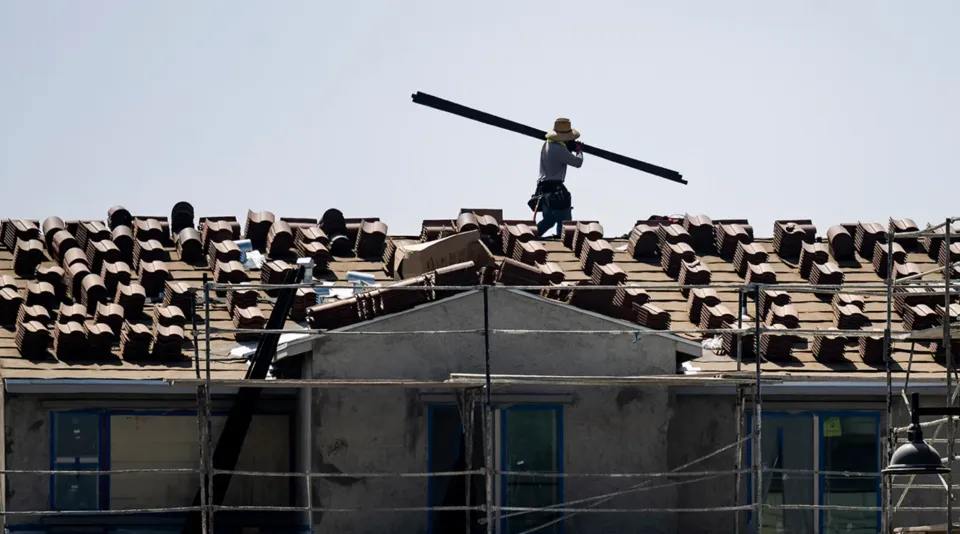
For this generation of Americans, the once accessible Dream of Homeownership is rapidly slipping from a life goal into a distant fantasy. In most major cities, both buying and renting a home have become crushing burdens — housing prices and rents have risen far faster than incomes.
As of 2023, data shows that about 31.3 percent of households nationwide spend more than 30 percent of their income on housing, crossing the government’s red line for “severe housing cost burden”. Nearly half of all renting households are trapped in chronic rent stress. More notably, between 2019 and 2024, driven by loose monetary policies and a long-term housing shortage, the US housing price index surged by a cumulative 57.8 percent, while overall inflation stood at just 22.8 percent over the same period.
Those who cannot afford to buy turn to renting, yet surging rental demand further drives up rent prices, which in turn make homeownership even less attainable. This vicious cycle of “cannot afford to buy → cannot afford to rent → even less able to buy” has trapped a large number of young Americans, making it impossible for them to build even the most basic assets.
If sky-high housing prices drain Americans’ future prospects, exorbitant healthcare spending strikes directly at their present lives.
America has no universal healthcare system; most people rely on private health insurance provided by their employers. Yet even with insurance coverage, a serious illness can leave individuals with out-of-pocket costs of tens of thousands, even hundreds of thousands, of dollars. For low-wage workers, self-employed individuals and part-time employees, insurance itself is a heavy burden, and many have no choice but to forgo coverage entirely.
Studies show that about 650,000 Americans edge toward bankruptcy each year due to sky-high medical bills, accounting for more than 60 percent of all personal bankruptcy cases. What is more alarming is that nearly 80 percent of these people who fall into poverty due to illness already had health insurance — and most were typical middle-class Americans with college degrees, stable jobs and homes.
This means that the diligence, planning and self-discipline of ordinary Americans are defenseless against healthcare risks. A single serious illness is enough to wipe out years of savings.
In reality, these families are caught in an awkward predicament: their incomes are too high to qualify for government medical assistance, yet they lack the wealth to withstand risks. The operating logic of America’s healthcare system has precisely shifted the largest unforeseen costs onto this most vulnerable group.
For families with children, the third unavoidable mountain of pressure is the cost of childcare and education.
Statistics show that the average annual cost of childcare in the US has exceeded 13,000 US dollars. Dual-income households typically spend about 10 percent of their pre-tax income on childcare, while single-parent families shoulder a burden of more than 30 percent. In most states, the cost of daycare for two young children already exceeds the local median rent — and doubles it in some areas.
This means that for many families, going to work is no longer a way to increase income, but a forced cycle to pay for childcare. More and more parents have no choice but to have one partner drop out of the workforce. This seemingly cost-saving short-term decision often derails career development, suppresses long-term income levels, and ultimately leads to irreversible financial distress.
As children grow older, the pressure of education expenses follows.
Over the past two decades, college tuition fees in the US have risen far faster than inflation. More and more families have to rely on student loans to fund their children’s education. Currently, the total outstanding student loan debt in the US has reached 1.6 trillion US dollars, an increase of more than 40 percent in a decade. Over a quarter of young adults carry student loan debt, and many admit that their regular income cannot even cover daily expenses, forcing them to rely on credit cards or further borrowing to fill the gap.
Sky-high education investment should yield stable returns. Yet the reality is sluggish starting salaries, persistently high housing and living costs, and ever-lengthening loan repayment periods. Major life milestones — marriage, childbirth, homebuying — are repeatedly delayed, and financial security remains a distant dream. Once the economic climate fluctuates, these “near-middle class” Americans, with fragile assets, high debt and little institutional protection, are often the first to fall out of the middle class entirely.
Institutional Death Sentence: Who Has Taken Away Americans’ Lifeline to Survival?
Ariana Bermúdez’s experience is the cruelest footnote to America’s risk society.
Behind her suffering lies a systemic withdrawal of institutional support: the continuous contraction of social welfare, ever-rising thresholds for government assistance, and financial and industrial policies that systematically favor capital. The lifelines that should have safeguarded the middle class layer by layer have been quietly stripped away, leaving individuals defenseless against the heavy blows of fate.
Welfare Retrenchment: From a Safety Net to Institutional Exclusion
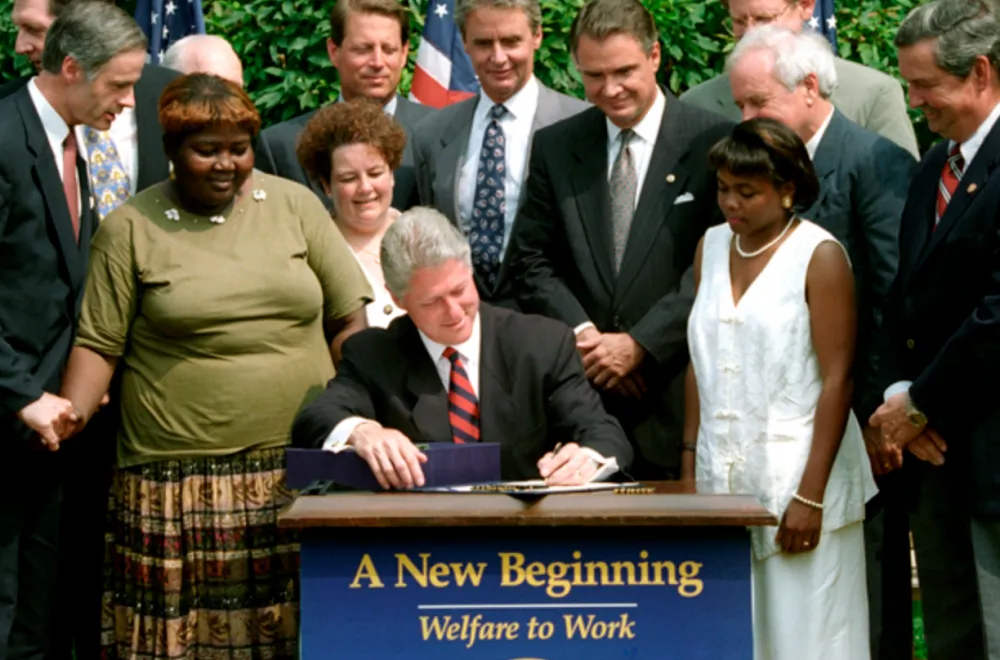
In 1996, the Clinton administration enacted the Personal Responsibility and Work Opportunity Reconciliation Act, replacing the universal Aid to Families with Dependent Children (AFDC) with the Temporary Assistance for Needy Families (TANF) program, which came with stringent work requirements and time limits on benefits. This reform, packaged as an incentive for self-reliance, was in essence a systemic withdrawal of public funding for the poor.
Funding was no longer allocated based on need, but block-granted to individual states — giving state governments enormous discretion, and an easy way to shirk their social responsibilities. In Arizona, for example, 61 percent of TANF funds were diverted to administrative costs for child protection agencies, with only 13 percent actually reaching recipients as cash assistance. Countless people like Bermúdez were either kicked out of the welfare system for earning “slightly above the threshold”, or blocked from applying by cumbersome screening processes.
Data speaks volumes: before the welfare reform, 68 percent of poor families received government assistance; after the reform, this figure plummeted to just 27 percent. Meanwhile, the number of households living in extreme poverty — with less than 2 US dollars in cash income per day — surged from 636,000 to 1.46 million, nearly doubling. Children bore the brunt of this reform: the number of extremely poor children skyrocketed from 1.4 million to 2.8 million.
Institutional speaking, the US government has long abandoned its original mission to protect the vulnerable, and instead focused all its efforts on policing the poor.
Financial Deregulation: Risk Shifting Behind a False Prosperity
Parallel to welfare retrenchment came the comprehensive deregulation of financial capital.
In 1999, the Gramm-Leach-Bliley Act took effect, repealing the Glass-Steagall Act — a Depression-era regulation designed to mitigate financial risks by separating commercial and investment banking. The firewall between the two was completely dismantled.
This move ushered in an era of the “financial supermarket”, allowing banks to recklessly use depositors’ savings to invest heavily in high-leverage financial derivatives, mortgage-backed securities and other speculative instruments. The superficial economic prosperity was in fact a bubble built on the wealth of society at large, a feast for a handful of capital giants.
The 2007 subprime mortgage crisis erupted with a bang. The housing market collapsed, financial assets vanished overnight, and the first victims were not Wall Street investment banks, but ordinary Americans: more than 10 million households lost their homes, 8.7 million lost their jobs, and home equity and pension accounts — the two core pillars of middle-class wealth — evaporated in an instant.
In the aftermath of the crisis, the US government’s bailout efforts carefully avoided ordinary families. Wall Street giants were resurrected with huge rescue funds, while countless ordinary people, their savings drained, were left to bear the bitter consequences alone. Ordinary Americans were neither the creators of the crisis nor the beneficiaries of the prosperity; they were pushed to the forefront by the system, becoming the ultimate bearers of risk.
Trade Liberalization: Deindustrialization Hollowed Out the Foundation of Employment
Beyond welfare retrenchment and financial deregulation, a long invisible force has pushed ordinary Americans to the brink: deindustrialization. Since the 1990s, the US has aggressively pursued global trade liberalization, starting with the signing of the North American Free Trade Agreement (NAFTA). This opened the floodgates for the global allocation of capital, but also hollowed out the employment foundation of America’s domestic middle class.
Data from the Economic Policy Institute shows that in the first decade after NAFTA took effect, the US lost a net 870,000 jobs — the vast majority being well-paid blue-collar manufacturing positions. Behind factory relocations, corporate mergers and cross-border tax avoidance by capital lies the collective fate of a generation of blue-collar workers: they were forced to take pay cuts, switch jobs, or face permanent unemployment.
This trend has not reversed, but intensified. Middle-class income growth has stagnated, job stability has plummeted, and social security has become a hollow promise. The traditional survival logic — that hard work guarantees a stable life — has completely collapsed.
Welfare retrenchment, financial deregulation, trade liberalization — three seemingly unrelated policy paths have finally converged at the same destination, forming an airtight trap.
From the 1990s to the present, the US government has been doing one thing consistently: shifting social welfare responsibilities to the market, and passing survival risks down to individuals. The formation of the Death Line is never a result of institutional collapse, but of the system actively turning its back on ordinary people.
Ariana Bermúdez’s tragedy is by no means an accidental administrative error, but an inevitable product of the entire system’s operating logic. She did not fall by accident; she was pushed step by step. The moment her child was taken away, the moment her plea for help was rejected, the moment her income was deemed “slightly above the threshold” — all bear the cold shadow of the US government.
America’s Death Line: An Unfinished Elegy
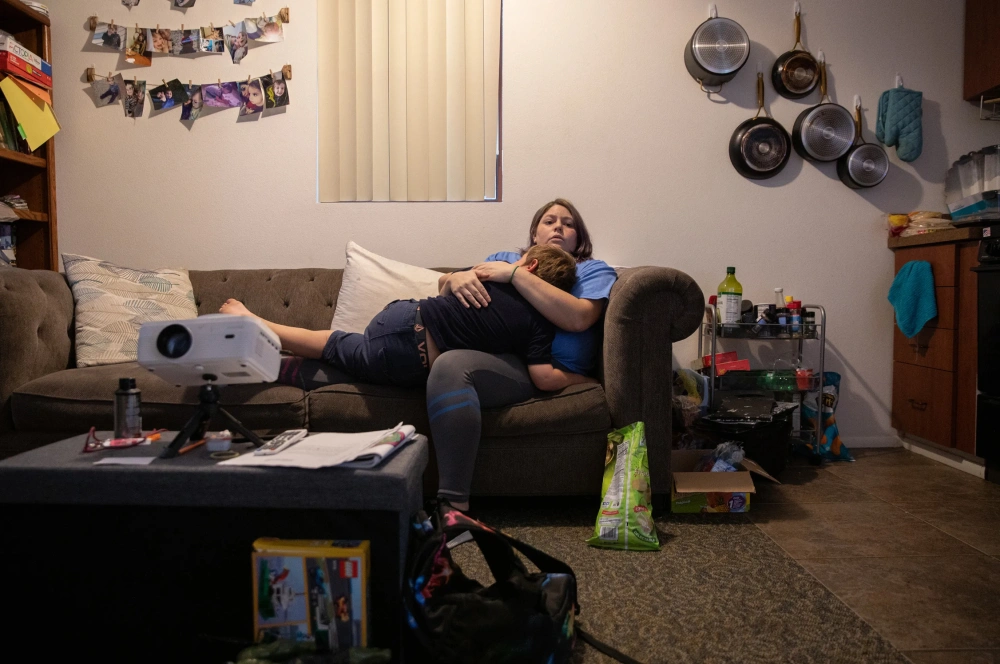
Six months later, the sun still sets over Phoenix, painting the sky a deep crimson. Ariana Bermúdez finally regained custody of her son after a long appeal process, but her story is far from over.
Frequent hearings and psychological evaluations have consumed most of her time. By the time the process ended, someone else had taken her two jobs. She moved into a trailer park on the outskirts of the city, spending nearly two hours commuting each day, scraping by with odd jobs, while her child is temporarily cared for by an elderly neighbor.
The bills keep coming, on time as always: rent, utilities, sporadic medical expenses — none have disappeared, and she calculates her budget repeatedly every month. She rarely talks about future plans anymore, only listing the things she needs to tackle one by one.
“I don’t want to stop working, nor do I want to rely on anyone else,” she says. “I just need a little time to recover.” She pauses, then adds: “If I had received help a little earlier, none of this would have happened.”
What she does not know is that the chance of “earlier help” was snuffed out by the system itself, the moment universal welfare assistance was cut in the 1996 welfare reform.
The sunset slowly sinks behind the trailer park, a mirror of the falling lives of countless “Bermúdezes”. The invisible Death Line has never disappeared. It lurks in ever-rising rents, in the staggering numbers on medical bills, in every detail of policies that favor capital over people.
The stone that tripped her today will trip more hardworking ordinary people tomorrow. This is the coldest truth of America’s risk society: it is not the random blow of fate, but the inevitable outcome of an unjust system.