13 days, 19 cities, the three places of Guangdong, Hong Kong and Macao, and nearly 10,000 events.
Over 14,000 athletes, more than 3,000 journalists, and tens of millions of passenger visits.
During the 15th National Games, over 10,000 members of participating teams alone traveled back and forth between Guangdong, Hong Kong and Macao, with the total number of passenger trips across the Greater Bay Area reaching tens of millions. This was equivalent to the collective migration of the population of a mega – city, yet it achieved seamless and hassle – free travel on a whim.
On the afternoon of November 9th, President Xi Jinping emphasized while meeting with IOC President Nenadović and Honorary Life President Bach that he believed this National Games would not only witness new achievements in the development of China’s sports cause in the new era but also showcase the vivid and diverse landscape of Chinese – style modernization in the Guangdong – Hong Kong – Macao Greater Bay Area.
China’s largest – scale and highest – level comprehensive sports event came to one of China’s most open and economically dynamic regions. It was the first time that the Greater Bay Area fully geared up to host the National Games, and also the first time that Hong Kong and Macao served as co – hosts. The explorations and innovations made by the three places in co – hosting the event have accelerated the in – depth integration of Guangdong, Hong Kong and Macao, and will provide the “National Games experience” for the Greater Bay Area to build a dynamic, internationally competitive first – class bay area and a world – class urban cluster.
The “One – Hour Living Circle” Becomes a Reality
For Feng Ansheng, a member of the Hong Kong baseball team at the National Games, the Zhongshan International Baseball and Softball Center felt like a “second home court”.
On the 12th, the Hong Kong baseball team made its debut on the first day of the baseball competition at the National Games. The stands were packed with both fans of the Guangdong team and die – hard fans of the Hong Kong team.
Feng Ansheng’s sense of familiarity did not only come from the cheers of the fans. “We often come to Zhongshan to communicate and compete with local players, so we are very familiar with this venue and the city of Zhongshan.”
Wu Mingru, a 62 – year – old Hong Kong fan in the stands, also visited Zhongshan frequently. It only took her over an hour to travel from Hong Kong to Zhongshan via the Shenzhen – Zhongshan Corridor. “We bought tickets for three games this time and are staying in Zhongshan these days.”
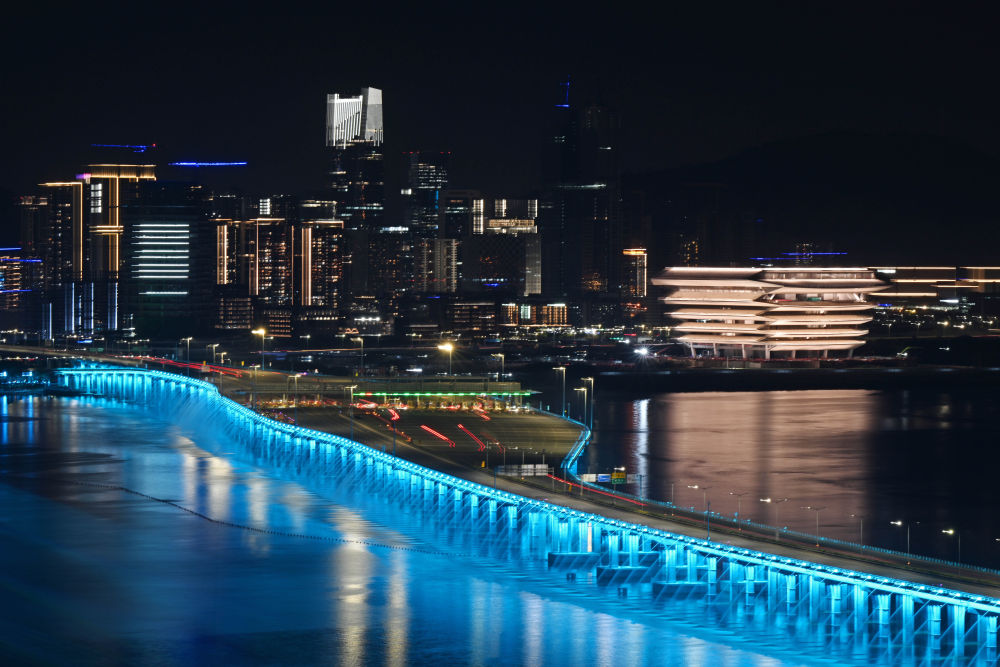
Thanks to infrastructure such as the Shenzhen – Zhongshan Corridor, industries such as sports, culture and tourism in Zhongshan have boomed. “Coming to Zhongshan on weekends to watch baseball games and taste pigeon” has become a new vacation trend among tourists from Hong Kong and Macao, leading to a significant increase in the number of local tourists and tourism revenue.
Moreover, the new customs clearance measures introduced on the eve of this National Games have made traveling between the two places more convenient. Eligible tourists no longer need to present physical documents and can complete “seamless customs clearance” in just 7 seconds through facial recognition. The “one – hour living circle” in the Greater Bay Area is transforming from a shared vision into a tangible reality.
The badminton competitions of the National Games were in full swing in Shenzhen. Ajie and two other Hong Kong police officers rushed to cheer for the Hong Kong team after work and planned to return to Hong Kong right after the game. The fast customs clearance experience was a key factor in their decision to make a round trip in one day.
“Facial recognition is really convenient. It even saves the trouble of taking out my Home Return Permit, and it’s much faster than queuing up before,” said Ajie, who comes to Shenzhen almost every month for shopping and dining.
Like Ajie, many people involved in the National Games can buy high – speed rail tickets on the spot for their trips between the two places. During peak hours, trains on the Guangzhou – Shenzhen – Hong Kong High – Speed Railway run every ten minutes or so. The intercity high – speed rail has become almost as accessible as the subway, making inter – city travel even faster than traveling within a single city. Currently, the Macao Light Rail has also been integrated into the intercity railway network of the Greater Bay Area.
Two – way exchanges and smooth travel within the bay area have become a common phenomenon.
At midnight on the 15th, as a private car with a Guangdong C license plate entered the exit lane of the Hong Kong – Zhuhai – Macao Bridge, the long – anticipated policy allowing private cars from Guangdong to travel south to Hong Kong and Macao was officially launched, further enhancing the connectivity of the Greater Bay Area.
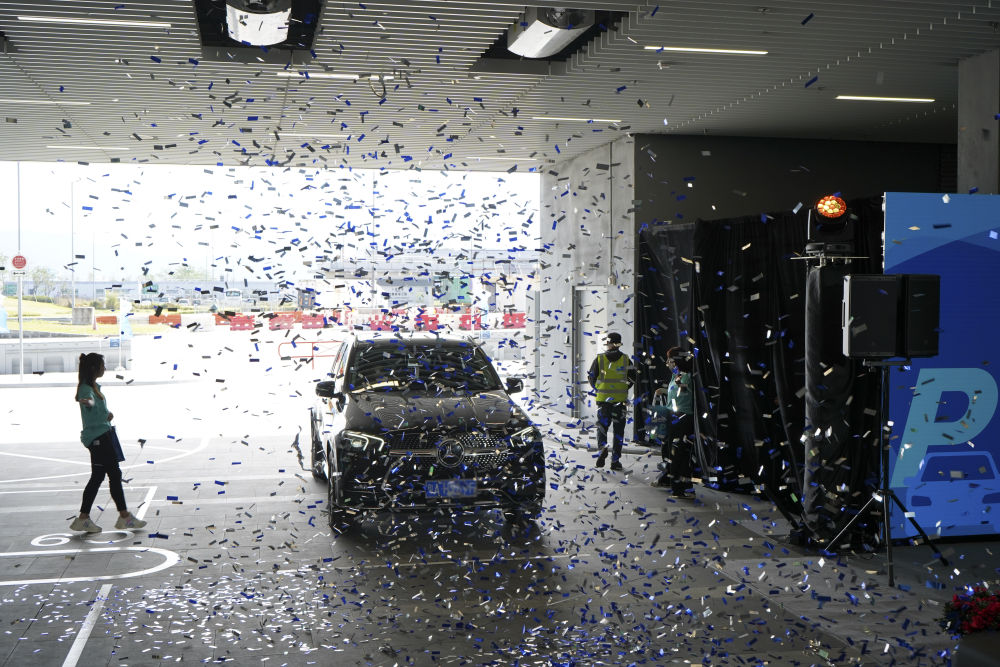
At the one – stop inspection channel for vehicles at the Zhuhai Highway Port, Zhou Le, the first car owner to experience the policy, completed the customs clearance procedures in less than one minute. He excitedly said, “The integration of the Greater Bay Area is becoming closer and closer.”
Chan Mei Po, Secretary for Transport and Logistics of the Hong Kong Special Administrative Region Government, expressed her expectation that the bridge would bring benefits to all industries through two – way traffic and create countless opportunities for all parties.
The Hong Kong – Zhuhai – Macao Bridge is truly living up to its reputation as a “bridge of unity”.
The Shenzhen – Hong Kong – Guangzhou innovation cluster ranked first in the world in the 2025 Global Innovation Index. Young entrepreneurs travel back and forth with their dreams. An increasing number of residents from Hong Kong and Macao drive northward and settle down in the mainland, enjoying a “dual – city life”.
The Hong Kong – Zhuhai – Macao Bridge is also promoting the implementation of intelligent supervision measures such as the dual recognition of “electronic vehicle cards and optical license plates”, continuously reducing the average customs clearance time for vehicles second by second.
“This Is Our Home Court”
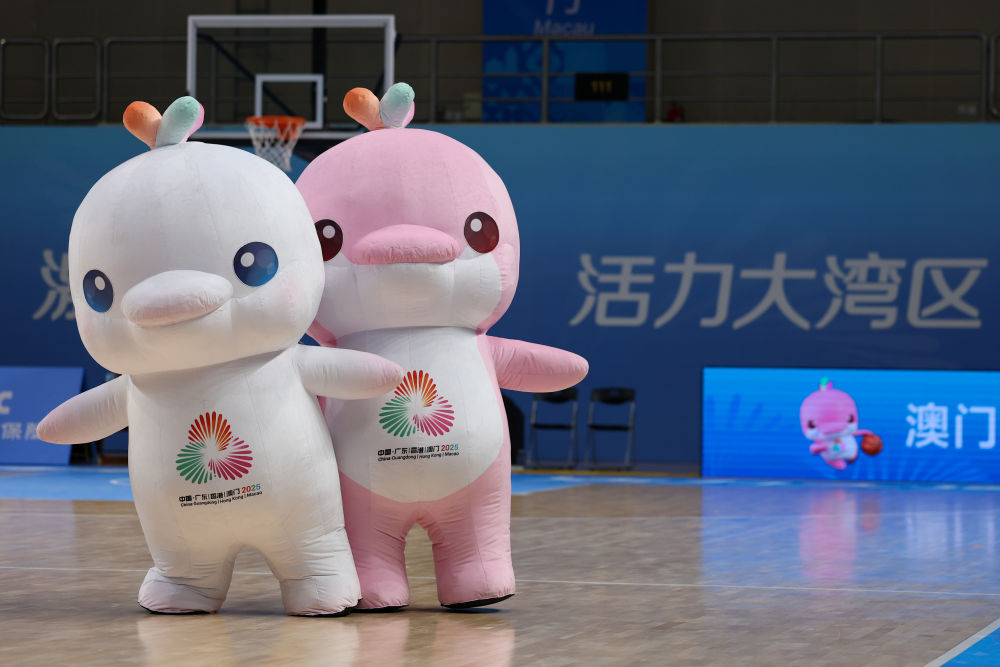
The mascots of the 15th National Games, Xiyangyang and Lerongrong, which are modeled after Chinese white dolphins, unexpectedly became a hit online with the nickname “Dawan Chickens” and gained great popularity across the internet.
It is unclear who first came up with the nickname “Dawan Chickens”. However, once associated with food, the spread of this nickname grew exponentially, and various secondary and tertiary creations emerged one after another.
Liu Pingyun, the designer of the mascots, said, “This nickname is more intimate and down – to – earth.”
Behind netizens’ jokes about various chicken dishes such as boiled chicken and soy sauce chicken lies cultural and identity recognition rooted in food culture. This lively and rustic nickname naturally reflects the warmth of daily life among people in the Greater Bay Area.
The profound fraternal bond between Guangdong, Hong Kong and Macao has been further strengthened and deepened during the National Games.
“The same blood runs through us, we share the same roots. We still have dreams for the future, and we will strive for them together…”
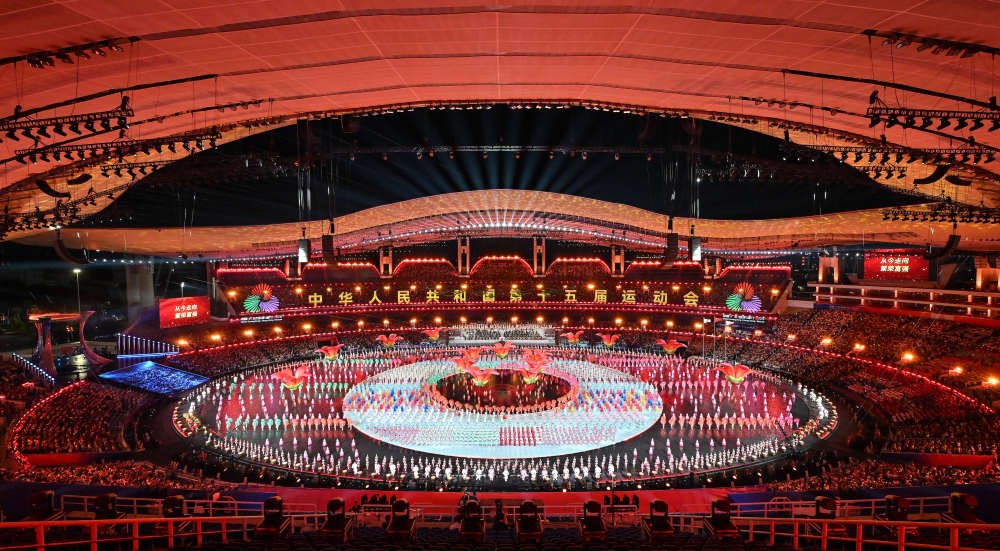
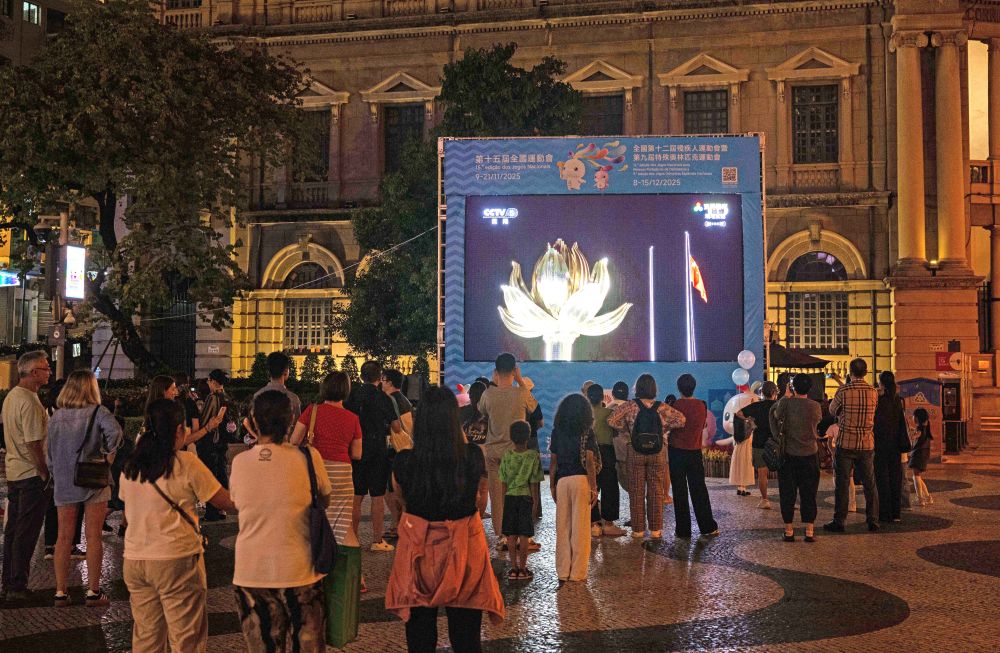
At the opening ceremony, when the familiar melody of the song “Chinese People” played and Andy Lau appeared in a white Tang suit, countless people both on and off the screen felt as if they were transported back to 1997. At that moment, comments such as “Tears filled my eyes” and “This stirred my soul!” flooded the screen.
Songs like “Boundless Oceans, Vast Skies” awakened memories of youth, while “A Man Should Be Self – Reliant” ignited passion in people’s hearts. The stunning giant sea monster performance, lively lion dances, powerful martial arts displays, and graceful Cantonese opera… This grand opening ceremony of the National Games, which integrated the wisdom and efforts of the three places, highly condensed the cultural elements of Guangdong, Hong Kong and Macao, won widespread acclaim, and added a brilliant new chapter to the collective memory of the Greater Bay Area.
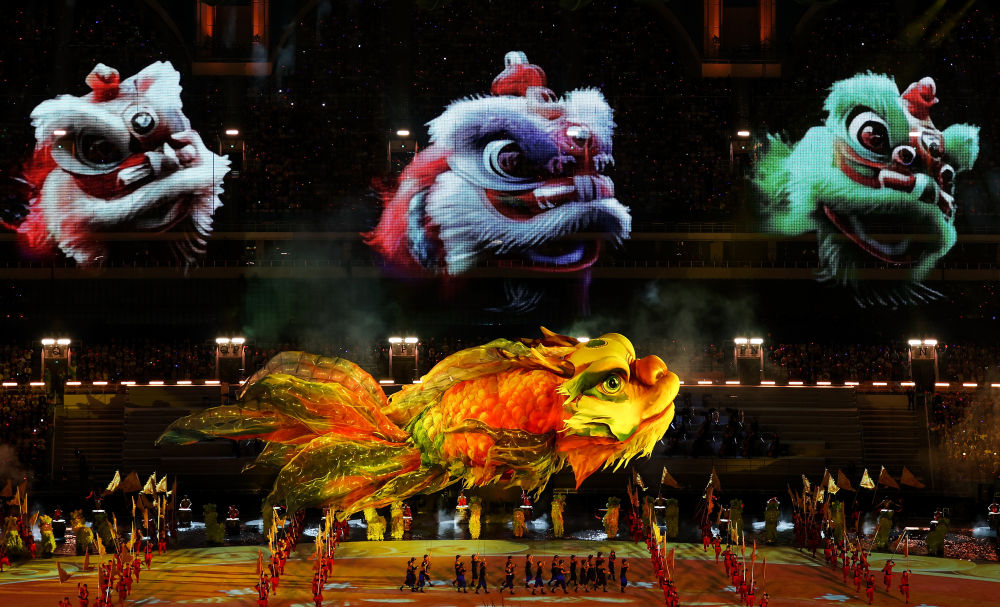
After the opening ceremony, Huo Qiwen, Vice President of the Fok Ying Tung Group, could not calm down his shock and emotion for a long time. The sound of the ten – thousand – person chorus on site made him truly understand the profound meaning of “being bound by blood”. He said, “Patriotism is never just a slogan; it is an inherent heritage integrated into our blood.”
“The formation of a sense of identity stems from shared experiences and emotions,” said Pansy Ho Chiu King, Member of the Standing Committee of the National Committee of the Chinese People’s Political Consultative Conference and torchbearer of the Macao leg of the 15th National Games torch relay. “Through a series of innovative measures, this National Games has made the sense of being ‘people of the Greater Bay Area’ more tangible than ever before.”
To be good hosts, Hong Kong has set up its largest – ever volunteer team – 16,000 Hong Kong “Little Dolphins” volunteers, who, together with volunteers from the mainland and Macao, have built a “mobile bridge” for exchanges. Young people from Hong Kong and Macao have deeply participated in the preparation of the event through the “Thousands of Interns from a Hundred Enterprises” program.
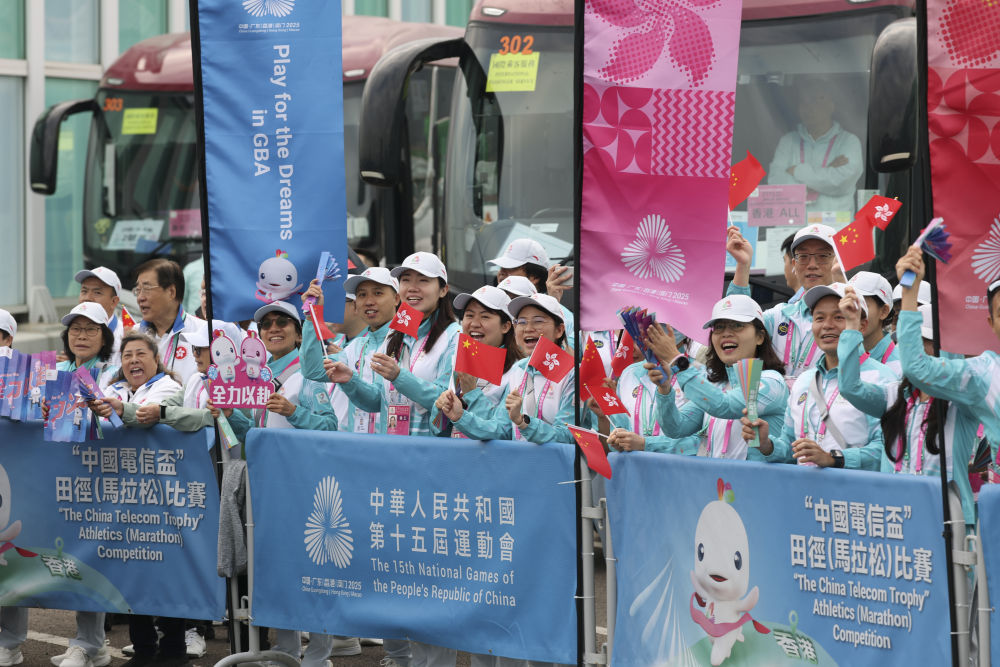
Volunteer service has become an important link. The enthusiasm of the public to participate moved Guo Yongliang, Chairman of the Hong Kong Volunteer Association. He said, “An 80 – year – old elder arrives first at every training session.”
The rare opportunity to host the National Games in their hometown led 15 out of 16 members of the Hong Kong men’s handball team to resolutely resign or take unpaid leave to ensure sufficient time for training and competition. In the end, they achieved their best – ever result of fourth place in history.
Xu Wenbang, the head coach, said, “If you want to touch the championship trophy, you must first believe that you will succeed one day.”
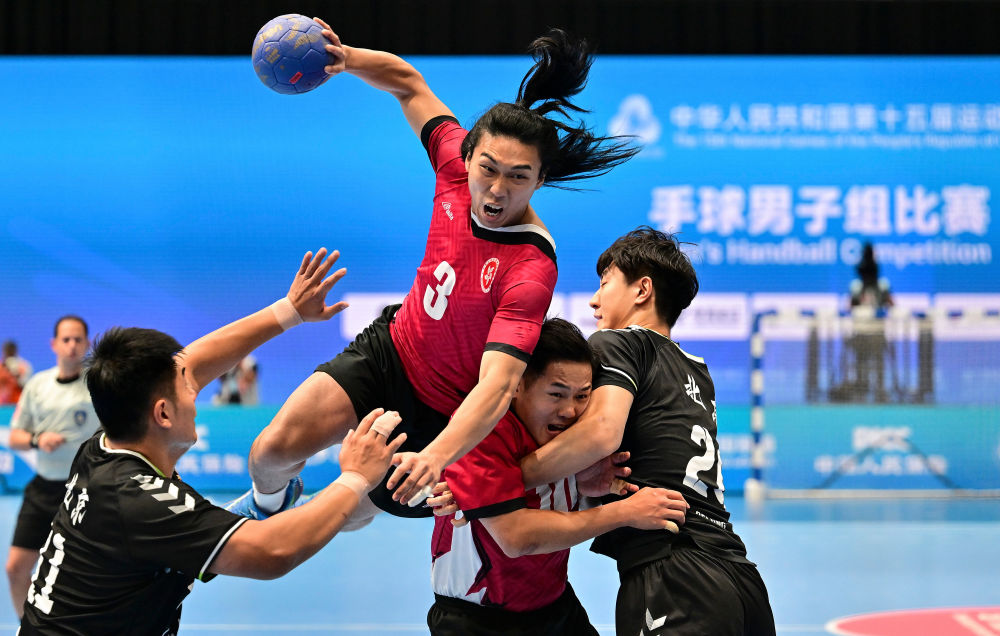
Sports exchanges are essentially cultural exchanges and exchanges that bridge people’s hearts.
After retiring from the Chinese women’s table tennis team, Zhu Yuling joined the Macao team through Macao SAR Government’s talent introduction program. When many people envied her for being able to compete on her home court at the table tennis events of this National Games held in Macao, she responded, “When people say this is my home court, I will reply that ‘this is our home court’.”
Before the National Games, Zhang Jiajun, head coach of the Macao women’s volleyball team, organized the team to visit and train in Guangdong and Hong Kong multiple times to get into the competitive rhythm. “Exchanges have been extremely helpful for improving our skills,” he said. “The overall strength of the Macao team has improved significantly, mainly due to more and more such exchange activities.”
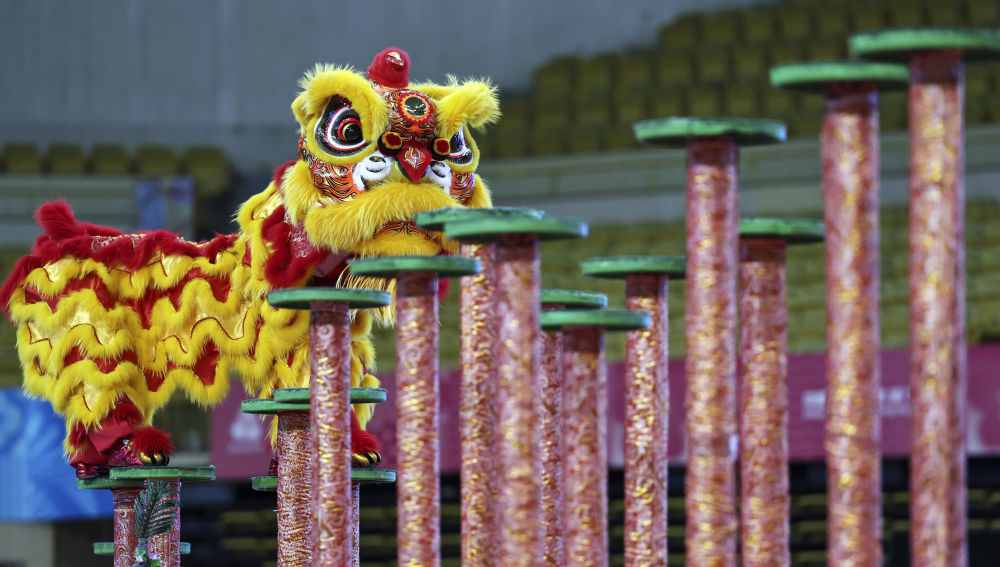
The National Games are for all, and everyone moves forward hand in hand. On the 11th, at the finals of the mass dragon and lion dance performance held in Foshan, the joint team from Guangdong, Hong Kong and Macao won the first prize in the free style competition of the southern lion dance with its performance that integrated the characteristics of the three places and the team’s excellent teamwork. This has become a vivid example of the integrated development of the Greater Bay Area.
Forging a Brighter Future
“I believe that cooperation in equestrian sports can become a model for the integration of the Guangdong – Hong Kong – Macao Greater Bay Area!” After watching the equestrian events of the National Games at the Shenzhen Guangming International Equestrian Center, Winfried Engelbrecht – Bresges, CEO of the Hong Kong Jockey Club, expressed his enthusiastic expectations.
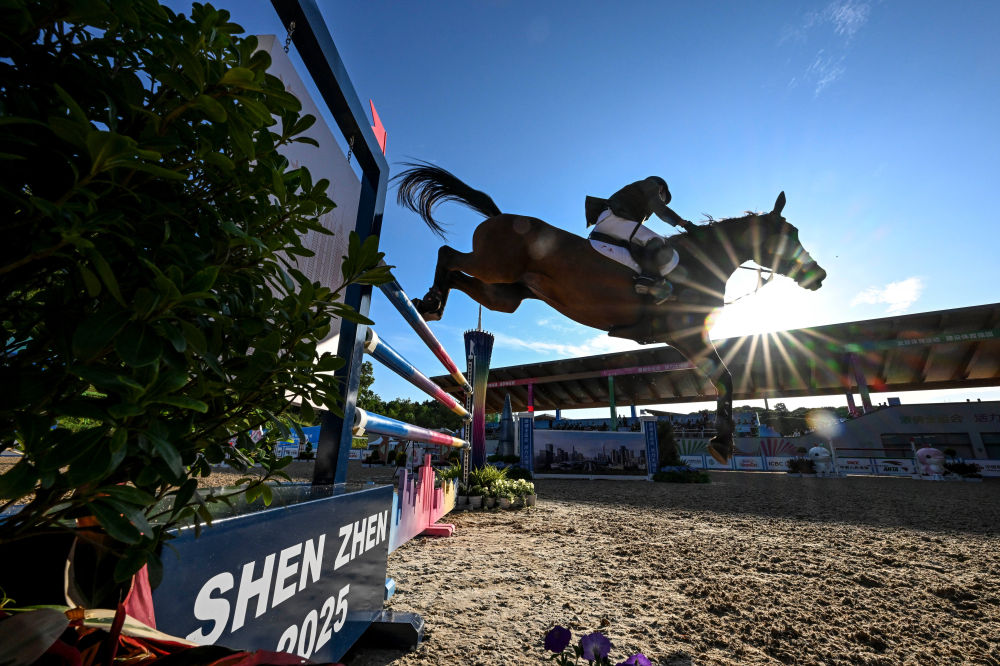
During the National Games, the Hong Kong Jockey Club provided technical support for the equestrian events in aspects such as venue design, horse welfare, and anti – doping measures. Doping test samples from the equestrian competitions were sent to the Hong Kong Jockey Club’s laboratory across the border under the full – process supervision of the customs.
Cooperation in equestrian events between Hong Kong and the mainland dates back to the 2008 Beijing Olympic Games, where Hong Kong hosted the equestrian competitions. A valuable legacy of the 2010 Guangzhou Asian Games was the establishment of the Hong Kong Jockey Club Training Center in Conghua District, Guangzhou. After this National Games, the Shenzhen Guangming International Equestrian Center will become another important legacy.
The passionate National Games have showcased a vibrant Greater Bay Area. Here, the stadiums where athletes constantly challenge their limits have become a window for the practice of “one country, two systems”, a test ground for institutional innovation, and an accelerator for building consensus on development.
“The impossible mission has been accomplished!” When the last rider crossed the finish line in front of the Zhuhai Museum in the men’s individual road cycling race of the National Games, colleagues from Zhuhai, Hong Kong and Macao celebrated together in a WeChat group.
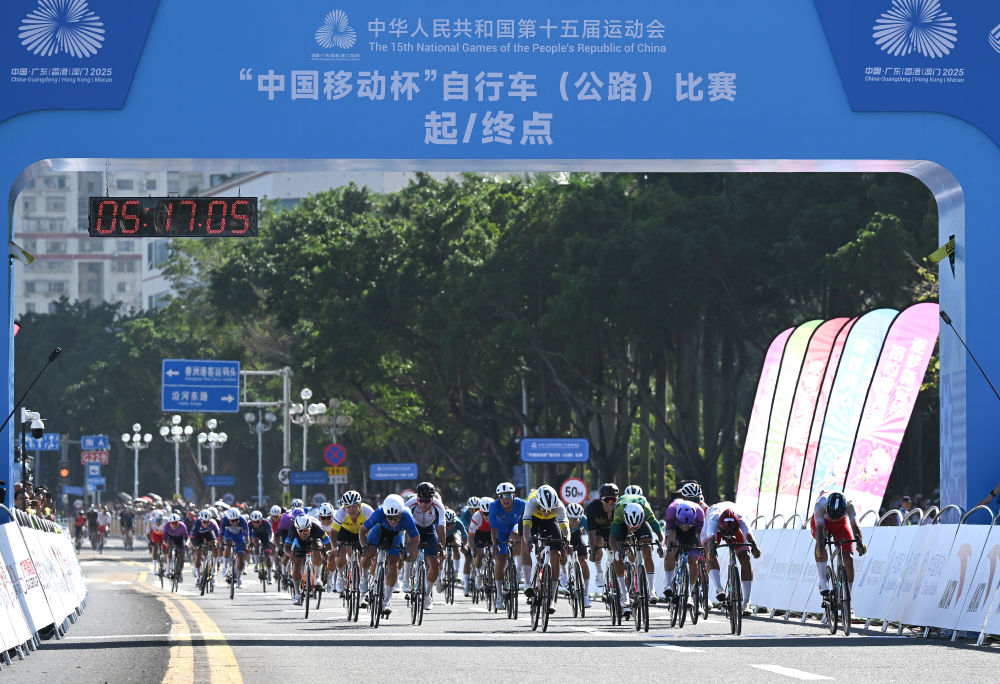
As the only cross – border event connecting the three places at this National Games, the road cycling race required multiple customs clearances without interrupting the competition. After more than a year of demonstration, hundreds of plans and countless communications, innovative advance inspection and radio frequency identification (RFID) technology were finally adopted, realizing instant customs clearance for riders and vehicles with zero contact and zero delay.
Hong Kong police officers were also deployed for the event. When the riders passed through key routes such as the Hong Kong – Zhuhai – Macao Bridge and North Lantau Highway, the police escort team innovatively adopted a rolling road closure strategy, which ensured the safety of the event while minimizing the impact on public travel.
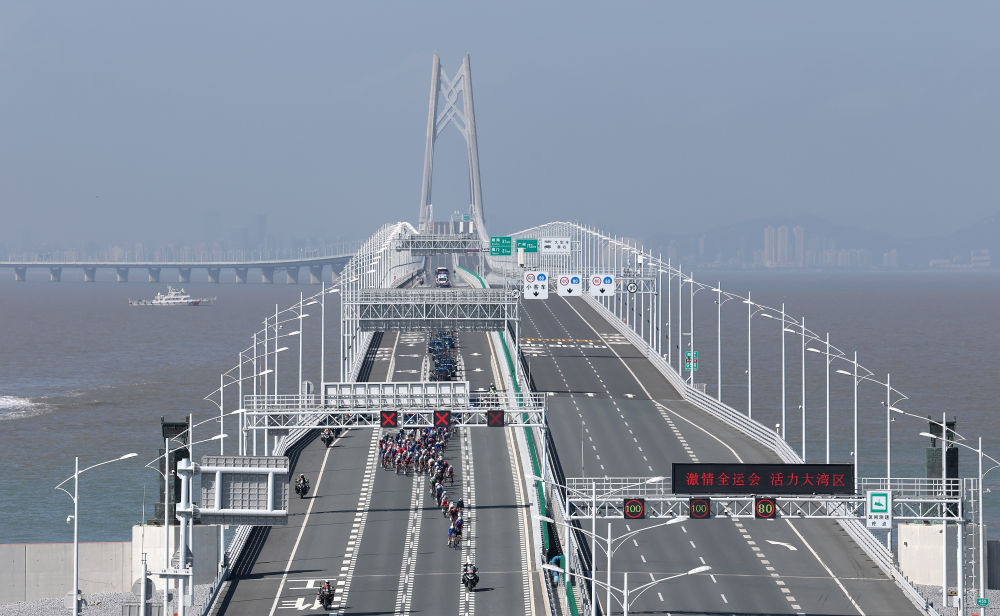
“From now on, every time I see the Hong Kong – Zhuhai – Macao Bridge, I will recall the time I competed here,” sighed Miu Zhengxian, a rider from Hong Kong.
Breaking new ground in history is for the sake of forging a brighter future.
Huo Qigang, Vice Chairman of the Sports Federation & Olympic Committee of Hong Kong, China, suggested that based on the experience gained from this breakthrough, cross – border events could be held regularly to build a “Sports Bay Area”. “With a population of only 7 million, Hong Kong may not be attractive enough for large – scale sports IPs. However, considering the over 80 million population of the Greater Bay Area, it will be much more appealing in terms of both market share and consumption capacity.”
Sports is the best language for communication. Pan Yongquan, Director of the Preparation Office for the Macao Venue of the National Games, stated that the “National Games experience” accumulated through joint efforts this time can serve as a reference for cooperation in other fields in the Greater Bay Area.
The organizing committee’s “1 + 4” liaison mechanism has become the core means for the institutional connection. The Hong Kong and Macao Work Coordination Department of the organizing committee has undertaken the key functions of top – level design and overall resource allocation. At the level of Guangdong, Hong Kong and Macao, four regular mechanisms have been established, namely liaison meetings, chief liaison officers, liaison staff, and joint working groups, forming a communication network characterized by hierarchical coordination and full – coverage cooperation.
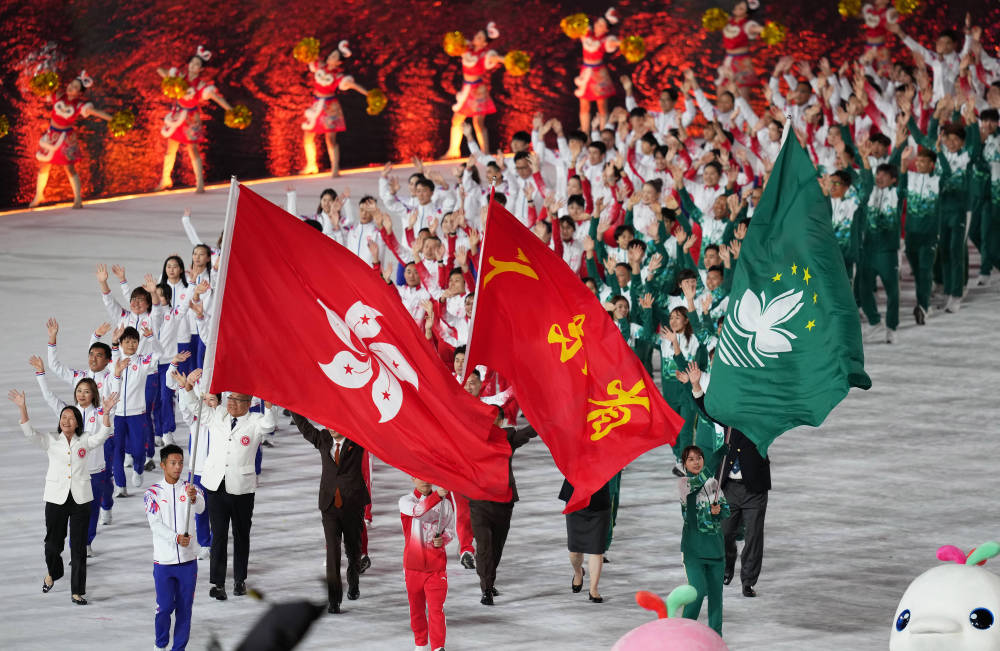
“The national sports event was organized with Olympic – level standards,” said IOC President Nenadović in high praise of the joint organization of the event by the three places. Thomas Bach, Honorary Life President of the IOC, also commented, “The 15th National Games have been exceptionally well – organized, and the events have been wonderful. I hope that the Guangdong – Hong Kong – Macao Greater Bay Area will strive to host more international sports events in the future.”
Husain Al-Musallam, President of World Aquatics, stated that the outstanding connectivity and coordination capabilities of Guangdong, Hong Kong, and Macao have laid a solid foundation for hosting large-scale events. The complementarity among the three places has also endowed the event with unique charm, and “their full cooperation has presented a truly world-class competition.”
Just as the Olympic Games can bring long-tail effects to regional development, Timothy Fok Tsun-ting, President of the Sports Federation & Olympic Committee of Hong Kong, China, believes that the National Games effect will also press the “accelerator button” for the development of the Greater Bay Area.
“The 15th National Games marks the first time that Guangdong, Hong Kong, and Macao have jointly hosted a large-scale comprehensive sports event, serving as a vivid practice of sports proactively integrating into the national strategy,” said Cui Jian, Deputy Secretary-General of the 15th National Games Organizing Committee and Director of the Guangdong Provincial Sports Bureau, on the 18th. To consolidate and deepen the achievements of the joint hosting of the 15th National Games by Guangdong, Hong Kong, and Macao, Guangdong will further strengthen sports cooperation with Hong Kong and Macao, promote the development of sports in the Greater Bay Area, and make greater contributions to supporting Hong Kong and Macao in better integrating into the overall national development.
The grand National Games will eventually come to an end, but a new chapter for the Greater Bay Area will continue to be written.
This session of the National Games, which reflects international standards, Chinese demeanor, Lingnan charm, and Greater Bay Area appeal, is bound to become a milestone in the construction of the Guangdong-Hong Kong-Macao Greater Bay Area and the journey toward building a leading sports nation.