As evening falls, the Yangjidong Station exit of Metro Line 10 buzzes with activity. Office workers and residents stream out, naturally flowing into the warm glow of Waisheng Xintiandi and disappearing into the newly renovated streets. This vibrant daily scene epitomizes the commercial energy of Meihua Village Street in Yuexiu District.
Adjacent to Guangzhou Avenue, the area is just a stone’s throw from the bustling Pearl River New City. In recent years, Meihua Village Street has prioritized optimizing the business environment and stimulating commercial vitality—from upgrading hardware infrastructure to establishing government-enterprise communication platforms—systematically transforming the area from a traditional residential zone into an integrated commercial and living space.
Metro Access Drives New Opportunities
“The daily commute used to be a chore; now it’s a pleasure,” says Ling Jie, a resident of Dongxingzhong Community. “No more avoiding sewage, dark corridors, struggling for parking, or unsightly illegal structures.” Today, seniors feel safe walking downstairs, and children play freely. “Many who considered moving now choose to stay.”
Ling’s experience reflects the outcomes of Meihua Village Street’s recent neighborhood renewal initiatives. From 2023 to 2025, the street focused on upgrading buildings constructed before 2000, benefiting 6,266 households. The project enhanced safety, repaired infrastructure, optimized public spaces, and added elderly-friendly facilities, transitioning the area from “aging and cluttered” to “charmingly livable.”
As resident satisfaction grew, so did the business environment. Improved conditions, especially in transportation, paved the way for commercial growth.
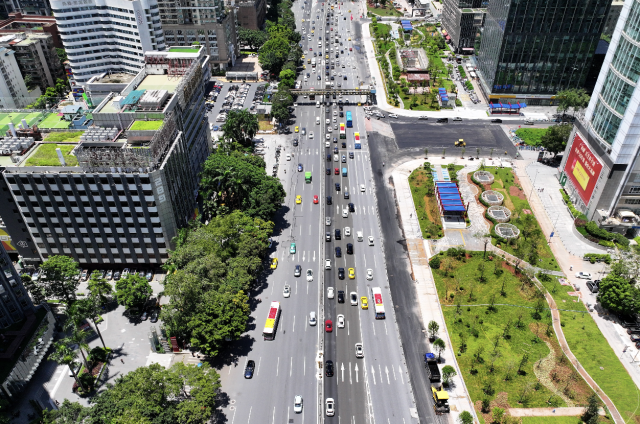
“We were drawn by the locational advantage,” said Chen Lifei, store manager of “Xiang Song,” a key tenant at Waisheng Xintiandi. “While other locations require three to four months of research, we finalized this one in just one to two months.”
Meihua Village Street employed strategic upgrades to pedestrian systems, connected dead-end roads, and repaired damaged surfaces. As a prime TOD project connected to Yangjidong Station, Waisheng Xintiandi is directly linked to Pearl River New City via an underground passage, creating a “seamless dual-core business district.”
“We’ve returned because the location is ideal,” said Lin Ruipan, owner of “Rui Wagyu & Juice Ice.” “This is the only commercial plaza on this section of Guangzhou Avenue, close to Pearl River New City, with high-spending customers.” While his shop already sees weekend queues, he anticipates even greater footfall as metro access boosts the area.
Collaborative Development Enhances Vitality
On a sunny afternoon, officials from Meihua Village Street, Yangji Village Economic Union, 289 Art Park, and Waisheng Xintiandi gathered to discuss collaborative development. “Our different complexes are not competitors but a community of shared interest,” said Yu Sui, Deputy Party Secretary of Meihua Village Street.
Xie Xiaolan, a representative from 289 Art Park, agreed: “We aim to integrate commercial space with neighborhood character, creating a vibrant ‘Mall + Block’ that thrives day and night.”
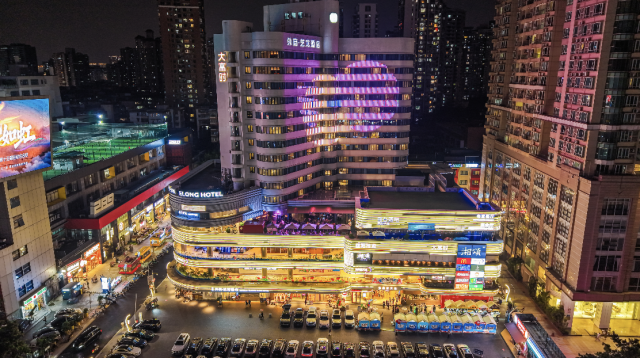
Jiang Hao, Director of the Guangzhou Urban Modern Renewal Center, highlighted the area’s strengths: “Meihua Village Street, adjacent to the city’s central axis, offers a solid foundation and prospects for modern commerce, cultural creativity, and biopharmaceuticals.”
Beyond facilitating collaboration, the street has actively nurtured innovation, supporting five specialized SMEs—including Guangzhou Electric Power Design Institute and Resource Environmental Technology—approved in 2024 and 2025. These enterprises, alongside cultural and commercial hubs, form a diverse economic ecosystem.
Cultural Roots Strengthen Community Bonds
“True preservation lies in inheritance by the people,” said Dai Xing, Chairman of Nanyue Intangible Cultural Heritage Co., who moved to 289 Art Park in 2020 and stayed despite challenges, believing in the power of culture to foster growth.
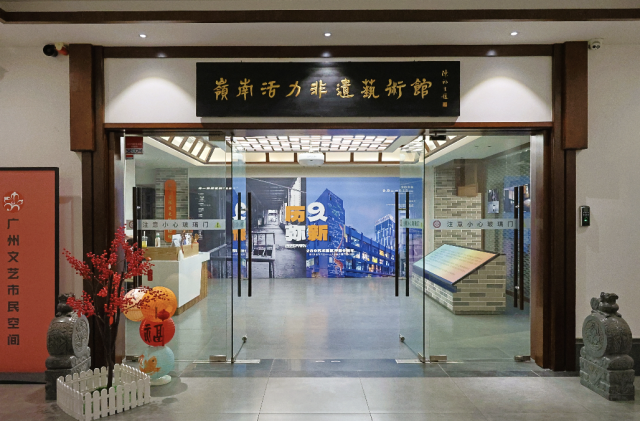
This sense of community, nurtured through cultural initiatives, has become a unique neighborhood asset. “Though just across from Pearl River New City, our cultural character is distinct. Economic vitality relies on people, rooted in culture,” said Yao Peiyuan, Chairman of Yangji Economic Development Co.
Meihua Village Street launched the “Four Seasons of Plum Blossoms” initiative, transforming cultural activities into tangible community experiences. The annual “Village Gala,” entirely organized and performed by residents, has been recognized as a model event in Guangdong, achieving “small stage, big impact” results.
“Performers included bank clerks, social workers, and ordinary residents. We rehearsed for a month at the community center,” shared resident Li after the 2024 gala. Planning for the 2026 event began enthusiastically in October 2025.
The street also integrated intangible heritage like the “Beidi Temple Parade” and dragon boat traditions into modern life, establishing the city’s first district-level “Yue Opera Inheritance Center.” 289 Art Park has further collaborated with local schools to promote cultural and scientific activities.
By revitalizing cultural traditions, expanding public participation, and enhancing community cohesion, Meihua Village Street has transformed neighborly relations from “strangers nearby” to “kin-like connections.” This vibrant cultural atmosphere not only boosts resident satisfaction but also strengthens the business environment, attracting enterprises and talent with its unique charm.