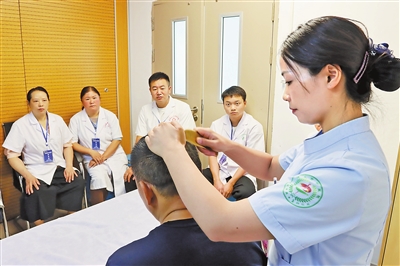
Recently, at the health clinic of Pingtao Village, Longjia Town, Yuqing County, Zunyi City, Guizhou Province, Chen Jing, a post-2000s rural doctor, applied the cupping and gua sha skills she learned from the training to treat a villager with lumbago as soon as she returned to her post. “Villagers used to have little trust in young rural doctors. Now they take the initiative to ask me for physical conditioning, saying my techniques have become much more professional,” she said with a smile.
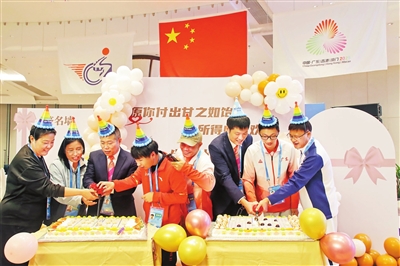
Behind this trust lies the continuous and in-depth advancement of the rotational training program for rural doctors driven by the cooperation between Zhuhai and Zunyi. To further improve rural doctors’ diagnosis and treatment capabilities and practical skills for common and frequently-occurring diseases, Zhuhai Municipal Health Commission, Zunyi Municipal Health Commission and Zunyi Hospital of Traditional Chinese Medicine jointly launched the Rotational Training Program for Rural Doctors in Zunyi in April 2024, with a plan to provide a new round of service capacity improvement training for 4,500 rural doctors across the city within three years.
Walking into the training classroom of Zunyi Hospital of Traditional Chinese Medicine, Li Yi, an attending physician of the Emergency Department, was explaining the key points of chest pain diagnosis and emergency treatment procedures to rural doctors from various towns and townships, and the trainees below were taking careful notes. Combining real clinical cases, Li Yi demonstrated in detail the interpretation of electrocardiograms and the grasp of thrombolysis timing, emphasizing the importance of the “golden 120 minutes”. Mao Qingsong, a rural doctor from Dasong Village, Songyan Town, Yuqing County, sighed after the class, “I used to have to refer patients with chest pain to higher-level hospitals. Now I have learned the initial treatment methods, and I feel much more assured.”
In another training classroom, Yuan Hongxia, a specialized nurse of TCM therapy in the Nursing Department, was demonstrating acupoint location and moxibustion techniques. The trainees gathered around to carefully observe her manipulation and heat control. “Moxibustion therapy must be tailored to individuals. The acupoint selection varies for people with cold-damp constitution and qi-deficiency constitution, and the temperature and duration of treatment also need to be adjusted,” she explained while performing the operation. Yuan Hongxia has been participating in the training and teaching of rural doctors for three consecutive years. She pointed to her WeChat chat interface and said, “Many trainees often send me messages to ask about operational details after the training. I am particularly gratified to see that they truly apply what they have learned to daily diagnosis and treatment,” she smiled.
These vivid scenes reflect the meticulous efforts of Zhuhai-Zunyi cooperation in empowering primary medical care. It is learned that a total of 30 sessions of the Rotational Training Program for Rural Doctors in Zunyi were held in 2024 and 2025, training 3,152 rural doctors and covering 4 districts and 11 counties/cities of Zunyi City.
“The project funds are from Zhuhai, with an investment of more than 5 million yuan in two years, mainly used for training organization, faculty deployment and trainee support,” introduced Kong Weijun, Vice President of Zunyi Hospital of Traditional Chinese Medicine. “Through the ‘theoretical learning + on-site practical training’ model, trainees have systematically mastered the knowledge and basic skills of appropriate TCM technologies, learned common emergency first-aid skills, better applied appropriate TCM technologies in clinical practice, and improved their emergency treatment and referral capabilities.”
Rural doctors are the gatekeepers of rural residents’ health, undertaking important responsibilities such as primary disease prevention, diagnosis and treatment of common diseases, and chronic disease management. From theoretical lectures to practical drills, from centralized training to follow-up guidance, as medical seeds are quietly sown in rural areas, they light up the path forward for primary health care — enabling every villager to access high-quality medical services at their doorstep, turning the vision of “treating minor illnesses in villages and referring severe illnesses in a timely manner” into reality, and adding a warm health-oriented touch to the collaboration between the eastern and western regions of China.